
RECO Integrated Psychiatry Guide to OCD and Anxiety Together
When OCD and anxiety start feeding each other: why the spiral feels so hard to stop You may be staring at the same thought for the tenth time today. That is exhausting. It can also feel embarrassing, especially when the worry seems irrational but still controls your next move. In Delray Beach, we hear this […]


When OCD and anxiety start feeding each other: why the spiral feels so hard to stop
You may be staring at the same thought for the tenth time today. That is exhausting. It can also feel embarrassing, especially when the worry seems irrational but still controls your next move. In Delray Beach, we hear this all the time from people who look fine on the outside and feel stuck inside.
The intrusive-thought loop that turns worry into compulsions and back again
Obsessive compulsive disorder and anxiety often overlap, but the pattern matters. An intrusive thought arrives, fear spikes, and you try to neutralize it quickly. That relief feels good for a moment, then the brain learns to ask for more.
This is why intrusive thoughts treatment cannot stop at reassurance. The more you try to force certainty, the louder the doubt often gets. In practice, the loop can involve checking, counting, repeating, searching, or silently reviewing events for “proof.”
One client from the Boca Raton side described it plainly. They were checking the stove, then checking the lock, then checking the stove again. By evening, the whole day felt hijacked. That is not laziness or weakness; it is a conditioned fear loop that needs skilled treatment.
Why rumination, reassurance seeking, and checking rituals can look like problem-solving but keep the cycle alive
Rumination and reassurance seeking often wear a clever mask. You tell yourself you are being responsible, thorough, or careful. Yet each mental review can strengthen the obsession and make the next doubt arrive faster.
Checking rituals work the same way. The behavior reduces distress briefly, then teaches your brain that danger was real. That is why checking rituals and compulsions can become more time-consuming over months, even when nothing bad happens.
Here is the part most people miss: compulsions are not always visible. They can be mental lists, replaying conversations, searching symptoms, or asking the same question in six different ways. Those hidden rituals are common in social anxiety with OCD traits and illness anxiety with obsessive fears.
How panic disorder, generalized anxiety, and illness anxiety can blur the picture
The overlap can be messy. Panic disorder and OCD overlap may create sudden fear surges, while generalized anxiety and OCD symptoms bring constant worry across many topics. Illness anxiety adds body scanning and fear of missed symptoms, which can look like ordinary health concern at first.
People often ask which diagnosis “wins.” That is the wrong question. A better question is which fears are driving behavior, and which safety moves are keeping the cycle alive. That distinction changes treatment.
Sometimes panic, health fear, and compulsive checking live together. In those cases, a careful anxiety disorder treatment and obsessive compulsive symptoms lens helps clarify what is OCD, what is anxiety, and what is both.
When perfectionism, control issues, and contamination fears point to OCD instead of ordinary stress
Perfectionism can be a strength. It can also become a trap. When perfectionism and control issues turn into repeated editing, rewriting, checking, or avoidance, the problem may be OCD rather than stress. The same is true for contamination OCD treatment when handwashing, cleaning, or fear of bodily harm starts shrinking your day.
Ordinary stress usually moves with the situation. OCD tends to keep demanding certainty long after the moment has passed. That is why functional impairment from anxiety matters so much in diagnosis. If your routines are taking hours, delaying work, or affecting relationships, the clinical picture needs a deeper look.
The treatment map that makes OCD and anxiety easier to treat together
The good news is that OCD and anxiety can be treated together with structure. The hard part is that treatment must match the pattern. A casual “face your fear” approach is usually not enough, and in some cases it backfires. That is why an evidence-based plan matters from the start.
Why exposure and response prevention is different from simply facing fears
Exposure and response prevention sounds simple, but it is specific. You face the trigger on purpose, then you stop the ritual that usually lowers distress. That is how the brain learns new safety information. It is also why ERP therapy for compulsions often works best with a therapist who understands OCD well.
ERP is not flooding. It is not forcing. It uses a graded plan, clear targets, and careful timing. The goal is to let anxiety rise and fall without the ritual that usually keeps it alive.
We often explain it this way: you are not trying to prove the fear is impossible. You are teaching your nervous system that you can tolerate uncertainty and still function. That shift can feel small at first, then surprisingly powerful.
How CBT for OCD and cognitive behavioral therapy for anxiety work better when they are paired with structure
CBT for OCD and cognitive behavioral therapy for anxiety share some tools, but the structure must fit the symptom pattern. With anxiety, you often test thoughts and challenge distortions. With OCD, you also need to target rituals, avoidance, and the urge to seek certainty.
That is where a steady plan helps. A therapist may use tracking sheets, behavioral experiments, and homework between visits. Distress tolerance skills and mindfulness-based anxiety treatment can support the process, especially when urges spike at night.
Our CBT for OCD and cognitive behavioral therapy for anxiety work focuses on practical steps, not abstract advice. For many people, that structure turns therapy from a vague conversation into a usable plan.
Where SSRIs for OCD and anxiety fit and what medication management usually focuses on
Medication can help lower the volume. SSRIs for OCD and anxiety are often considered because they can reduce obsession intensity, panic, and the constant edge of fear. People sometimes call them medication options for OCD, but the real question is how closely they are monitored.
OCD medication management usually focuses on dose, side effects, timing, activation, and symptom change over time. Clinicians also watch for sleep changes, agitation, and interactions with other conditions. In some cases, a selective serotonin reuptake inhibitor may need a different dose strategy for OCD than for depression.
If you want a deeper look at that process, OCD medication management with SSRIs for anxiety can be part of a broader plan. Medication does not replace ERP. It can make ERP more possible.
When trauma-informed psychiatry matters for people with OCD and PTSD treatment needs
Some people have OCD, anxiety, and trauma in the same picture. In those cases, trauma-informed psychiatry is essential. A trauma history can shape safety behaviors, hypervigilance, shame, and avoidance. It can also make exposure work feel too raw if the clinician moves too fast.
Co-occurring anxiety and depression is common here as well. Trauma can worsen sleep, concentration, and irritability. That is why trauma-informed psychiatry for OCD and anxiety treatment may be needed alongside OCD care.
A patient once described their mornings as “bracing for impact before I even get out of bed.” That language matters. It tells a clinician that the work is not only about thoughts; it is also about nervous system activation and safety.
How telepsychiatry for Florida residents can support continuity when getting to Delray Beach is hard
Not every person can come to Delray Beach every week. Work, parenting, traffic on I-95, and distance all get in the way. Telepsychiatry for Florida residents helps keep momentum when in-person visits are hard to manage.
This can be especially useful for medication follow-ups, check-ins, and ongoing coaching. It also helps when symptoms make travel feel overwhelming. If you live farther up the coast or across South Florida, continuity matters more than convenience.
Our telepsychiatry for Florida residents with OCD and anxiety option helps keep care steady. That steadiness often matters as much as the therapy itself.
What a careful psychiatric evaluation is really looking for before treatment starts
A good evaluation does more than label symptoms. It looks for the pattern, the risks, and the parts of the story that change treatment. That matters because OCD can sit beside bipolar disorder, depression, substance use, or other co-occurring disorders and still be missed.
The questions that help separate OCD from bipolar disorder therapy needs, depression, addiction, or other co-occurring disorders
Clinicians ask about mood shifts, impulsivity, substance use, sleep, and thought content. That is how they distinguish OCD from bipolar disorder therapy needs or from depression and addiction patterns. A person may also need dual diagnosis mental health care when anxiety and substance use reinforce each other.
The question is not just “What do you feel?” It is “What do you do when you feel it?” That reveals whether a symptom is an obsession, a panic response, a manic pattern, or a coping habit. For many patients, that distinction explains why treatment has felt off before.
If you are facing this mix, a psychiatric evaluation for OCD and anxiety symptoms can sort through the overlap. The evaluation should be careful, humane, and detailed.
Why family history, sleep disruption, and functional impairment matter in the diagnosis
Family history can point to risk patterns. Sleep disruption can intensify intrusive thoughts, lower frustration tolerance, and make rituals feel harder to resist. Sleep disruption and anxiety also worsen concentration, which can make OCD feel more confusing.
Functional impairment from anxiety tells the story in real life. Are you late to work? Missing class? Avoiding drives down Federal Highway? Repeating tasks until they feel “right”? Those details matter because diagnosis should reflect what is happening day to day, not just a checklist.
A clinician should also ask about adolescence and early adulthood. That matters during adolescent to adult OCD transition care, when symptoms often change shape but do not disappear. Early patterns can guide better treatment later.
How clinicians think about obsessive thoughts, compulsions, and mental rituals that never show up on the surface
Not every compulsion is visible. Some people have obsessive thoughts, but the ritual happens in the mind. They may pray, count, compare memories, review safety fears, or try to “feel certain” before moving on. Those mental rituals can be just as draining as handwashing or checking. 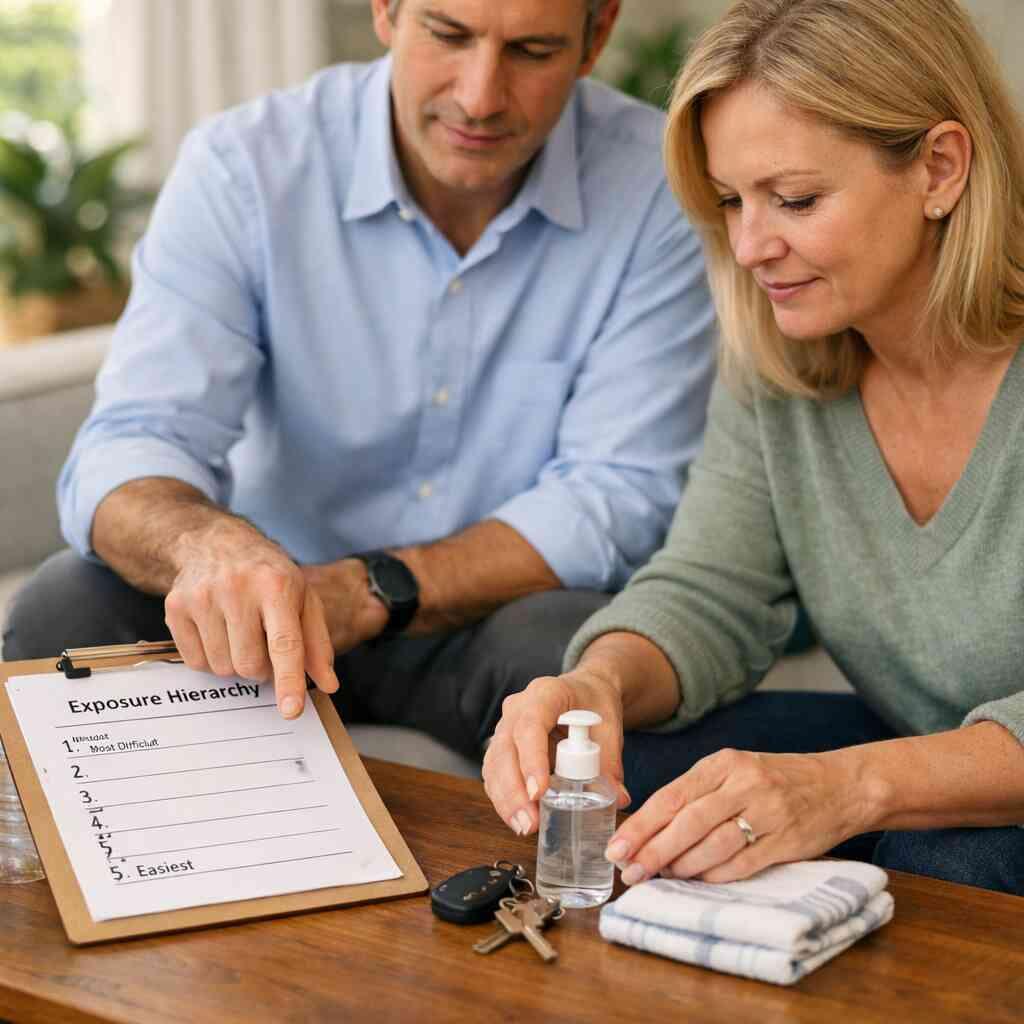
This is why surface questions are not enough. A person may say, “I just think a lot.” Under that statement may be repeated neutralizing, reassurance seeking, or silent repetition that eats hours each week. That hidden layer often explains why the illness has felt impossible to describe.
On the projects we see most often this year, the biggest breakthrough comes when the person finally names the ritual, not just the fear. That honesty opens the door to real treatment.
When treatment-resistant OCD calls for a wider plan including integrative psychiatry and advanced options
Some cases do not improve quickly. Treatment-resistant OCD may need a wider plan, including medication review, ERP adjustments, trauma work, and support for sleep or mood. In those cases, integrative psychiatry for co-occurring anxiety and OCD can help organize the pieces.
Advanced options sometimes matter when standard treatment falls short. RECO Integrated Psychiatry also offers access to innovative therapies such as TMS, Spravato, and ketamine treatment when clinically appropriate and after evaluation. Those options are not shortcuts, and they are not for every person.
If symptoms remain stubborn, treatment resistant OCD and complex anxiety care may be the right frame. The goal is not to chase novelty. It is to match the plan to the clinical reality.
Why outpatient care in Delray Beach can work when the problem is serious but life still has to keep moving
Not every person needs a hospital setting to get better. Many need careful outpatient support, a plan they can follow, and enough structure to keep life intact. That balance can be especially helpful in Delray Beach, where people are often balancing work, school, family, and recovery.
How an outpatient psychiatry in Delray Beach model supports school, work, parenting, and recovery at the same time
Outpatient psychiatry in Delray Beach gives you care without removing you from daily life. That matters if you are parenting, in school, or trying to keep a job while symptoms are active. It also fits people who need ongoing OCD medication management or therapy support.
The rhythm can be steady and practical. Visits, homework, coping work, and symptom tracking can all happen in a real week. That structure often helps people stay engaged longer than a one-size-fits-all plan.
What PHP vs IOP means for people who need more than weekly therapy but less than inpatient care
People ask about what is PHP vs IOP all the time. PHP, or partial hospitalization program, usually means a higher level of daytime structure. IOP, or intensive outpatient, offers strong support with more flexibility for work or home life.
Level of careTypical structureBest forPHPMore hours, more clinical contactHigher symptom burden, unstable routinesIOPFewer hours, still structuredPeople who need support but can manage more independenceA mental health IOP can be a smart fit when symptoms are serious but not unsafe. If you need more context, an outpatient program Delray Beach model can help you compare options without guessing.
How group therapy activities, family therapy, and skills work fit into a real week
Group work can feel intimidating at first. Yet group therapy activities often help people realize they are not strange or broken. Hearing someone else describe the same checking ritual or the same panic surge can reduce shame fast.
Family therapy matters too, especially when loved ones keep answering reassurance questions. That pattern is loving, but it can feed OCD. Family programming helps relatives support progress without accidentally strengthening the ritual.
A typical week may also include practice with routines, coping tools, and problem-solving. That is where recovery becomes concrete.
Why mindfulness-based anxiety treatment, distress tolerance skills, and relapse prevention belong in the same plan
Mindfulness is not about empty calm. It is about noticing a thought without obeying it. Mindfulness-based anxiety treatment can help people pause before a ritual starts, while distress tolerance skills help them ride out the discomfort.
Relapse prevention for OCD should start early, not after symptoms return. That plan may include warning signs, coping tools, and a response for rough days. It also helps to pair behavioral activation with stress management strategies so the day keeps moving.
How South Florida recovery support and the local Delray Beach recovery community can reinforce progress
Support outside the office matters. In South Florida, people often benefit from local routines, peer support, and structure around sober or stable living. For some, the Delray Beach recovery community adds accountability and hope, especially near Atlantic Avenue and the beachside recovery culture that many people know well.
This is not about forcing one philosophy. Some prefer 12-step alternatives, others use SMART Recovery, and many mix approaches. What matters is that the support fits your values and your diagnosis.
If you want to see how local continuity works, the RECO Integrated Psychiatry Guide to OCD and Anxiety Together fits into a wider care network. That can matter when symptoms cross categories.
The next decision that protects long-term progress after symptoms calm down
Getting symptoms down is important. Keeping them down takes planning. The next phase is often where people regain confidence, because treatment shifts from crisis control to durable habits.
How to know when to keep adjusting medication options versus leaning more on ERP therapy for compulsions
Sometimes medication still needs fine-tuning. Other times, the bigger gain comes from more precise ERP. The right answer depends on symptom type, side effects, and how much the rituals still drive the day.
A clinician may compare changes in obsession intensity, avoidance, sleep, and function before changing course. That is why ongoing evidence-based treatment planning matters. It keeps decisions grounded in what is actually happening, not just in hope.
What aftercare planning should include for long-term symptom management and coping skills for anxiety
Good aftercare planning is specific. It should cover follow-up visits, crisis contacts, coping strategies, and what to do if rituals return. It may also include coping skills for anxiety, sleep routines, and structured exposure practice at home.
If substance use has been part of the picture, aftercare should include relapse prevention and clear coordination. That can also involve case management, life skills training, or support around vocational support and nutritional counseling when those needs affect functioning. Small supports often make a big difference.
How family education for OCD and support around reassurance seeking can reduce setbacks at home
Families often mean well. They answer the same question, re-check the same thing, or offer repeated comfort. That can reduce distress in the moment, but it can also keep the loop alive.
Family education for OCD teaches relatives how to respond differently. The goal is not coldness. It is calm, consistent support that does not feed reassurance seeking. That shift helps home feel less like a ritual partner and more like a recovery environment.
When to use evidence-based treatment planning that includes CBT, EMDR, or holistic psychiatric treatment
Not every case is purely OCD. Sometimes trauma, depression, or chronic stress complicate the picture. In those situations, CBT, EMDR, and holistic psychiatric treatment may all play a role, depending on the evaluation.
EMDR can help when trauma is driving hyperarousal or stuck fear. Holistic care may add sleep work, movement, nutrition, or relaxation practice without replacing core therapy. The best plan stays evidence-based and clinically honest.
If you need help deciding what level of care fits, integrated psychiatric care for OCD and anxiety in Delray Beach can be a practical place to start. You do not have to solve every piece today. Start with one call, and let the next step become clear from there.
Frequently Asked Questions
Question: What does integrated psychiatric care for OCD and anxiety look like at RECO Integrated Psychiatry in Delray Beach?
Answer: Integrated psychiatric care for OCD and anxiety starts with a careful psychiatric evaluation that looks beyond symptom labels and focuses on the pattern driving the distress. At RECO Integrated Psychiatry in Delray Beach, that often means separating intrusive thoughts treatment needs from generalized anxiety and OCD symptoms, panic disorder and OCD overlap, illness anxiety and obsessive fears, or social anxiety with OCD traits. From there, the plan may include OCD medication management, CBT for OCD, cognitive behavioral therapy for anxiety, and exposure and response prevention when compulsions are keeping the cycle alive. The goal is not just to reduce worry in the moment, but to build long-term symptom management that improves functioning at work, at home, and in relationships.
Question: How is exposure and response prevention different from simply facing fears, and can it help with checking rituals and compulsions?
Answer: Exposure and response prevention is a structured treatment approach that helps people face triggers on purpose while resisting the ritual that usually brings temporary relief. That is very different from simply forcing yourself to tolerate distress without a plan. For OCD, especially when checking rituals and compulsions, rumination and reassurance seeking, or perfectionism and control issues are involved, ERP therapy for compulsions helps retrain the brain to stop treating uncertainty like an emergency. At RECO Integrated Psychiatry, ERP is typically paired with CBT for OCD, distress tolerance skills, and mindfulness-based anxiety treatment so patients can practice in a way that is steady, measurable, and clinically sound. This is especially helpful when intrusive thoughts feel relentless and ordinary reassurance no longer works.
Question: When should someone consider medication options for OCD and anxiety, including SSRIs for OCD and anxiety?
Answer: Medication can be helpful when anxiety, obsessions, panic, or sleep disruption are making it hard to function. SSRIs for OCD and anxiety are commonly considered because they can lower the intensity of intrusive thoughts, reduce panic symptoms, and make therapy more manageable. At RECO Integrated Psychiatry, OCD medication management is approached carefully and individually, with attention to side effects, timing, activation, sleep disruption and anxiety, and how symptoms are changing over time. Medication is not a replacement for exposure and response prevention, but it can be a valuable support when integrated psychiatric care for OCD is needed. This is especially important in treatment-resistant OCD, where a broader plan may be needed rather than a single intervention.
Question: How does RECO Integrated Psychiatry evaluate whether symptoms are OCD, anxiety disorder treatment needs, bipolar disorder therapy needs, or something else?
Answer: A thorough psychiatric evaluation for OCD looks at what the person is thinking, what they are doing in response, and how much the symptoms are affecting daily life. That matters because obsessive thoughts can overlap with generalized anxiety and OCD symptoms, panic disorder and OCD overlap, depression and addiction, or even bipolar disorder therapy needs. Clinicians also consider co-occurring anxiety and depression, dual diagnosis mental health care, trauma-informed psychiatry, and functional impairment from anxiety when deciding what treatment path makes sense. At RECO Integrated Psychiatry, the goal is to understand the full picture, including family history, sleep disruption and anxiety, and any hidden mental rituals that may not be visible on the surface. That level of detail helps create evidence-based treatment planning instead of a one-size-fits-all approach.
Question: Does RECO Integrated Psychiatry offer telepsychiatry for Florida residents, and how does it support long-term recovery?
Answer: Yes. Telepsychiatry for Florida residents is available to help people stay connected to care when travel to Delray Beach is difficult or when consistency matters more than convenience. This can be especially useful for medication follow-ups, symptom check-ins, and ongoing support for coping skills for anxiety, relapse prevention for OCD, and long-term symptom management. For many people, ongoing outpatient psychiatry in Delray Beach combined with telepsychiatry helps maintain progress without interrupting work, parenting, or school. It also allows care to continue when someone is transitioning from more intensive support, such as a mental health IOP, partial hospitalization program, or outpatient program Delray Beach model, back into everyday life. That continuity can be an important part of aftercare planning and can help reduce setbacks over time.
Question: How does the RECO Integrated Psychiatry Guide to OCD and Anxiety Together connect with broader South Florida recovery support and aftercare planning?
Answer: The RECO Integrated Psychiatry Guide to OCD and Anxiety Together is designed to help people understand how OCD, anxiety, and related symptoms can feed each other, and what evidence-based treatment may look like in real life. For some patients, that includes family education for OCD, support around reassurance seeking, and coordination with broader South Florida recovery resources when co-occurring disorders are present. Aftercare planning may include coping skills for anxiety, behavioral activation, stress management strategies, and referrals or coordination that support functioning beyond the office. When appropriate, care may also align with trauma therapy South Florida needs, holistic psychiatric treatment, and the kind of continuity that supports long-term recovery. The emphasis is always on thoughtful, individualized care that fits the person’s life, not just the diagnosis.
“RECO’s mental health program is excellent. Their integrative approach with therapy and psychiatry helped me overcome anxiety and depression. Compassionate staff and supportive environment. Highly recommend!”– Sabrina F., a 5 star review from our business on Google Business Reviews