Spravato (Esketamine) Treatment
What Is Spravato (Esketamine)?
Spravato is the brand name for esketamine, a prescription nasal spray approved by the U.S. Food and Drug Administration for the treatment of treatment-resistant depression (TRD) in adults and major depressive disorder (MDD) with acute suicidal ideation or behavior in adults. Developed by Janssen Pharmaceuticals, Spravato represents a breakthrough in psychiatric treatment because it works through an entirely different mechanism than traditional antidepressants.
Esketamine is the S-enantiomer of ketamine, meaning it is one of the two mirror-image molecules that make up the racemic ketamine mixture used in anesthesia and IV ketamine therapy. The S-enantiomer has a higher affinity for the NMDA (N-methyl-D-aspartate) receptor compared to the R-enantiomer, and it was specifically chosen for development as a nasal spray due to its potency, pharmacological profile, and ease of administration.
Unlike traditional antidepressants that may take weeks or months to produce noticeable effects, Spravato can begin to alleviate depressive symptoms within hours to days of the first dose. This rapid onset of action is particularly meaningful for patients who are suffering from severe, debilitating depression and need faster relief than conventional medications can provide.
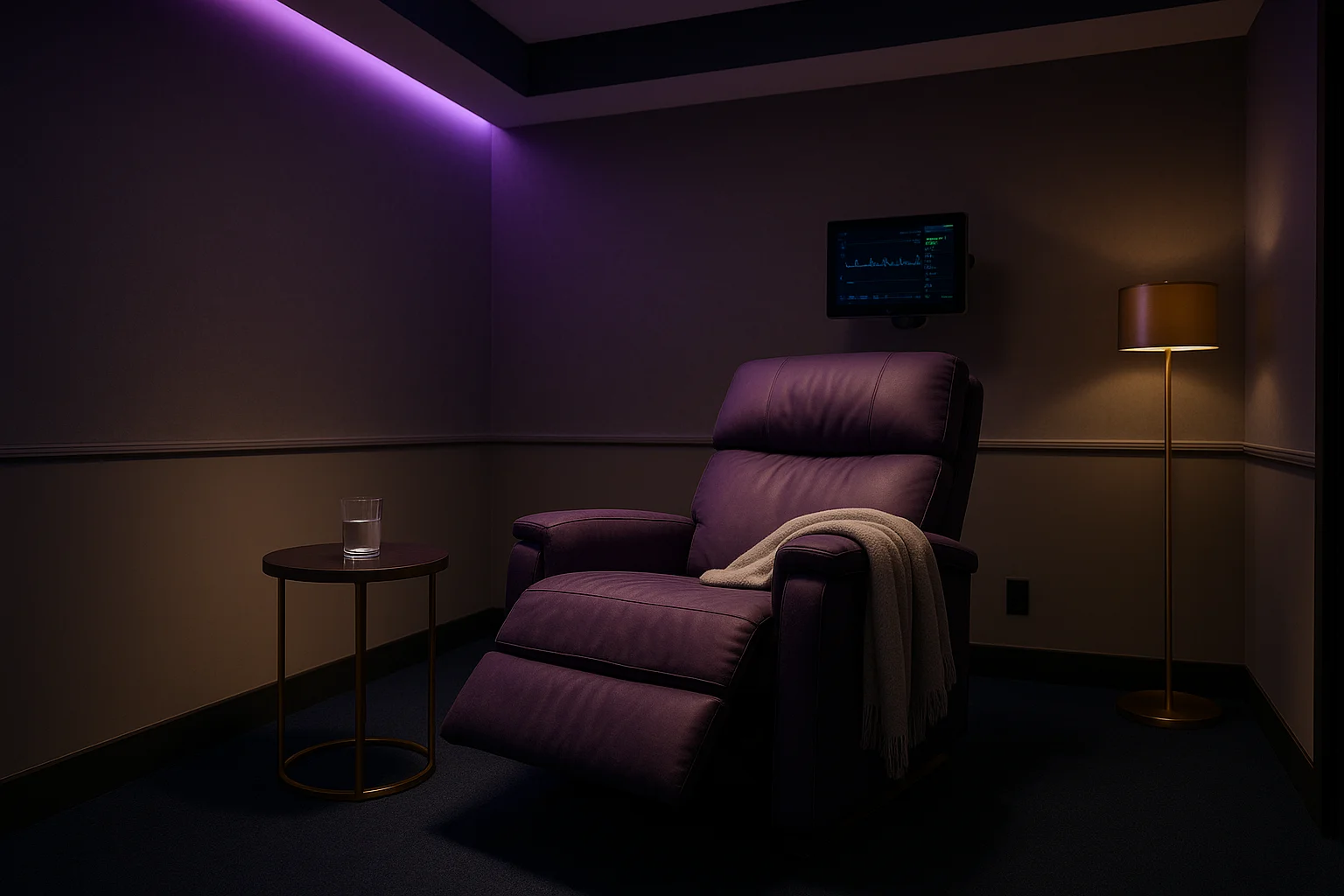
Spravato is always used in conjunction with an oral antidepressant and must be administered under the direct supervision of a healthcare provider in a certified healthcare setting. Patients cannot take Spravato home or self-administer it outside of a clinical environment. At RECO Integrated Psychiatry, our dedicated Spravato treatment suites provide a calm, monitored environment where patients can receive their treatment in comfort and safety.
FDA Approval and Clinical History
The journey of Spravato from research compound to FDA-approved medication represents one of the most significant advances in psychiatric pharmacology in decades. The approval timeline reflects the rigorous scientific evidence supporting its use.
In March 2019, the FDA approved Spravato for treatment-resistant depression in adults, making it the first fundamentally new mechanism of action for depression treatment in over 30 years. This approval was based on three short-term clinical trials (TRANSFORM-1, TRANSFORM-2, and TRANSFORM-3) and one long-term maintenance trial (SUSTAIN-1) involving over 1,700 patients.
In August 2020, the FDA expanded the approval to include adults with major depressive disorder who have current suicidal ideation with intent. This expanded indication was based on the ASPIRE I and ASPIRE II trials, which demonstrated that Spravato, used in addition to standard of care, reduced depressive symptoms in as little as 24 hours compared to standard of care alone.
The clinical trials that supported FDA approval enrolled patients who had genuinely treatment-resistant depression, meaning they had failed to respond to at least two different antidepressant medications at adequate doses and durations. The fact that Spravato demonstrated efficacy in this challenging patient population underscores the significance of its approval.
How Spravato Works: The NMDA Receptor Mechanism
Traditional antidepressants such as SSRIs and SNRIs work primarily by modulating serotonin, norepinephrine, and, in some cases, dopamine neurotransmission. While effective for many patients, these medications leave a significant percentage of people with depression without adequate relief. Spravato works through an entirely different pathway, targeting the glutamate system.
Glutamate is the most abundant excitatory neurotransmitter in the brain and plays a fundamental role in neural communication, learning, and memory. In depression, glutamate signaling is often disrupted, leading to impaired synaptic connections between neurons, particularly in the prefrontal cortex and hippocampus, regions critical for mood regulation, cognition, and emotional processing.
Esketamine acts as an antagonist at the NMDA receptor, a type of glutamate receptor. By temporarily blocking these receptors, esketamine triggers a cascade of downstream effects that ultimately increase the release of brain-derived neurotrophic factor (BDNF), a protein essential for the growth, maintenance, and survival of neurons. This increase in BDNF promotes synaptogenesis, the formation of new synaptic connections between neurons, effectively helping the brain repair and strengthen the neural circuits that have been weakened by chronic depression.
This process, sometimes referred to as a "neuroplasticity burst," is believed to be the primary mechanism behind Spravato's rapid antidepressant effects. Unlike traditional antidepressants that must slowly build up in the system and gradually shift neurotransmitter levels over weeks, Spravato's effect on the glutamate-BDNF-synaptogenesis pathway can produce measurable changes in brain function within hours.
Treatment Protocol: What Your Spravato Sessions Look Like
Spravato treatment follows a structured protocol designed to maximize efficacy while ensuring patient safety. Every session at RECO Integrated Psychiatry is conducted in our certified treatment facility under the supervision of qualified healthcare providers.
The Treatment Schedule
Induction Phase (Weeks 1-4)
Treatment begins with sessions twice per week for the first four weeks. This intensive schedule helps establish the therapeutic effect and allows your treatment team to optimize your dose (56 mg or 84 mg). Most patients begin to notice improvement during this phase.
Maintenance Phase (Weeks 5-8)
Sessions reduce to once per week during weeks five through eight. Your psychiatrist assesses your response and determines whether the current frequency and dose continue to be appropriate.
Extended Maintenance (Week 9 and Beyond)
From week nine onward, sessions are typically administered once weekly or once every two weeks, based on your individual response and clinical needs. Some patients may eventually reduce to less frequent sessions while maintaining their improvement.
What Happens During Each Session
Each Spravato session follows a carefully designed protocol that ensures your safety and comfort throughout the treatment experience.
Pre-treatment preparation: Arrive at the clinic at your scheduled time. You should avoid eating for at least two hours and drinking liquids for at least 30 minutes before your appointment. If you use a nasal corticosteroid or decongestant, do not use it within one hour of treatment. Your blood pressure will be checked before administration.
Nasal spray administration: Under direct observation of our healthcare team, you will self-administer the Spravato nasal spray. The medication comes in a single-use device. For a 56 mg dose, you will use two devices (one spray in each nostril per device); for an 84 mg dose, you will use three devices. There is a five-minute rest period between each device. Total administration time is approximately 5 to 15 minutes.
Two-hour monitoring period: After administration, you will rest comfortably in our treatment suite for a minimum of two hours. During this time, our clinical staff monitors your blood pressure, level of consciousness, and any side effects. Many patients use this time to relax, listen to music, or rest quietly. Some experience mild dissociative effects during this period that typically resolve within 90 minutes.
Post-treatment assessment: At the end of the monitoring period, your vital signs are rechecked and a clinician assesses your readiness to leave. You must not drive, operate heavy machinery, or engage in activities requiring full alertness until the day after a restful sleep. You must arrange for someone to drive you home after each session.
Who Qualifies for Spravato Treatment?
Spravato is specifically indicated for two patient populations. Your board-certified psychiatrist at RECO Integrated Psychiatry will determine if you meet the criteria during your comprehensive psychiatric evaluation.
Treatment-Resistant Depression (TRD): Adults with major depressive disorder who have not responded adequately to at least two different oral antidepressant treatments of adequate dose and duration in the current depressive episode. Spravato is prescribed in combination with a newly initiated oral antidepressant.
Major Depressive Disorder with Suicidal Ideation or Behavior: Adults with MDD who are experiencing acute suicidal thoughts with intent. Spravato is used in combination with an oral antidepressant to provide rapid relief while longer-acting treatments take effect.
Contraindications
Spravato is not appropriate for patients with aneurysmal vascular disease (including aortic, intracranial, or peripheral arteries) or arteriovenous malformation. Patients with a history of intracerebral hemorrhage should not receive Spravato. Individuals with known hypersensitivity to esketamine, ketamine, or any excipients in the formulation are also excluded.
Benefits of Spravato vs. Traditional Antidepressants
Spravato offers several important advantages, particularly for patients who have struggled with conventional antidepressant treatments.
- Rapid onset of action: While traditional antidepressants often require four to eight weeks to produce meaningful effects, Spravato can begin to reduce depressive symptoms within hours to days of the first treatment.
- Novel mechanism of action: By targeting the glutamate system rather than the serotonin or norepinephrine pathways, Spravato provides a new therapeutic avenue for patients whose depression has not responded to conventional medications.
- Proven efficacy in treatment-resistant populations: Clinical trials demonstrated significant improvement in patients who had failed at least two prior antidepressant trials, a population that has historically had limited treatment options.
- Addresses suicidal ideation: Spravato is one of very few treatments specifically approved for the rapid reduction of suicidal thoughts in adults with MDD, filling a critical gap in psychiatric care.
- Promotes neuroplasticity: The glutamate-BDNF-synaptogenesis pathway activated by Spravato may help the brain form new, healthier neural connections, potentially contributing to lasting improvement beyond the acute medication effects.
- FDA-regulated and standardized: Unlike off-label ketamine treatments, Spravato has an FDA-approved indication, standardized dosing protocol, and established safety monitoring requirements through the REMS program.
Side Effects and Safety Profile
As with any medication, Spravato can cause side effects. The most common side effects typically occur within the first two hours after administration and resolve by the end of the monitoring period.
Common Side Effects
- Dissociation: A feeling of disconnection from thoughts, feelings, or surroundings. This is the most commonly reported side effect and typically resolves within 90 minutes of administration.
- Dizziness: Mild to moderate dizziness that usually subsides during the monitoring period.
- Nausea: Some patients experience nausea, which can be managed with anti-nausea medication if needed.
- Sedation: Drowsiness or sleepiness during and after the session, which is why patients cannot drive until the following day.
- Vertigo: A sensation of spinning or imbalance that typically passes within the monitoring window.
- Increased blood pressure: Transient elevations in blood pressure are common, which is why blood pressure is monitored before and during each session.
- Anxiety: Some patients may experience transient anxiety during the session, though this is generally mild and short-lived.
Serious Considerations
Spravato carries a Boxed Warning for sedation, dissociation, and abuse and misuse potential. These risks are managed through the REMS (Risk Evaluation and Mitigation Strategy) program, which requires that Spravato be administered only in certified healthcare settings under direct observation. The two-hour monitoring requirement and the restriction against take-home use are specifically designed to mitigate these risks.
Patients with a history of substance use disorders should discuss the risks and benefits carefully with their psychiatrist. While Spravato has abuse potential related to its ketamine-like properties, clinical trials and post-marketing surveillance have not identified significant rates of diversion or misuse when the medication is administered through the REMS program.
Insurance Coverage and the REMS Program
Because Spravato is an FDA-approved medication, it is covered by most major commercial insurance plans, Medicare Part D, and many state Medicaid programs. Coverage often requires prior authorization documentation demonstrating that the patient meets the criteria for treatment-resistant depression or MDD with suicidal ideation.
Spravato Savings Program
Janssen, the manufacturer of Spravato, offers a patient savings program called the Janssen CarePath Savings Program. Eligible commercially insured patients may pay as little as $10 per treatment session. Our admissions team will help you enroll and navigate all available financial assistance options. Call (561) 421-4107 to learn more.
Understanding the REMS Program
The Spravato REMS (Risk Evaluation and Mitigation Strategy) program is an FDA-mandated safety program that governs how Spravato is prescribed and administered. Key requirements include:
- Spravato must be administered in a certified healthcare setting such as RECO Integrated Psychiatry
- Patients must be monitored by a healthcare provider for at least two hours after each dose
- Patients must be enrolled in the REMS program before beginning treatment
- Healthcare providers must document that the patient was assessed for readiness to leave after each session
- Spravato cannot be dispensed directly to patients for at-home use
RECO Integrated Psychiatry is a certified Spravato REMS healthcare setting. Our team handles all REMS enrollment, documentation, and compliance requirements, so you can focus on your recovery.
Frequently Asked Questions
Spravato (esketamine) is the S-enantiomer of ketamine, delivered as an FDA-approved nasal spray with standardized dosing and an established safety monitoring protocol. IV ketamine uses the racemic mixture of both S and R enantiomers and is administered intravenously as an off-label treatment. Spravato is covered by most insurance plans due to its FDA approval, while IV ketamine is typically a self-pay treatment. Both target the glutamate system and can produce rapid antidepressant effects, but they differ in administration route, regulatory status, and cost structure.
Yes, Spravato is covered by most major insurance plans, including Medicare Part D, Blue Cross Blue Shield, Aetna, Cigna, United Healthcare, and many Medicaid programs. Prior authorization is typically required, and our insurance specialists handle this process on your behalf. The manufacturer also offers a savings program that can reduce out-of-pocket costs to as little as $10 per session for eligible commercially insured patients. Visit our insurance verification page to check your benefits.
The nasal spray administration itself takes approximately 5 to 15 minutes. However, the FDA-mandated monitoring period requires that you remain at our clinic for a minimum of two hours after each dose. Including check-in, pre-treatment blood pressure assessment, administration, monitoring, and post-treatment evaluation, you should plan to be at RECO Integrated Psychiatry for approximately 2.5 to 3 hours per session.
No. Due to the potential for sedation, dissociation, and changes in blood pressure and perception, patients must not drive, operate heavy machinery, or perform activities requiring full mental alertness until the day following each treatment after a restful sleep. You must arrange for a responsible adult to drive you home after every Spravato session. Ride-share services or public transportation with a companion are acceptable alternatives.
Some patients experience meaningful improvement in depressive symptoms within hours to days after the first dose. The ASPIRE clinical trials demonstrated statistically significant reductions in depression scores compared to placebo as early as 24 hours after the initial treatment. However, the full therapeutic benefit typically develops over the first several weeks of treatment during the induction phase. Your psychiatrist will monitor your progress closely and adjust your treatment plan accordingly.
The most commonly reported side effects include dissociation (feeling disconnected), dizziness, nausea, sedation, vertigo, decreased sensitivity, anxiety, increased blood pressure, and a feeling of intoxication or euphoria. Most side effects begin within minutes of administration and resolve within the two-hour monitoring period. Side effects tend to be most pronounced during the first few sessions and often become less intense with continued treatment. Our clinical team is trained to manage all side effects and ensure your comfort and safety throughout each session.
The duration of Spravato treatment varies by individual. After the induction phase, many patients are able to reduce treatment frequency during the maintenance phase. Your psychiatrist will periodically assess whether continued Spravato treatment is necessary based on your symptom levels and overall response. Some patients eventually transition to maintenance with oral antidepressants and medication management alone, while others benefit from ongoing Spravato sessions at reduced frequency. The goal is always to find the minimum effective treatment regimen that maintains your improvement.