Pharmacogenomic & Genetic Testing
What Is Pharmacogenomic Testing?
Pharmacogenomic testing, often called pharmacogenetic testing or PGx testing, is a type of genetic test that analyzes specific genes involved in how your body processes medications. By examining variations in your DNA, this test helps your psychiatrist predict which psychiatric medications are most likely to work well for you, which may require dose adjustments, and which should be avoided due to a higher risk of side effects or ineffectiveness.
The traditional approach to prescribing psychiatric medications has long relied on a trial-and-error process. A psychiatrist prescribes a medication based on clinical guidelines and experience, waits several weeks for it to take effect, and then adjusts or switches if the response is inadequate or side effects are intolerable. This process can take months or even years before finding the right medication at the right dose. For patients already struggling with depression, anxiety, or other debilitating conditions, this prolonged trial-and-error period can be profoundly demoralizing.
Pharmacogenomic testing fundamentally changes this equation. By understanding your unique genetic profile before prescribing, your psychiatrist at RECO Integrated Psychiatry can make more informed, personalized medication decisions from the very first appointment. This precision medicine approach has been shown in clinical studies to improve treatment response rates, reduce the number of medication trials needed to find an effective treatment, decrease adverse drug reactions, and lower overall healthcare costs.
The science behind pharmacogenomics is well-established. The U.S. Food and Drug Administration has included pharmacogenomic information in the labeling of more than 300 medications, including many commonly prescribed psychiatric drugs. Major professional organizations, including the American Psychiatric Association and the Clinical Pharmacogenetics Implementation Consortium, have published guidelines supporting the clinical use of pharmacogenomic testing in psychiatric practice.
How Pharmacogenomic Testing Works
Your DNA contains the instructions your body uses to produce enzymes and proteins that metabolize medications. Variations in specific genes can cause these enzymes to work faster, slower, or differently than average, directly affecting how you respond to certain drugs.
Drug Metabolism and Genetic Variation
When you take a medication, your body uses specific enzymes, primarily in the liver, to break it down into active or inactive metabolites. The speed at which this process occurs determines the effective drug level in your bloodstream. Based on your genetic makeup, you may be classified as one of four metabolizer types for each relevant enzyme:
- Ultrarapid Metabolizer: You break down the medication too quickly, so standard doses may be ineffective because the drug is cleared from your body before it can work. Higher doses or alternative medications may be needed.
- Extensive (Normal) Metabolizer: You process the medication at a typical rate, and standard dosing guidelines are likely appropriate for you.
- Intermediate Metabolizer: You break down the medication somewhat more slowly than average. Dose reductions may be needed to avoid side effects from drug accumulation.
- Poor Metabolizer: You process the medication very slowly, leading to higher-than-expected drug levels that can increase the risk of toxicity and side effects. Significant dose reductions or alternative medications are usually recommended.
What the Test Analyzes
Pharmacogenomic tests used in psychiatric practice typically examine a panel of genes that are most relevant to the metabolism and efficacy of commonly prescribed psychiatric medications. Key genes include:
- CYP2D6: Metabolizes approximately 25% of all prescribed drugs, including many antidepressants (fluoxetine, paroxetine, venlafaxine), antipsychotics (aripiprazole, risperidone), and ADHD medications (atomoxetine).
- CYP2C19: Important for the metabolism of several SSRIs (citalopram, escitalopram, sertraline), benzodiazepines, and tricyclic antidepressants.
- CYP3A4: The most abundant liver enzyme, involved in metabolizing quetiapine, buspirone, and many other medications.
- CYP1A2: Relevant for the metabolism of clozapine, olanzapine, duloxetine, and certain other psychiatric medications.
- SLC6A4 (Serotonin Transporter): Genetic variations in this gene may influence response to SSRI and SNRI antidepressants.
- HLA-A and HLA-B: Certain variants increase the risk of severe allergic reactions to medications like carbamazepine and oxcarbazepine.
- MTHFR: Variations in this gene affect folate metabolism, which may influence depression and antidepressant response.
Benefits of Pharmacogenomic Testing
Integrating pharmacogenomic testing into your psychiatric care offers multiple significant advantages over the traditional trial-and-error approach to medication selection.
- Reduced trial-and-error: Rather than cycling through multiple medications over months or years, genetic insights help your psychiatrist narrow down the most promising options from the start, getting you to an effective treatment faster.
- Fewer side effects: By identifying medications that your body may not metabolize well, testing helps avoid drugs that are more likely to cause adverse reactions for your specific genetic profile.
- Optimized dosing: Knowing your metabolizer status allows for more precise dosing from the beginning, rather than starting at a standard dose and adjusting reactively based on your response.
- Improved adherence: Patients who experience fewer side effects and faster improvement are more likely to stay on their prescribed medication regimen, which is essential for long-term treatment success.
- Cost savings: By reducing the number of ineffective medication trials, unnecessary office visits, and emergency room visits due to adverse effects, pharmacogenomic testing can lower your overall healthcare costs.
- Lifetime value: Your genetic results never change. The information from a single test can inform medication decisions for the rest of your life, across all areas of medicine, not just psychiatry.
Who Is a Candidate for Genetic Testing?
While pharmacogenomic testing can benefit virtually any patient considering psychiatric medication, it is especially valuable in the following situations:
- You have tried one or more psychiatric medications without adequate improvement
- You have experienced significant or unusual side effects from psychiatric medications
- You are starting psychiatric medication for the first time and want to make the most informed choice possible
- You are taking multiple medications and are concerned about drug interactions
- You have a family history of poor medication response or adverse drug reactions
- You are being considered for medication management and want to take a precision medicine approach from the outset
Important Note
Pharmacogenomic testing is a tool that enhances clinical decision-making but does not replace the expertise of your psychiatrist. Genetic results are interpreted in the context of your full clinical picture, including your diagnosis, symptoms, medical history, and current medications. Your psychiatrist integrates genetic data with clinical experience to develop your personalized treatment plan.
What to Expect: The Testing Process
The pharmacogenomic testing process at RECO Integrated Psychiatry is straightforward, painless, and minimally disruptive to your schedule.
Consultation with Your Psychiatrist
During your psychiatric evaluation or medication management appointment, your psychiatrist discusses the potential benefits of pharmacogenomic testing for your specific situation and obtains your informed consent.
Simple Cheek Swab Collection
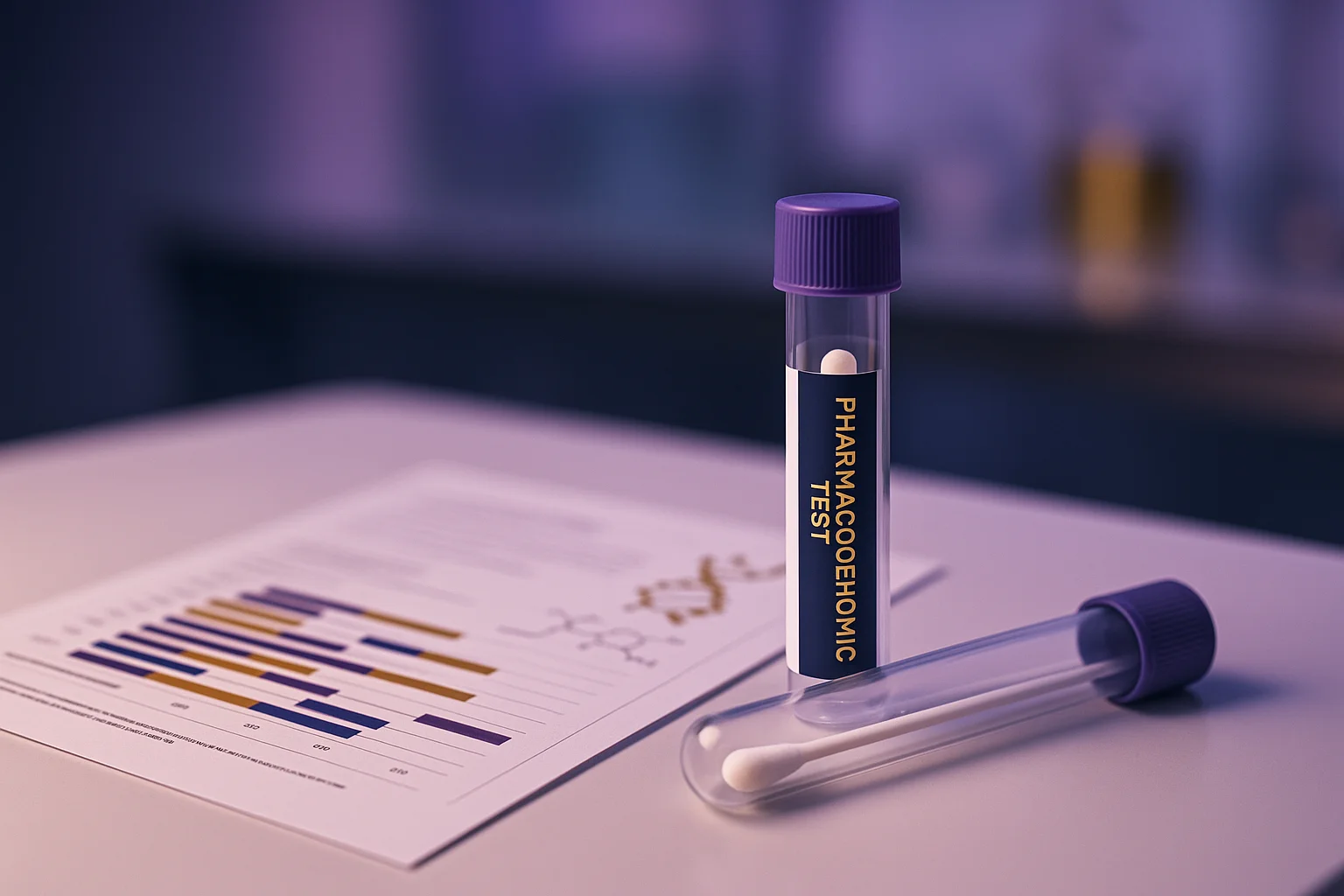
The DNA sample is collected using a painless cheek swab, similar to a cotton swab rubbed gently along the inside of your cheek. The entire collection process takes less than one minute. No blood draw, no needles, no fasting required.
Laboratory Analysis
Your sample is sent to a CLIA-certified, CAP-accredited laboratory where it is analyzed using advanced genotyping technology. The lab examines your DNA for variations in the specific genes that affect psychiatric medication metabolism and response.
Results Report
Within five to seven business days, a comprehensive report is generated that categorizes commonly prescribed psychiatric medications into three color-coded groups: green (use as directed), yellow (use with caution or consider dose modifications), and red (significant gene-drug interaction, consider alternatives).
Results Review with Your Psychiatrist
Your psychiatrist reviews the results with you in detail, explaining what your genetic profile means for your current and future medication options. Together, you develop or refine your medication management plan based on these personalized insights.
Ongoing Precision Care
Your genetic results become a permanent part of your medical record, informing every future medication decision. As new medications become available or your treatment needs change, your pharmacogenomic profile continues to guide personalized prescribing for life.
Insurance Coverage
Many insurance plans, including Medicare, cover pharmacogenomic testing when medically necessary criteria are met. Our insurance specialists will verify your benefits and obtain any required prior authorization before testing. Contact us at (561) 421-4107 or visit our insurance verification page to check your coverage.
Frequently Asked Questions
Not at all. The test involves a simple, painless cheek swab that takes less than one minute to collect. A soft cotton-tipped swab is gently rubbed along the inside of your cheek to collect a DNA sample from your saliva cells. No blood draw, needles, or any discomfort is involved. Patients often remark that they expected the process to be far more involved than it actually is.
Results are typically available within five to seven business days after your sample reaches the laboratory. Once your results are ready, your psychiatrist will schedule a follow-up appointment (in-person or via telepsychiatry) to review the findings in detail and discuss how they inform your medication plan. In urgent clinical situations, some laboratories offer expedited processing.
Many insurance plans, including Medicare, cover pharmacogenomic testing when medical necessity criteria are met. Common qualifying criteria include a history of prior medication failure, adverse drug reactions, or polypharmacy (taking multiple medications). Most testing companies also offer patient assistance programs or reduced self-pay pricing for patients without insurance coverage. Our insurance specialists will verify your specific benefits and inform you of any out-of-pocket costs before testing proceeds.
Pharmacogenomic testing does not prescribe a specific medication. Rather, it provides valuable information that helps your psychiatrist make more informed decisions. The test categorizes medications based on how your body is genetically predisposed to metabolize them, identifying which drugs are likely to work well at standard doses, which may need dose adjustments, and which should be avoided. Your psychiatrist integrates this genetic data with your clinical history, current symptoms, and treatment goals to select the optimal medication for you.
No. Pharmacogenomic testing analyzes your DNA, which is determined at conception and does not change with medication use, diet, age, or any other factor. You can continue taking all of your current medications without any interruption or adjustment during the testing process. In fact, the results may help your psychiatrist understand why a current medication is or is not working effectively for you.
The Genetic Information Nondiscrimination Act (GINA) is a federal law that prohibits health insurance companies and employers from discriminating based on genetic information. This means that the results of your pharmacogenomic test cannot be used to deny you health insurance coverage, increase your premiums, or affect your employment. Your genetic information is also protected under HIPAA privacy regulations and is kept strictly confidential within your medical record.