TMS Therapy
What Is TMS Therapy?
Transcranial Magnetic Stimulation (TMS) is an FDA-cleared, non-invasive neuromodulation therapy that uses focused magnetic pulses to stimulate specific regions of the brain associated with mood regulation. At RECO Integrated Psychiatry, we offer TMS as a safe, effective treatment option for patients who have not responded adequately to traditional antidepressant medications.
TMS was first cleared by the U.S. Food and Drug Administration in 2008 for the treatment of major depressive disorder in adults who had failed to achieve satisfactory improvement from at least one prior antidepressant medication. Since then, the FDA has expanded clearance to include obsessive-compulsive disorder (OCD) in 2018, and several TMS systems have received additional clearances for smoking cessation and anxious depression.
Unlike electroconvulsive therapy (ECT), TMS does not require anesthesia, sedation, or any recovery time. Patients remain fully awake and alert throughout each session and can drive themselves to and from appointments. The treatment is performed in an outpatient setting, meaning you can return to work, school, or your daily activities immediately after each session.
The technology behind TMS has been studied in hundreds of clinical trials involving thousands of patients worldwide. The evidence base supporting its efficacy continues to grow, with newer protocols such as theta burst stimulation (TBS) offering faster treatment times while maintaining comparable or even superior outcomes to traditional TMS protocols.
How TMS Therapy Works
TMS operates on a well-established principle of electromagnetic induction. A treatment coil placed against the scalp generates brief, focused magnetic pulses that pass through the skull and induce small electrical currents in the targeted brain tissue. These currents stimulate neurons in the left dorsolateral prefrontal cortex (DLPFC), a region of the brain that plays a central role in mood regulation and is often underactive in individuals with depression.
Repeated stimulation over multiple sessions promotes neuroplasticity, the brain's ability to form new neural connections and strengthen existing ones. Over the course of treatment, this process helps normalize activity in the mood-regulating circuits of the brain, leading to sustained improvement in depressive symptoms.
The Step-by-Step TMS Treatment Process
Initial Consultation & Evaluation
Your board-certified psychiatrist conducts a comprehensive psychiatric evaluation to determine if TMS is appropriate for your condition. This includes reviewing your treatment history, current medications, and any medical conditions that may affect candidacy.
Motor Threshold Mapping
During your first TMS session, the technician determines your individual motor threshold, the minimum amount of magnetic energy required to make your thumb twitch. This measurement is used to calibrate the treatment intensity specifically for your brain.
Treatment Coil Positioning
Using precise anatomical landmarks, the coil is positioned over the left dorsolateral prefrontal cortex. Some advanced systems use neuronavigation technology for even greater targeting accuracy.
Magnetic Pulse Delivery
The system delivers rapid pulses of magnetic energy in a prescribed pattern. Standard protocols deliver approximately 3,000 pulses per session. Theta burst stimulation protocols deliver 600 pulses in a compressed timeframe.
Ongoing Treatment Sessions
Treatment typically consists of five sessions per week for six weeks (30 sessions), followed by a taper period of three sessions per week for an additional two to three weeks. Each session lasts approximately 19-37 minutes depending on the protocol.
Progress Monitoring & Follow-Up
Your psychiatrist monitors your response throughout treatment using standardized depression rating scales. Treatment parameters may be adjusted based on your progress to optimize outcomes.
Who Is TMS Therapy For?
TMS therapy is primarily indicated for adults diagnosed with major depressive disorder who have not achieved adequate relief from antidepressant medications. In clinical practice, this typically means patients who have tried at least one, and often two or more, antidepressant medications at adequate doses and durations without satisfactory improvement.
TMS may be an appropriate treatment option if you:
- Have been diagnosed with major depressive disorder and have not responded well to antidepressant medications
- Experience intolerable side effects from antidepressant medications such as weight gain, sexual dysfunction, or fatigue
- Have been diagnosed with obsessive-compulsive disorder (OCD) that has not responded to first-line treatments
- Prefer a non-pharmacological treatment approach as part of your comprehensive care plan
- Are experiencing anxious depression and want a treatment that addresses both mood and anxiety symptoms simultaneously
- Have previously responded well to TMS and are experiencing a recurrence of symptoms
Important Safety Note
TMS is not appropriate for individuals who have metallic implants in or near the head (excluding standard dental fillings), cochlear implants, or implanted cardiac devices such as pacemakers. Patients with a history of seizure disorders should discuss the risks carefully with their psychiatrist before proceeding.
Benefits of TMS Therapy
TMS therapy offers several distinct advantages compared to traditional pharmacological treatments and other neuromodulation therapies. Understanding these benefits can help you make an informed decision about whether TMS is the right choice for your treatment plan.
- Non-invasive and drug-free: TMS does not require surgery, implants, or systemic medications. The magnetic pulses are delivered externally through the scalp, making it one of the least invasive brain stimulation therapies available.
- No sedation or anesthesia: Unlike ECT, TMS does not require general anesthesia or sedation, eliminating the risks and recovery time associated with these procedures.
- No systemic side effects: Because TMS targets the brain directly rather than circulating through the bloodstream, it avoids the common side effects of antidepressant medications including weight gain, sexual dysfunction, gastrointestinal disturbances, and drowsiness.
- Outpatient convenience: Each session is performed in our office. Patients can drive themselves to appointments and resume their normal activities immediately afterward, including work and exercise.
- Proven efficacy: Large-scale clinical trials and real-world effectiveness studies demonstrate that approximately 50-60% of patients with treatment-resistant depression experience clinically meaningful improvement with TMS, and roughly one-third achieve full remission.
- Durable results: Studies show that the benefits of TMS can last for months or even years following a successful course of treatment. Maintenance or retreatment sessions can help sustain long-term improvements.
- Compatible with other treatments: TMS can be used in combination with medication management, psychotherapy, and other treatment modalities as part of an integrated approach to mental health care.
What to Expect During TMS Treatment
Understanding what happens during a typical TMS session can help alleviate any apprehension you may have about starting treatment. At RECO Integrated Psychiatry, we prioritize patient comfort and education at every step of the process.
Before Your First Session
After your initial psychiatric consultation, our team will verify your insurance coverage and obtain any necessary prior authorizations. You will receive detailed instructions about what to bring and what to expect. On the day of your first session, plan to arrive about 15 minutes early to complete any remaining paperwork. Wear comfortable clothing, and feel free to bring headphones, a book, or anything else to help you relax during treatment.
During Each Session
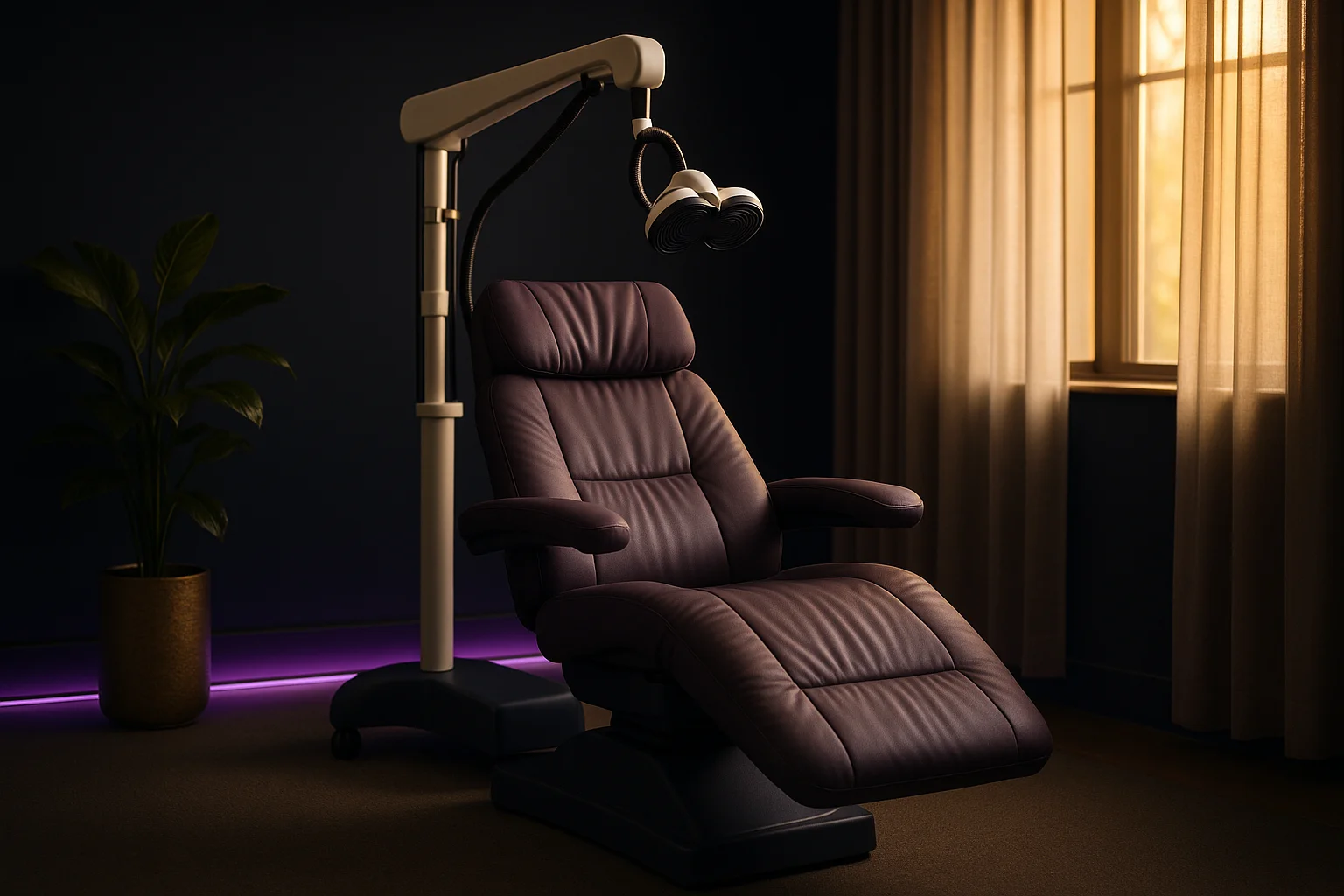
You will be seated in a comfortable reclining chair in our dedicated TMS treatment suite. The TMS technician will position the treatment coil against your head, using the coordinates established during your mapping session. Once the coil is in position, the system will begin delivering magnetic pulses. You will hear a rapid clicking sound and feel a tapping sensation on your scalp. Many patients describe the sensation as similar to someone tapping on their head with a pencil.
During the session, you can relax, listen to music, watch television, or simply rest. You remain fully awake and conscious throughout the entire procedure. Standard repetitive TMS sessions last approximately 19 to 37 minutes, while theta burst stimulation sessions can be completed in as little as 3 to 6 minutes.
After Each Session
There is no recovery period required after TMS. You can stand up, walk out of the treatment room, and immediately drive yourself home or back to work. Some patients experience mild scalp tenderness or a slight headache after the first few sessions, but these effects typically diminish quickly and can be managed with over-the-counter pain medication if needed.
Side Effects and Safety
TMS therapy has an excellent safety profile and is well-tolerated by the vast majority of patients. The most commonly reported side effects are mild and typically diminish after the first week of treatment.
Common Side Effects
- Scalp discomfort or pain at the treatment site: The most frequently reported side effect, usually mild and transient. This tends to decrease as you become accustomed to the sensation over the first several sessions.
- Headache: Mild to moderate headaches may occur during or after sessions, particularly early in treatment. Over-the-counter analgesics such as acetaminophen or ibuprofen are usually effective.
- Lightheadedness: Some patients report brief lightheadedness immediately after a session. This is typically short-lived and resolves within minutes.
- Tingling or twitching of facial muscles: The magnetic field may occasionally stimulate muscles near the treatment area, causing temporary twitching. Adjusting the coil position can usually resolve this.
Rare but Serious Risks
The most serious potential risk of TMS therapy is seizure. However, the risk is extremely low, estimated at approximately 0.01% per session, or roughly 1 in 10,000 treatments. This rate is comparable to the background seizure risk in the general population. To minimize this risk, your treatment team follows strict safety protocols and screening criteria established by expert consensus guidelines.
TMS does not cause the memory loss, cognitive impairment, or prolonged recovery time associated with electroconvulsive therapy. There is no evidence of long-term adverse effects from TMS treatment based on over 15 years of post-market surveillance data.
Insurance Coverage and Cost
TMS therapy is covered by most major commercial insurance plans, Medicare, and many Medicaid programs for the treatment of major depressive disorder. Insurance coverage for OCD treatment with TMS is also increasingly available, though policies may vary by carrier.
Insurance Verification
Our dedicated insurance specialists will verify your benefits and obtain prior authorization before treatment begins. We work with all major insurance carriers including Blue Cross Blue Shield, Aetna, Cigna, United Healthcare, Humana, and Medicare. Contact us at (561) 421-4107 or visit our insurance verification page to get started.
To qualify for insurance coverage, most carriers require documentation that you have tried and failed to respond to at least one or two antidepressant medications at adequate doses and durations. Your psychiatrist at RECO Integrated Psychiatry will compile the necessary clinical documentation to support your authorization request.
For patients without insurance coverage or those who wish to pay out of pocket, we offer competitive self-pay rates and flexible payment plans. Please contact our admissions team to discuss pricing and financing options.
Frequently Asked Questions
Most patients describe TMS as a tapping or clicking sensation on the scalp. During the first few sessions, some patients may experience mild discomfort at the treatment site that typically diminishes as treatment progresses. TMS does not require anesthesia or sedation, and the vast majority of patients tolerate the treatment well. If discomfort occurs, your technician can make adjustments to improve comfort.
Standard repetitive TMS (rTMS) sessions typically last between 19 and 37 minutes, depending on the specific protocol prescribed by your psychiatrist. Newer theta burst stimulation (TBS) protocols can be completed in as little as 3 to 6 minutes per session. Including check-in and setup time, you should plan to be at our office for approximately 30 to 45 minutes per visit for standard protocols.
Yes, most major insurance companies cover TMS therapy for treatment-resistant depression, including Medicare, Blue Cross Blue Shield, Aetna, Cigna, United Healthcare, and Humana. Coverage typically requires documentation that you have tried at least one or two antidepressant medications without adequate improvement. Our insurance specialists handle the entire prior authorization process on your behalf. Visit our insurance verification page to check your benefits.
Some patients notice initial improvement within the first two weeks of treatment, while most experience significant symptom reduction between weeks four and six. The full benefits of TMS are typically realized after completing the entire course of treatment, which consists of 30 to 36 sessions over six to nine weeks. It is important to complete the full treatment course even if you begin feeling better early on, as this helps ensure lasting results.
Yes, TMS can be used alongside most psychiatric medications. In fact, research suggests that combining TMS with antidepressant medication may enhance treatment outcomes compared to either treatment alone. Your psychiatrist will review all of your current medications before starting TMS to ensure safety and compatibility. Certain medications that significantly lower the seizure threshold may need to be adjusted, but this is determined on a case-by-case basis.
Clinical studies demonstrate that approximately 50-60% of patients with treatment-resistant depression who undergo TMS experience a clinically meaningful response, defined as at least a 50% reduction in depression symptom severity. About one-third of these patients achieve full remission. These are remarkable results considering that these patients had previously not benefited from antidepressant medications. Real-world data from clinical practice often show even higher response rates when TMS is combined with ongoing medication management and psychotherapy.
The antidepressant effects of TMS can last for several months to over a year following a successful initial treatment course. Studies report that the average duration of benefit is approximately 12 months, though individual results vary. If symptoms begin to return, a shorter course of retreatment sessions can often restore improvement. Many patients also benefit from periodic maintenance sessions to sustain their results over the long term.