Support Groups Directory
The Power of Peer Support
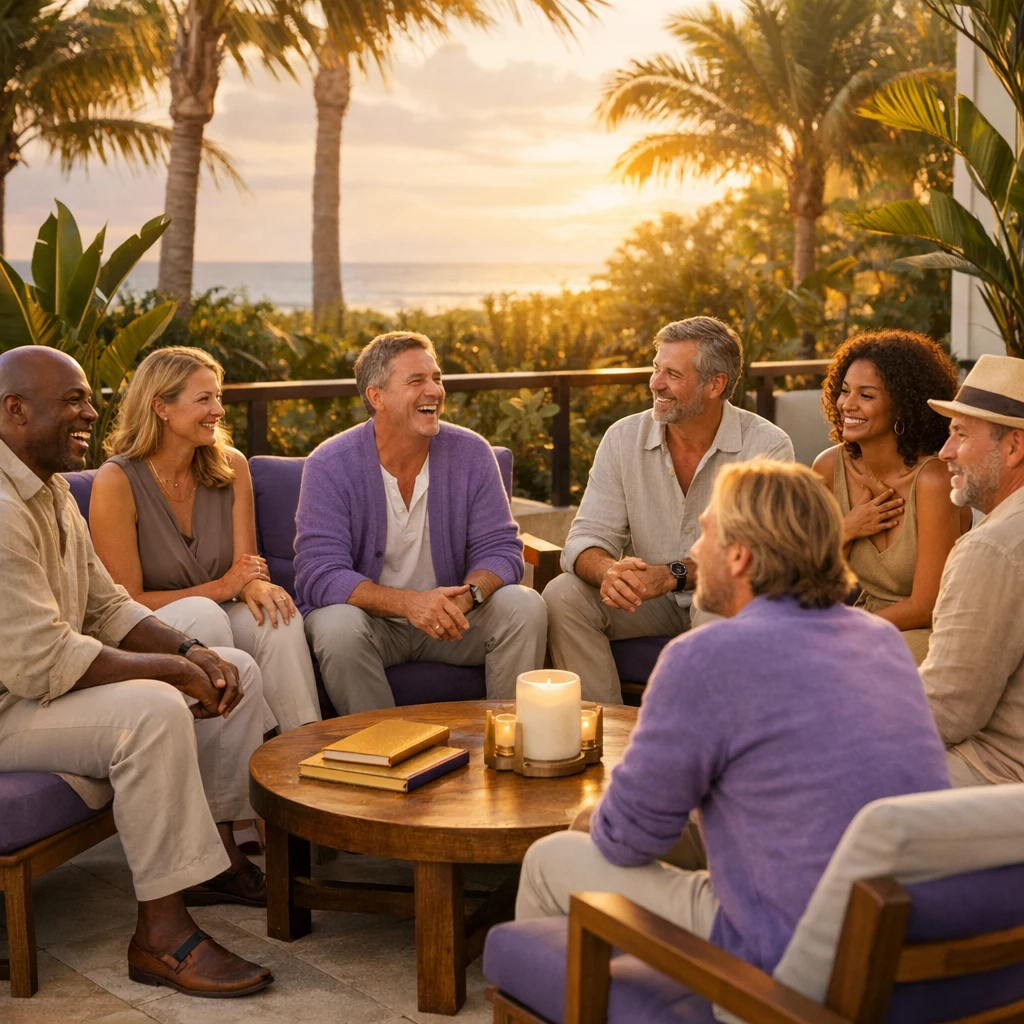
Peer support brings together people with shared lived experience of mental illness for mutual understanding, hope, and recovery. Unlike professional therapy, peer support is led by and for people with mental health conditions.
Peer support participants show better recovery outcomes (SAMHSA, 2024)
Fewer psychiatric hospital admissions with peer support (NIMH, 2023)
Report feeling less alone after joining support groups (NAMI)
By NAMI, DBSA, and other peer support organizations
Why Peer Support Works
- Shared understanding: Only someone who has experienced depression, anxiety, or psychosis truly understands what it feels like
- Reduced shame: Hearing others share similar struggles normalizes your experience and reduces self-blame
- Hope through example: Seeing others in recovery demonstrates that improvement is possible
- Practical strategies: Learn coping skills from people who have actually used them, not just read about them
- Reciprocal benefit: Helping others reinforces your own recovery and builds self-esteem
- Community belonging: Creates connections and friendships that combat isolation
- Empowerment: Peer support emphasizes strengths and personal agency, not just symptoms and deficits
Important: Peer support complements professional treatment—it doesn't replace it. The combination of professional care plus peer support typically produces the best outcomes.
National Support Group Organizations
NAMI Connection
Free peer-led support group for adults living with mental illness
Who Can Attend
Adults age 18+ with any mental health condition including depression, anxiety, bipolar disorder, schizophrenia, OCD, PTSD, eating disorders, personality disorders, and others. No formal diagnosis required—if you're experiencing mental health challenges, you're welcome.
What to Expect
- 90-minute meetings, typically weekly or monthly
- Groups led by trained facilitators with lived experience
- Open discussion format—share as much or little as you're comfortable
- All participants maintain strict confidentiality
- No fees, no religious affiliation, no required curriculum
- Focus on recovery, hope, and mutual support
South Florida NAMI Connection Groups
- Delray Beach: 2nd and 4th Tuesday, 6:30-8:00pm | Contact NAMI Palm Beach (561) 688-2772
- West Palm Beach: Every Wednesday, 7:00-8:30pm | Contact NAMI Palm Beach (561) 688-2772
- Jupiter: 1st and 3rd Monday, 6:00-7:30pm | Contact NAMI Palm Beach (561) 688-2772
- Fort Lauderdale: Multiple weekly groups | Contact NAMI Broward (954) 566-1049
Find groups: www.nami.org/connection | NAMI Palm Beach: (561) 688-2772
DBSA Support Groups (Depression and Bipolar)
Peer support for people living with depression and bipolar disorder
Focus Areas
Major depressive disorder, persistent depressive disorder, bipolar I and II, cyclothymic disorder, seasonal affective disorder, postpartum depression, and treatment-resistant depression.
Group Format
- In-person and online options available
- Facilitated by peers with lived experience of mood disorders
- Share coping strategies for managing episodes
- Discuss medication experiences and side effects
- Address stigma, relationships, work challenges
- Wellness toolbox and mood tracking resources
Find groups: www.dbsalliance.org/support | National: 1-800-826-3632
ADAA Online Support Groups (Anxiety & OCD)
Anonymous online peer support community for anxiety disorders and OCD
Conditions Covered
Generalized anxiety disorder, panic disorder, social anxiety disorder, specific phobias, health anxiety, OCD, body-focused repetitive behaviors, and co-occurring depression.
Platform Features
- Moderated online discussion forums available 24/7
- Anonymous participation (username-based)
- Specific forums for different anxiety disorders
- Share experiences with treatments (therapy, medication, lifestyle)
- Professional moderators ensure supportive environment
- Connect with others worldwide
Join community: adaa.org/supportgroups
SMART Recovery (Substance Use & Co-Occurring Disorders)
Science-based mutual support for substance use and behavioral addictions
Who It Helps
People with substance use disorders (alcohol, drugs, prescription medications) and behavioral addictions (gambling, eating, internet). Particularly helpful for those with co-occurring mental health conditions, as SMART addresses both addiction and emotional/mental health.
How It's Different from AA/NA
- Non-12-step, non-spiritual approach
- Based on cognitive-behavioral therapy (CBT) and motivational interviewing
- Emphasizes self-empowerment rather than powerlessness
- Medication-assisted treatment (MAT) friendly
- Harm reduction and moderation options discussed
- 4-Point Program: Building motivation, coping with urges, managing thoughts/feelings/behaviors, living a balanced life
South Florida meetings: Multiple weekly groups in Palm Beach, Broward, and Miami-Dade counties. In-person and online options available.
Find meetings: www.smartrecovery.org/meetings
AA / NA for Co-Occurring Disorders
12-step fellowships for substance use, widely available throughout South Florida
Mental Health & 12-Step Programs
Many people with mental illness also struggle with substance use (co-occurring disorders). AA and NA welcome people taking psychiatric medications and encourage professional treatment. Look for "dual diagnosis" or "mental health friendly" meetings that specifically welcome people with co-occurring conditions.
Finding Meetings
AA (Alcoholics Anonymous): Thousands of meetings weekly in South Florida | www.aa.org | (561) 276-4581 (Palm Beach Intergroup)
NA (Narcotics Anonymous): Daily meetings throughout tri-county area | www.na.org | (954) 476-9297 (Broward NA)
Online Support Communities
Online communities provide 24/7 support, anonymity, and connection across geographic barriers:
NAMI Discussion Groups
Moderated online message boards covering specific mental health conditions, caregiving, recovery, and more. Free to join, anonymous participation. Thousands of active members sharing experiences and support.
7 Cups
Free emotional support through trained volunteer listeners available 24/7 via anonymous chat. Also offers online support group rooms, self-help guides, and therapist directory. Mobile app available. Over 380,000 active listeners worldwide.
Mental Health America Online Screening & Community
Free, anonymous mental health screening tools for depression, anxiety, bipolar, PTSD, and other conditions. Results include personalized resources and connection to peer support communities and local treatment providers.
HealthUnlocked
Large online health community with active mental health support groups. Specific communities for anxiety, depression, OCD, bipolar disorder, PTSD, and more. Moderated by health professionals and patient advocates. Over 2 million members across all health topics.
Safety reminder: Online communities are peer support, not crisis services. If you're in crisis, call 988 or text HOME to 741741. Never share personally identifying information in public forums. Be cautious about private messages from strangers.
Certified Peer Specialists
Peer support has become formalized through Certified Peer Specialist (CPS) programs. These are professionals with lived experience who receive specialized training to provide peer support services.
What Certified Peer Specialists Do
Where They Work
CPS work in mental health agencies, hospitals, crisis stabilization units, community mental health centers, residential programs, outpatient clinics, ACT teams, supported employment programs, and peer-run organizations.
Services Provided
- One-on-one peer support: Regular meetings to share recovery experiences, teach coping skills, and provide hope
- System navigation: Help understanding mental health services, insurance, benefits, housing resources
- Recovery planning: Assist in developing and working toward personal recovery goals
- Crisis support: De-escalation, safety planning, warm line support
- Advocacy: Support in communicating with treatment providers, attending appointments, asserting rights
- Group facilitation: Lead peer support groups and wellness workshops
- Community integration: Support accessing employment, education, housing, and social opportunities
Training & Certification
CPS complete 40-80 hours of training covering recovery principles, active listening, boundaries, ethics, trauma-informed care, cultural competency, and how to share personal experience therapeutically. Training emphasizes using personal story as a tool for hope while maintaining appropriate boundaries.
Florida certification: Florida Certification Board oversees peer specialist credentialing. Training programs available through community mental health centers, NAMI chapters, and peer-run organizations.
Insurance Coverage
Many insurance plans, including Medicare and Florida Medicaid, cover peer support services when provided by certified peer specialists. Check with your insurance provider or ask your mental health agency if peer support services are available.
Finding the Right Support Group
Questions to Consider
1. Condition-Specific vs. General
Condition-specific groups (DBSA for depression/bipolar, ADAA for anxiety) provide targeted strategies for particular symptoms. General groups (NAMI Connection) welcome all conditions and offer broader community. Some people attend both types.
2. Format Preferences
- In-person vs. online: In-person offers stronger connection; online offers accessibility and anonymity
- Open discussion vs. structured curriculum: Some groups use workbooks or topic guides; others are free-flowing
- Peer-led vs. professionally facilitated: Both are valuable; peer-led emphasizes shared experience, professionally-facilitated may offer more clinical guidance
3. Practical Considerations
- Location and transportation: Can you reliably get there?
- Meeting frequency: Weekly commitment vs. monthly check-in
- Time of day: Evening groups more common but may not suit your schedule
- Group size: Smaller groups (6-10) more intimate; larger groups (15-20) more diverse perspectives
4. Philosophy and Approach
- 12-step programs (AA/NA): Spiritual component, emphasis on powerlessness and higher power, abstinence-focused
- Non-12-step (SMART Recovery): Science-based, self-empowerment, harm reduction options
- Recovery-focused (NAMI, DBSA): Emphasize hope, personal goals, wellness beyond symptom reduction
- Symptom management: Focus on coping skills and crisis prevention
Important advice: Try at least 3-4 meetings before deciding if a group is right for you. First meetings always feel awkward. The right group should leave you feeling less alone, more hopeful, and psychologically safe to share. If a group doesn't feel right after several meetings, try a different one—there are many options!
Frequently Asked Questions
What is peer support and how does it help?
Peer support brings together people with shared lived experience of mental illness for mutual support, hope, and recovery. Unlike professional therapy, peer support is led by and for people with mental health conditions. Research from SAMHSA shows peer support improves: hope and empowerment, reduced feelings of isolation, better coping skills, increased engagement with treatment, reduced hospitalizations and emergency room visits, and improved quality of life. Peer support works through shared understanding—only someone who has experienced depression, anxiety, or psychosis truly understands what it feels like. This reduces shame, normalizes struggles, and provides practical strategies from people who have been there.
What is NAMI Connection and who can attend?
NAMI Connection is a free, peer-led support group for adults living with mental illness. Groups are led by trained facilitators who themselves have lived experience with mental health conditions. Meetings provide a safe space to share experiences, coping strategies, and mutual support. Open to anyone age 18+ with mental illness including depression, anxiety, bipolar disorder, schizophrenia, OCD, PTSD, and other conditions. NAMI Connection groups meet weekly or monthly throughout Palm Beach and Broward counties. All participants maintain confidentiality. No formal diagnosis required—if you're experiencing mental health challenges, you're welcome.
How do I find the right support group for me?
Finding the right fit may take trying different groups. Consider: (1) Condition-specific vs. general groups - DBSA focuses on depression/bipolar, ADAA on anxiety, while NAMI Connection welcomes all conditions. (2) Format - In-person vs. online, structured curriculum vs. open discussion, peer-led vs. professionally facilitated. (3) Group size and dynamics - Some prefer smaller intimate groups, others like larger community feel. (4) Meeting frequency and location - Choose sustainable commitment given your schedule. (5) Philosophy - 12-step programs (AA/NA) vs. non-12-step (SMART Recovery), recovery-focused vs. symptom management. Try 3-4 meetings before deciding if a group is right for you—first meetings can feel awkward. The right group should feel safe, non-judgmental, and leave you feeling less alone.
Can I attend support groups while in treatment?
Yes—support groups complement professional treatment, they don't replace it. The combination of professional care (medication management, therapy) plus peer support typically produces the best outcomes. Support groups provide ongoing community and practical daily coping strategies, while psychiatry and therapy address clinical symptoms and deeper psychological work. Many providers, including RECO Integrated Psychiatry, actively encourage support group participation as part of comprehensive recovery. Some groups even meet at mental health centers. Be sure to continue prescribed medications and therapy appointments while attending support groups.
Are online support groups as effective as in-person?
Research shows online support groups can be highly effective, with some unique advantages. Benefits of online groups: Accessibility for those with mobility issues, social anxiety, or transportation barriers; Anonymity which may increase openness about sensitive topics; Flexible timing with asynchronous forums available 24/7; Geographic diversity bringing broader perspectives; and Lower barrier to entry for those intimidated by in-person meetings. Benefits of in-person groups: Stronger sense of connection and community; Nonverbal communication and physical presence; Social skills practice; Local resources and friendships; and Less screen time. Many people use both—online for daily support, in-person monthly for deeper connection. Choose what works for your needs and comfort level.
What are Certified Peer Specialists?
Certified Peer Specialists (CPS) are individuals with lived experience of mental illness who receive specialized training to provide peer support services professionally. Unlike volunteer peer support groups, CPS work in mental health agencies, hospitals, crisis centers, and community programs as paid staff. CPS training (40-80 hours) covers: recovery principles, active listening, boundaries, ethics, trauma-informed care, and how to share personal experience therapeutically. CPS help by: offering hope based on their own recovery, teaching coping skills from personal experience, helping navigate mental health systems, reducing stigma, and supporting treatment engagement. Many insurance plans and Medicaid cover peer support services. Florida certifies peer specialists through the Florida Certification Board.