
Spravato treatment for Delray Beach — REMS-certified, insurance-covered TRD care.
A specialist outpatient program for clients in Delray Beach. PHP, IOP, in-house psychiatry, sober-living network, family programming. Same admissions team, 24/7.
Start the conversation Or call directly — (561) 421-4107Local options exist. This is the clinical specialist.
RECO Integrated Psychiatry is a REMS-certified Spravato site in downtown Delray Beach, one block from Atlantic Avenue and zero minutes from Pineapple Grove, Lake Ida, and the Beach District. Spravato induction runs twice weekly for four weeks — a schedule that only works when the office is close enough to walk or drive to in five minutes, and when the psychiatrist managing your oral antidepressant is the same clinician overseeing your esketamine dosing. Prior authorization and REMS enrollment are handled in-house.
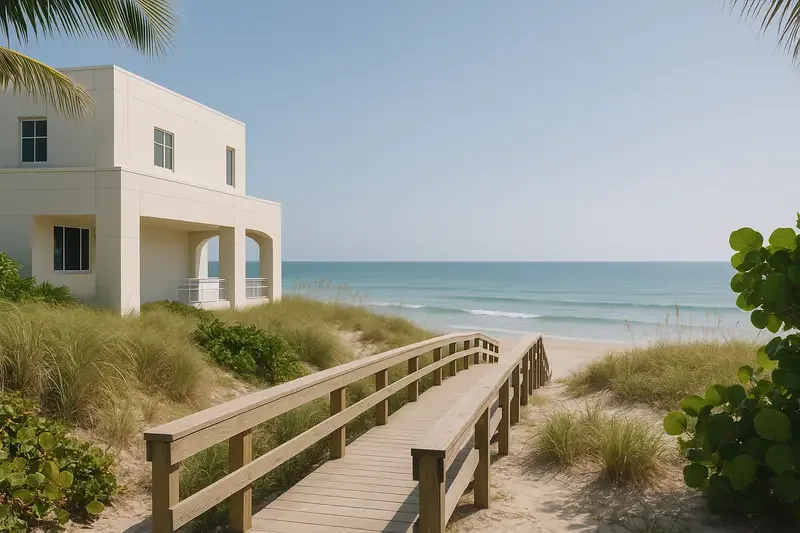
The RECO Integrated Psychiatry office sits a short walk from Atlantic Avenue, in the same downtown corridor where Delray Beach residents already run errands, walk the dog, and reach the ocean in five minutes. For adults living with treatment-resistant depression, that geography matters — Spravato induction requires twice-weekly visits for a month, and the protocol collapses when the drive itself becomes a reason to skip. Care delivered close to Pineapple Grove, Lake Ida, Tropic Isle, the Beach District, and Osceola Park — the neighborhoods you already move through — is what makes an eight-session induction schedule realistic.
Spravato and the REMS protocol — what treatment actually looks like
Spravato (esketamine) is an intranasal spray, self-administered by the patient under nursing supervision inside the office. The medication is dispensed only at REMS-certified sites; RECO Integrated Psychiatry is registered under the Spravato REMS program, which is what allows the drug to be administered in an outpatient setting rather than a hospital. First-session dosing for treatment-resistant major depressive disorder is 56 mg, delivered as two intranasal devices five minutes apart. Subsequent sessions are 84 mg, with downward adjustment only for tolerability.
Every session includes two hours of post-dose monitoring on-site. Blood pressure is checked at baseline and again at forty minutes — a transient systolic rise of 20 to 40 mmHg is expected and rarely clinically significant, but it is the reason the monitoring window is non-negotiable. Dissociative symptoms are assessed with the CADSS (Clinician-Administered Dissociative States Scale), and sedation is tracked with the Modified Observer’s Assessment of Alertness and Sedation. Patients cannot drive for the remainder of the day; a ride home is confirmed before the first dose, not after it.
The induction and maintenance schedule
The FDA-approved induction schedule for treatment-resistant depression is twice weekly for four weeks — eight sessions — followed by weekly dosing for four weeks, then every one to two weeks for maintenance based on PHQ-9 response and clinical judgment. The parallel indication, major depressive disorder with acute suicidal ideation, uses twice-weekly dosing for four weeks with a separate maintenance decision made at the end of that acute phase. Skipping induction visits materially degrades response; the twice-weekly cadence is the treatment, not a scheduling preference.
Initial mood effect is often reported within the first week — sometimes within hours of the first dose — but that early lift is not the endpoint. Sustained remission, when it occurs, tends to consolidate across the full eight-session induction. Discontinuation, when clinically appropriate, is done as a taper of dosing frequency rather than an abrupt stop, and PHQ-9 and C-SSRS scores are tracked at every visit to inform the decision.
Spravato with an oral antidepressant, not instead of one
Spravato’s FDA approval is specifically for esketamine in conjunction with an oral antidepressant. Patients arriving on a partial-response SSRI or SNRI — sertraline, escitalopram, venlafaxine, duloxetine — typically continue that medication throughout Spravato treatment. Discontinuing the oral agent to “let Spravato work alone” is off-label and unsupported by the registration trials.
Patients who have failed multiple adequate antidepressant trials sometimes start or switch an oral agent at the same time as beginning Spravato — a new SNRI, an augmentation agent such as aripiprazole, lithium, or quetiapine, or a switch to a mechanistically distinct compound. RECO Integrated Psychiatry’s psychiatrists manage the concurrent oral regimen as part of the same treatment plan, so medication decisions and esketamine dosing are not being made by two clinicians who have never spoken.
Spravato versus IV ketamine and how we choose
Spravato and IV ketamine share a mechanism — NMDA receptor antagonism with downstream effects on glutamate signaling and BDNF — but they diverge on nearly every other axis. Spravato is FDA-approved for TRD and for MDD with acute suicidal ideation and is covered by commercial insurance with a prior authorization; IV ketamine is prescribed off-label and is almost universally cash-pay. Spravato dosing is fixed at 56 mg or 84 mg; IV ketamine allows weight-based titration, typically around 0.5 mg/kg over 40 minutes, with adjustment based on tolerability and response.
Time in the office is comparable — a Spravato visit runs roughly two hours end-to-end including monitoring, and an IV ketamine visit runs similarly for a 40-minute infusion plus recovery. The decision usually turns on insurance coverage, prior response to either compound, and whether the fixed-dose or titratable model fits the clinical picture. Both options are laid out at the initial psychiatric consultation rather than treated as competing services.
What to expect on your first visit
The first appointment is a full psychiatric intake rather than a dosing session. The psychiatrist reviews prior medication trials with doses and durations, current diagnoses, medical comorbidities, and standardized scales including the PHQ-9 for depression, the GAD-7 for anxiety, and the C-SSRS for suicide risk. Documented treatment resistance — failure of at least two adequate antidepressant trials at therapeutic dose and duration — is required for both insurance authorization and clinical appropriateness.
If Spravato is indicated, REMS enrollment paperwork is completed at the intake and prior authorization is submitted to the insurance carrier the same day. The first dosing session is scheduled once approval clears — usually one to two weeks out. Patients arrange transportation home in advance, take their usual morning medications unless instructed otherwise, and are asked not to eat for two hours before dosing to reduce nausea. Adjunctive therapy — CBT, ACT, or motivational interviewing — is coordinated in parallel where clinically indicated.
Insurance and access from Delray Beach
Spravato is covered under most commercial plans for documented treatment-resistant depression, including Florida Blue, Aetna, Cigna, UnitedHealthcare, Humana, and BCBS. Prior authorization is required in every case and is submitted by the office; typical turnaround is three to ten business days depending on the carrier. Out-of-pocket cost after authorization is generally limited to plan copay or coinsurance, and coverage carries through induction and maintenance phases without a separate re-authorization for each session.
The office is zero miles from downtown Delray Beach — a walk, a short bike ride, or a five-minute drive from Pineapple Grove, Lake Ida, Tropic Isle, the Beach District, and Osceola Park. Because Spravato patients cannot drive after a session, proximity is a clinical variable rather than a convenience one, and it is the single biggest predictor of whether an eight-session induction actually gets completed on schedule.
Serving residents of: Pineapple Grove, Lake Ida, Tropic Isle, Beach District, Osceola Park.
If it's any of these, we can help.
From Delray Beach callers, most asked.
Is Spravato covered by insurance for Delray Beach patients?
How long does a full course of Spravato treatment take?
What happens at the first Spravato appointment?
How is Spravato different from IV ketamine?
How do I get to RECO Integrated Psychiatry from Delray Beach neighborhoods?
Can a family member be involved in Spravato treatment?
Other delray beach-area communities we serve.


Confidential. No commitment.
Tell us a little and a real human from admissions will call you back. We verify insurance benefits within minutes and tell you honestly whether RECO Integrated Psychiatry is the right fit — including if we should refer you elsewhere.