
Spravato treatment for Lake Worth Beach — REMS-certified, insurance-covered TRD care.
A specialist outpatient program for clients in Lake Worth Beach. PHP, IOP, in-house psychiatry, sober-living network, family programming. Same admissions team, 24/7.
Start the conversation Or call directly — (561) 421-4107Local options exist. This is the clinical specialist.
RECO Integrated Psychiatry is a REMS-certified Spravato (esketamine) treatment site 22 minutes down A1A from Lake Worth Beach, delivering the full 56 mg to 84 mg induction and maintenance protocol under Board-certified psychiatry oversight. Concurrent oral antidepressant management, session-by-session PHQ-9 tracking, and in-network coverage with Florida Blue, Aetna, Cigna, UnitedHealthcare, Humana, and BCBS mean Bryant Park and College Park clients aren't juggling a dosing clinic and an outside prescriber.
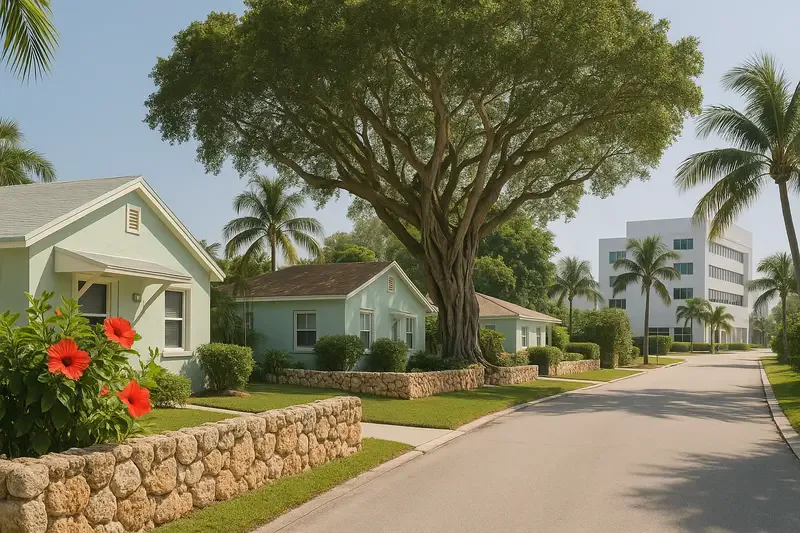
Lake Worth Beach sits fourteen miles up A1A from RECO Integrated Psychiatry’s Delray Beach campus — roughly a 22-minute drive outside of season, longer once winter traffic backs up through downtown and Bryant Park. For clients in College Park, Mango Groves, or Parrot Cove who have already tried two or more oral antidepressants without adequate response, that drive is often the shortest route to a REMS-certified Spravato (esketamine) treatment site. RECO delivers the full induction and maintenance protocol under Board-certified psychiatry oversight, with concurrent oral antidepressant management handled by the same team rather than farmed out to a separate prescriber.
Spravato and the REMS protocol — what treatment actually looks like
Spravato (esketamine) is administered as a nasal spray, self-administered by the client under direct nursing supervision. RECO Integrated Psychiatry is a certified Spravato treatment site registered under the FDA Risk Evaluation and Mitigation Strategy (REMS) program, which sets specific, non-negotiable requirements for how each session is conducted, monitored, and documented. Standard treatment-resistant depression dosing begins at 56 mg for session one and moves to 84 mg for subsequent sessions, with adjustment for tolerability and sedation.
Every session includes two hours of post-dose monitoring in a dedicated treatment room. Blood pressure is checked before dosing and again at 40 minutes post-dose, when transient elevation is clinically anticipated. Dissociative symptoms are quantified using the Clinician-Administered Dissociative States Scale (CADSS), and sedation is tracked continuously by nursing staff. Clients are discharged only after meeting predefined criteria for hemodynamic stability, alertness, and orientation.
Clients cannot drive after a Spravato session — a ride home is required and confirmed in writing before dosing. REMS registration, per-session monitoring logs, and outcome documentation are handled entirely by our office, not left to the client to reconcile with the manufacturer or the pharmacy.
The induction and maintenance schedule
For treatment-resistant major depressive disorder, induction runs twice weekly for four weeks — eight sessions total — followed by weekly dosing for four weeks, then every one to two weeks during maintenance based on measured response. Response is tracked through session-by-session PHQ-9 scoring, GAD-7 where anxiety is comorbid, and structured clinician assessment. Maintenance interval decisions come from that data rather than a fixed calendar.
The separate FDA indication for major depressive disorder with acute suicidal ideation runs twice weekly for four weeks, with a distinct maintenance decision that depends on concurrent care planning, Columbia Suicide Severity Rating Scale (C-SSRS) trajectory, and stabilization of the underlying depression. Most clients report an initial mood shift within the first week of induction; sustained response consolidates across the full eight-session block.
Discontinuation, when appropriate, is done on a taper rather than abruptly, and coordinated with the oral antidepressant regimen. Clients who lose response during a maintenance taper are re-inducted rather than left to relapse.
Spravato with an oral antidepressant, not instead of one
The FDA approval for esketamine is specifically as an adjunct to an oral antidepressant — not as monotherapy. Clients arriving on a partial-response SSRI or SNRI such as sertraline, escitalopram, venlafaxine, or duloxetine typically continue that agent through Spravato induction, with dose and adherence reviewed at every visit. When an oral antidepressant has clearly failed at adequate dose and duration, a switch or augmentation strategy — for example, adding aripiprazole, lithium, or quetiapine — is planned alongside the start of Spravato.
RECO’s psychiatry team manages the concurrent regimen directly, so clients aren’t triangulating between a Spravato clinic and an outside prescriber. Medication reconciliation, side-effect review, and lab monitoring — lithium levels, metabolic screening for atypicals, thyroid function where indicated — run as part of the same treatment plan. Ongoing psychotherapy through CBT, ACT, or trauma-focused modalities such as EMDR is coordinated in parallel when it fits the case formulation.
Spravato versus IV ketamine and how we choose
Spravato and IV ketamine are pharmacologically related but not interchangeable in practice. Spravato (esketamine) is FDA-approved for treatment-resistant depression and for MDD with acute suicidal ideation, and is covered under most commercial plans with documented prior antidepressant failures. IV ketamine remains off-label for depression and is typically cash-pay. Spravato dosing is fixed at 56 mg or 84 mg intranasally; IV ketamine allows weight-based titration, commonly 0.5 mg/kg over 40 minutes, with response-based adjustment across a course.
Chair time is similar between the two — two hours in office for Spravato monitoring, roughly two hours end-to-end for a standard IV ketamine infusion. The choice usually comes down to insurance coverage, prior treatment history, dosing flexibility, and schedule. At the psychiatric consult, RECO reviews both options against the client’s documented antidepressant trials, PHQ-9 and C-SSRS scores, and specific Florida Blue, Aetna, Cigna, UnitedHealthcare, Humana, or BCBS benefits before recommending a path.
What to expect on your first visit from Lake Worth Beach
The first visit is a full psychiatric evaluation, not a Spravato dose. A Board-certified psychiatrist reviews prior antidepressant trials by drug, dose, and duration; screens for contraindications including uncontrolled hypertension, aneurysmal vascular disease, recent cardiovascular events, and active substance use disorder where relevant; and administers PHQ-9, GAD-7, and the C-SSRS where clinically indicated.
Prior records — pharmacy history, previous psychiatric notes, imaging if relevant — materially shorten the evaluation and can be sent ahead of the appointment. If Spravato is appropriate, our admissions team files the REMS enrollment and initiates prior authorization with the client’s carrier the same day. Most Lake Worth Beach clients are scheduled for their first dosing session within one to two weeks of the consult, subject to insurance turnaround and any additional clinical documentation the payer requires.
Insurance and admissions from Lake Worth Beach
RECO Integrated Psychiatry is in-network with Florida Blue, Aetna, Cigna, UnitedHealthcare, Humana, and BCBS for outpatient psychiatry and Spravato treatment. Coverage for esketamine is standard under most commercial plans when TRD criteria are documented — typically two or more failed antidepressant trials at adequate dose and duration, with response tracked through validated instruments such as the PHQ-9. Prior authorization is submitted by our admissions team rather than left to the client to chase down.
Practical logistics for Lake Worth Beach clients are usually straightforward: a 22-minute drive down I-95 or A1A to the Delray Beach office, two-hour sessions scheduled around work or caregiving, and a coordinated ride home. The Spravato program integrates with ongoing medication management and, when clinically indicated, adjunctive rTMS delivered at 120% motor threshold over standard 3000-pulse sessions, or telepsychiatry follow-up between dosing days for clients whose schedules cannot accommodate additional in-office visits.
Serving residents of: Bryant Park, College Park, Mango Groves, Parrot Cove, downtown Lake Worth.
If it's any of these, we can help.
From Lake Worth Beach callers, most asked.
Is Spravato covered by insurance for Lake Worth Beach clients?
How long does the full Spravato treatment course take?
What happens at the first visit before I get dosed?
How is Spravato different from IV ketamine?
How do I get to RECO Integrated Psychiatry from Lake Worth Beach?
Can my family be involved, and how is my privacy handled?
Other lake worth beach-area communities we serve.

Confidential. No commitment.
Tell us a little and a real human from admissions will call you back. We verify insurance benefits within minutes and tell you honestly whether RECO Integrated Psychiatry is the right fit — including if we should refer you elsewhere.