Best 7 Ways to Use Mindfulness in Anxiety Recovery 2026
Why anxious minds resist silence and what mindfulness changes first Silence can feel loud when your nervous system is already on alert. If you are reading this because your mind will not settle, that reaction makes sense. Anxiety often treats stillness like danger. Mindfulness changes that pattern by teaching your brain to notice rather than […]


-
Why anxious minds resist silence and what mindfulness changes first
Silence can feel loud when your nervous system is already on alert. If you are reading this because your mind will not settle, that reaction makes sense. Anxiety often treats stillness like danger. Mindfulness changes that pattern by teaching your brain to notice rather than instantly react. For many people, that is the hardest part and also the most useful.
The alarm system behind racing thoughts and why stillness can feel unsafe
Anxiety is not weakness. It is an overactive alarm system. Your brain scans for threat even when the room is quiet and safe. That is why a still moment can feel uncomfortable, especially if you live with trauma, panic, or generalized anxiety disorder and panic disorder support. In South Florida mental health care, this comes up often with people juggling work, family, and constant noise.
One client in Delray Beach described it well: the moment traffic stopped at a red light, their thoughts got louder. They were not relaxed by quiet. They felt trapped in it. That is common in anxiety disorder management, and it is also common in co-occurring disorders. The brain has learned to brace before it can rest.
How present-moment awareness lowers panic attack intensity without forcing calm
Present-moment awareness does not force calm. It gives you a clearer view of what is happening right now. That alone can lower panic attack intensity. A 2023 analysis in JAMA Network Open linked mindfulness-based practices with meaningful reductions in anxiety symptoms across several settings. The mechanism is simple: you stop adding fear to fear.
This is where mindfulness for anxiety recovery and present-moment awareness become practical. You notice the tight chest, the heat in your face, the thought that says, “Something is wrong.” Then you name it. That small step interrupts spiraling. It supports coping with racing thoughts without demanding perfection. For many people, that is the first real win.
Why trauma informed mindfulness matters when anxiety and substance use overlap
Trauma-informed mindfulness matters because not every anxious body feels safe closing its eyes. If anxiety and substance use overlap, the body may expect shock, criticism, or loss of control. That is why trauma-informed mindfulness for co-occurring anxiety and substance use works better than a one-size-fits-all meditation script. SAMHSA treatment guidance has long emphasized care that respects trauma, choice, and pacing.
Here is the part most people miss: mindfulness should feel adjustable. You can keep your eyes open. You can sit near a door. You can start with ten seconds. In dual diagnosis treatment, that flexibility matters. It helps people build trust with their own attention again, which supports long-term recovery instead of fight-or-flight habits.
-
The breath awareness reset that steadies panic before it takes over
Breath work sounds simple, and that is exactly why people dismiss it. But simple is not shallow. When panic rises, breathing is one of the fastest ways to send a steadier signal to the body. It does not erase fear. It makes fear more manageable. That difference matters on hard days.
What to do when the chest tightens and thoughts start spiraling
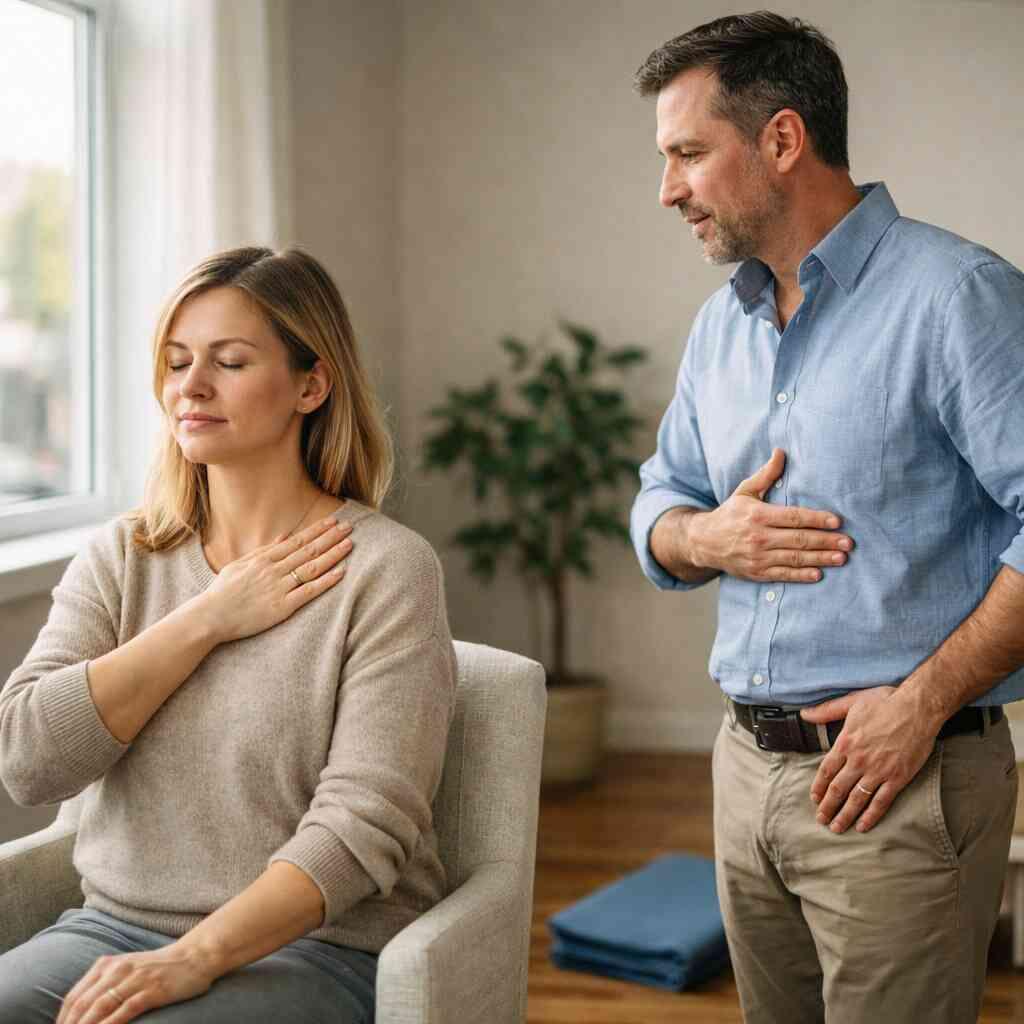
Start by noticing the moment your chest tightens. Do not argue with it. Do not chase the thought cloud. Instead, lengthen your exhale slightly and count your breaths. Even three slow rounds can interrupt the panic loop. If needed, place one hand on your chest and one on your belly.
A useful script is this: “I am noticing tightness. I am breathing. This feeling will peak and pass.” That line helps because panic often grows when you treat it like an emergency. For some people, pairing breath with grounding techniques for anxiety and panic attack coping brings the body back faster. It also fits well with outpatient psychiatry, where skills and medication management can work together.
Breath awareness exercises that support nervous system regulation in real life
Not every breathing exercise fits every person. Some people like box breathing. Others do better with longer exhales. In breath awareness exercises for nervous system regulation, the goal is not perfect form. The goal is a repeatable reset.
Try these:
- Inhale for four, exhale for six.
- Breathe in through the nose, out through pursed lips.
- Count breaths from one to ten, then start again.
- Match breathing to walking pace on a hallway or sidewalk.
These are stress reduction strategies, not magic tricks. They support nervous system regulation by shifting attention and slowing the body’s alarm response. They also work well as anxiety coping skills between therapy visits.
How to pair breathing with grounding techniques for anxiety on busy Delray Beach days
Breathing alone may not hold if your day is packed. On Atlantic Avenue, in traffic near I-95, or after a long shift, your attention can scatter fast. That is when breathing plus grounding works better than either skill alone. A cold water bottle, the texture of your keys, or naming five things you see can anchor you while you breathe.
If you want a practical rhythm, use this:
- Exhale longer than you inhale.
- Name three objects.
- Press your feet into the floor.
- Recheck your breath.
That combination turns mindfulness-based anxiety coping skills in outpatient care into something usable during real life. It is especially helpful for people who need generalized anxiety support without stepping away from work or family.
-
Body scan meditation when your stress lives in the shoulders jaw and gut
Many people think anxiety lives in thoughts first. Often, the body knows before the mind does. Tight shoulders, clenched jaw, shallow breathing, and a hard stomach can all be early warning signs. Body scan meditation helps you catch those signals sooner. That can prevent a full spiral.
How to notice physical anxiety signals before they become full symptoms
A body scan asks you to move attention slowly from head to toe. You are not judging sensations. You are collecting data. That matters because anxiety often hides in muscle tension before it becomes obvious fear. If you catch it early, you can respond earlier.
The most common signals we hear about are neck pain, jaw tension, stomach fluttering, and a buzzing chest. These are not random. They are part of the body’s stress response. In body scan meditation for stress reduction and emotional regulation, the point is to build awareness before discomfort becomes crisis. That supports emotional regulation skills in a very direct way.
Using body scan meditation to build emotional regulation skills and body trust
Body trust grows slowly. If your body has felt like a place of panic, it may take time to sit with sensation without fear. Start with thirty seconds. Notice your forehead. Then your shoulders. Then your hands. Ask, “What do I feel here?” not “What is wrong here?”
One person in a Boca Raton outpatient program said they learned their anxiety started in their tongue. They had no idea how hard they were pressing it against their teeth. Once they noticed that pattern, they could relax sooner. That is the quiet power of somatic awareness. It gives you a map before distress takes over.
Why somatic awareness works best alongside CBT and psychotherapy for anxiety
Body awareness helps most when it sits beside therapy. Evidence-based anxiety treatment with psychotherapy support often uses CBT, or cognitive behavioral therapy, to challenge fearful thought loops. DBT can add distress tolerance and emotion skills. Together, these approaches teach you how thoughts, feelings, and body signals connect.
Here is what almost no online guide mentions: your body can become a feedback tool in therapy. If you notice tension rise during a specific topic, that is useful. It tells your clinician where to slow down. It also supports trauma therapy that South Florida patients often need when anxiety and older stress responses overlap. That kind of integrated work is a strength of outpatient psychiatry.
-
Grounding techniques for anxiety that actually hold up after the panic fades
The worst part of panic is not always the peak. Often, it is the afterward. You feel shaky, embarrassed, and on edge. That is when grounding matters most. It helps you return to the present instead of replaying the fear. And yes, it works better when practiced before the crisis.
Five sense grounding and object focus for grounding after panic symptoms
Five-sense grounding is simple and reliable. Name five things you see, four you feel, three you hear, two you smell, and one you taste. If that feels too long, start with one object and describe it in detail. Color. Weight. Texture. Temperature. That is object focus, and it works because attention cannot split forever.
After panic symptoms, your brain often wants proof that danger is gone. Grounding gives it evidence. This is one reason grounding techniques for anxiety and panic attack coping remain useful in both therapy and daily life. They help with panic attack coping strategies without requiring a private room or special tools.
Mindfulness journaling as a way to map triggers racing thoughts and coping patterns
Mindfulness journaling turns vague distress into a pattern you can read. Write down what happened, what you felt in your body, what thought showed up, and what helped. Keep it short. Two minutes is enough. Over time, this builds a map of triggers, racing thoughts, and coping patterns. This practice supports mindfulness journaling and self-compassion practices for recovery. It can also help with relapse prevention planning if alcohol or drugs have become part of your coping cycle. People often discover they are not “randomly anxious.” They are reacting to sleep loss, conflict, hunger, or shame. That clarity changes what you do next. ### How self compassion practices prevent shame from turning one bad moment into a relapse 
Shame says, “I failed, so why try?” Self-compassion says, “That was a hard moment, and I can still respond well.” That difference can prevent one bad evening from becoming a bigger setback. It also supports long-term recovery, because shame tends to push people away from help.
A short self-compassion practice might sound like this: “This is hard. Other people struggle too. I can take one steady action.” That is not indulgent. It is protective. In recovery-oriented mindfulness, kindness is not a bonus feature. It is part of relapse prevention.
-
Mindfulness in dual diagnosis treatment when anxiety and substance use feed each other
Anxiety and substance use often reinforce each other. You feel anxious, you use something to blunt it, and then the rebound makes the anxiety worse. That cycle can feel fast and private. It is also treatable. A coordinated plan makes a real difference.
Why co occurring anxiety and substance use need one coordinated plan
NIDA’s co-occurring disorder model recognizes that mental health and substance use should not be treated in separate silos. That matters when someone is searching for Delray Beach rehab, Florida addiction treatment, or South Florida detox and also needs anxiety care. The symptoms feed each other. The plan should too.
This is why dual diagnosis treatment matters. It can include depression and addiction care, anxiety treatment, bipolar disorder therapy, and substance use support in one place. For people needing what dual diagnosis care is for anxiety and substance use, that integrated view keeps treatment from becoming fragmented or confusing.
How mindfulness based relapse prevention supports sobriety and relapse prevention planning
Mindfulness-based relapse prevention teaches you to notice craving, stress, and thought loops before action follows. It does not ask you to fight urges with willpower alone. It asks you to observe them, breathe, and choose a different response. That is why mindfulness-based relapse prevention for long-term recovery fits so well with group therapy activities and aftercare planning.
In real life, this can look like pausing before a phone call, eating before a meeting, or leaving a triggering space sooner. Small choices matter. They protect sober living resources and help keep recovery steady. If you are also building on 12-step alternatives like SMART Recovery, mindfulness can support both paths.
Where medication management and outpatient psychiatry fit with evidence based anxiety treatment
Mindfulness is powerful, but it is not always enough. Some people need medication management for anxiety, especially when symptoms are severe or persistent. Others may benefit from FDA-approved options such as Suboxone maintenance or Vivitrol injections when substance use is also part of the picture. Those decisions belong with a licensed clinician.
At RECO Integrated Psychiatry in Delray Beach, outpatient psychiatry can coordinate with psychotherapy, CBT, DBT, and trauma-informed care. That matters for complex cases, including benzodiazepine withdrawal, opioid rehab Delray needs, fentanyl treatment, and heroin recovery. If you are comparing medication management and psychiatric medication support, the goal is not to label you. The goal is to match care to symptoms with evidence-based treatment.
-
Building a daily mindfulness routine that fits outpatient care and real life
A daily routine works best when it is small enough to repeat. Most people do not need a perfect morning ritual. They need something usable before work, after therapy, or between errands. Consistency matters more than intensity. That is especially true in outpatient care.
Short practices that work between therapy sessions telepsychiatry and work hours
If you use telepsychiatry in Florida or see a clinician in person, your mindfulness routine should fit your real schedule. Five minutes counts. One breath counts. A short pause before opening email counts. Those small moments build pattern memory in the nervous system.
For many adults, a daily mindfulness routine for generalized anxiety support looks like this:
- Two minutes of breath awareness.
- One minute of body scan.
- One minute of grounding.
- One line in a journal.
This kind of routine fits around work hours, school runs, and appointments. It also supports mindfulness for sleep and anxiety when your evenings feel too full.
How group therapy activities and family therapy reinforce recovery oriented mindfulness
Mindfulness gets stronger in relationship. In group therapy, you hear how other people handle racing thoughts, cravings, and fear. In family therapy, you practice calmer communication. Both settings help you use skills under real pressure, not just in theory. That is where recovery becomes more durable.
If family involvement is part of care, family therapy can reduce blame and improve support at home. It also helps loved ones understand dual diagnosis, relapse prevention, and emotional regulation. In some cases, family weekend or structured family sessions can change the tone of the whole home.
What to do when sleep stress or a hard week disrupts the routine
Your routine will break sometimes. That does not mean it failed. On hard weeks, shrink the plan. Do one breath practice. Walk outside for one minute. Put both feet on the floor and name what is real. That is enough to keep the habit alive.
The mistake we see most often is all-or-nothing thinking. People miss two days and decide they are behind. They are not. They are human. What matters is returning without drama. That is how long-term recovery is built, one imperfect repetition at a time.
-
Choosing the next right support when mindfulness is not enough on its own
Mindfulness can do a lot. It cannot do everything. If anxiety is disrupting work, sleep, relationships, or sobriety, you may need a higher level of care. That is not failure. It is good judgment.
When anxiety needs a higher level of care such as PHP IOP or medication support
Some people need partial hospitalization program support. Others do better in intensive outpatient. If you have repeated panic, major avoidance, or substance use that keeps returning, higher structure can help. RECO Integrated Psychiatry also supports outpatient program Delray Beach care, mental health IOP, and coordinated medication support.
If you are comparing options like inpatient rehab Palm Beach County, residential treatment facility care, or outpatient psychiatry, ask about the level of structure you actually need. A PHP versus IOP planning for anxiety recovery in South Florida conversation can clarify that quickly. Sometimes the right answer is more support now, then lighter care later.
How Delray Beach outpatient psychiatry can coordinate CBT DBT EMDR and medication management
Delray Beach has a strong recovery community, and that helps. Local care can connect evidence-based treatment with real-life planning. CBT helps with thoughts. DBT helps with distress. EMDR trauma therapy may help when trauma keeps feeding the alarm system. Medication management can reduce symptom load so you can use the skills more effectively.
For people seeking best anxiety coping skills for Delray Beach in 2026, the best plan is usually layered. That may include psychiatric care, case management, aftercare support, and sober living resources if substance use is also part of the picture. The beachside setting helps, but structure does the deeper work.
What a long term plan looks like for emotional resilience building after treatment
Long-term anxiety recovery is not a straight line. It is a set of repeatable habits, plus support when symptoms rise. A good plan may include relapse prevention, alumni support, vocational support, and ongoing psychotherapy. It may also include insurance verification, family support, or a gradual step-down from more intensive care.
If you are ready to compare options, start with the care that matches your symptoms and your life. Review your insurance, ask about the intake process, and look for licensed clinicians who use evidence-based treatment. If you want help sorting out the next move, RECO Integrated Psychiatry in Delray Beach can help you think it through with care and clarity. Start with one call, one form, or one honest conversation today.
Frequently Asked Questions
Question: How does RECO Integrated Psychiatry use mindfulness for anxiety recovery in outpatient psychiatry and telepsychiatry in Florida?
Answer: RECO Integrated Psychiatry uses mindfulness for anxiety recovery as part of evidence-based treatment that can include psychotherapy for anxiety, cognitive behavioral therapy, dialectical behavior therapy, and medication management for anxiety when appropriate. In practice, that may mean breath awareness exercises, grounding techniques for anxiety, body scan meditation, and mindfulness journaling to support nervous system regulation and stress reduction strategies. Because our team offers Delray Beach outpatient psychiatry with telepsychiatry options for Florida residents, these skills can be taught and reinforced in a way that fits real life, work schedules, and family demands. We focus on helping capable adults build coping skills that support long-term anxiety recovery without forcing a one-size-fits-all approach.
Question: Can mindfulness help if anxiety and substance use overlap in dual diagnosis treatment?
Answer: Yes. Mindfulness can be especially helpful when co-occurring anxiety and substance use feed each other, which is common in dual diagnosis treatment. At RECO Integrated Psychiatry, mindfulness-based relapse prevention may be used alongside outpatient psychiatry, relapse prevention planning, and therapy to help people notice cravings, racing thoughts, and emotional triggers before they lead to automatic reactions. This matters for people navigating depression and addiction, opioid rehab Delray needs, prescription pill addiction, benzodiazepine withdrawal, or recovery after South Florida detox. Mindfulness is not a replacement for comprehensive care, but it can be a powerful part of a coordinated plan that may also include medication-assisted treatment, Vivitrol injections, Suboxone maintenance, and support from licensed clinicians.
Question: What makes the Best 7 Ways to Use Mindfulness in Anxiety Recovery 2026 approach practical for people with panic symptoms and racing thoughts?
Answer: The strength of the Best 7 Ways to Use Mindfulness in Anxiety Recovery 2026 approach is that it focuses on skills people can actually use when symptoms show up. For panic attack coping strategies, that can include present-moment awareness, longer exhales, five-sense grounding, object focus, and body scans that help people notice early physical signs like chest tightness, jaw tension, or stomach fluttering. These tools are practical because they can be used before, during, or after anxiety spikes, and they work well for generalized anxiety support, chronic stress relief, and grounding after panic symptoms. At RECO Integrated Psychiatry, we pair these skills with evidence-based treatment such as CBT, DBT, and, when clinically appropriate, medication support so patients are not left trying to manage severe symptoms alone.
Question: How does RECO Integrated Psychiatry support mindfulness for sleep and anxiety, stress reduction strategies, and emotional regulation skills?
Answer: We support mindfulness for sleep and anxiety by helping patients build a daily mindfulness routine that is realistic and sustainable. That may include a short breathing practice before bed, a body scan meditation to release physical tension, or mindfulness journaling to reduce mental clutter. For many people, emotional regulation skills improve when they learn to notice body signals earlier and respond with self-compassion practices instead of shame. Our outpatient program Delray Beach model allows people to keep working on these skills between appointments, and our clinicians can adjust the plan if sleep disruption, panic, trauma, or co-occurring disorders are making progress harder. This is where holistic recovery can be helpful too, especially when mindfulness is integrated with psychotherapy, family therapy, and aftercare support.
Question: When should someone in Delray Beach consider more than mindfulness and look into PHP, IOP, or medication management?
Answer: Mindfulness is valuable, but it is not always enough on its own. If anxiety is interfering with sleep, work, relationships, or sobriety, it may be time to consider a higher level of care such as partial hospitalization program support, intensive outpatient, or mental health IOP. RECO Integrated Psychiatry can help people compare options and determine whether outpatient psychiatry, medication management for anxiety, psychotherapy, or a stepped-up level of support makes the most sense. This is especially important for complex situations involving dual diagnosis, bipolar disorder therapy, PTSD treatment, trauma therapy South Florida needs, or substance use concerns that may also call for coordinated treatment planning. We also help patients understand how evidence-based treatment, insurance verification, and the intake process can fit into a broader long-term recovery plan.