Guide to Suboxone Maintenance for Opioid Recovery in 2026
When Suboxone starts making recovery feel possible instead of impossible If you are reading this while worried about withdrawal, cravings, or a return to fentanyl use, take a breath. This part is hard, and the fear is real. For many people, Suboxone maintenance changes the picture from frantic survival to something steadier. That steadiness can […]
When Suboxone starts making recovery feel possible instead of impossible
If you are reading this while worried about withdrawal, cravings, or a return to fentanyl use, take a breath. This part is hard, and the fear is real. For many people, Suboxone maintenance changes the picture from frantic survival to something steadier. That steadiness can feel strange at first. It can also be the difference between another detox cycle and real progress.
Why cravings, fear of withdrawal, and fentanyl exposure change the way opioid recovery has to be planned
Cravings are not a character flaw. They are a brain-and-body response that can stay intense after last use. Fentanyl has made that worse for many families seeking fentanyl recovery support near Delray Beach in South Florida. The part most people miss is this: opioid recovery planning now has to account for stronger potency, faster relapse risk, and deeper fear of feeling sick.
A man we met in Delray Beach described it plainly: every time he tried to stop, he thought more about withdrawal than recovery. That is common. A good plan lowers that panic first. Then it creates room for counseling, structure, and daily life.
What Suboxone maintenance actually does in the brain and why it is different from short detox alone
Suboxone combines buprenorphine and naloxone. Buprenorphine is a partial opioid agonist, which means it attaches to opioid receptors without producing the same high as full opioids. That helps with withdrawal symptom control and craving management. Short detox alone removes the drug, but it does not stabilize the brain’s reward system. Maintenance does.
This is why buprenorphine maintenance therapy for opioid use disorder treatment is often discussed alongside therapy, not instead of it. The goal is not just to stop use for a few days. The goal is to help you function, think clearly, and keep building recovery skills. In practice, that means fewer crises and more usable days.
Which patients tend to benefit most from buprenorphine maintenance therapy in outpatient care
People with repeated relapse, fentanyl exposure, or severe withdrawal fears often benefit most. So do patients who need to keep working, caring for family, or attending school. Many also have co-occurring disorders like anxiety, depression, or PTSD. That is where dual diagnosis treatment becomes essential.
At RECO Integrated Psychiatry, outpatient opioid treatment can be paired with psychiatric care when that mix is clinically appropriate. The best candidates are usually people who can participate in regular monitoring and accept support. They do not need perfection. They do need consistency. That matters more than people realize.
Why Delray Beach families often ask about Suboxone before they ever ask about rehab programs
Families usually ask about Suboxone because they are tired of watching hope collapse after each detox. They have seen the cycle: panic, withdrawal, short improvement, then relapse. In South Florida, that conversation often starts before someone ever tours a program in Palm Beach County.
A mother near Atlantic Avenue once told us she did not care what the label was. She wanted her son safe enough to sleep and eat again. That is a reasonable place to begin. For many, Suboxone maintenance for opioid recovery in 2026 is the first stable answer that makes the next decision possible.
The stability phase that keeps people out of the detox and relapse loop
Stability is not laziness. It is clinical work. In opioid use disorder treatment, the stable phase gives your brain time to settle while your habits, sleep, and routines start changing. That is why medication-assisted treatment for opioid use disorder matters so much. It holds the line while recovery skills start to take root.
How medication-assisted treatment fits into opioid use disorder treatment without replacing real recovery work
Medication-assisted treatment, or MAT, uses medication plus counseling and follow-up care. It does not replace recovery. It makes recovery usable. The medication reduces physiologic distress, while therapy addresses triggers, grief, shame, trauma, and daily stress.
SAMHSA guidance supports this model because it treats opioid use disorder as a medical condition with behavioral and social components. A person can take Suboxone and still need cognitive behavioral therapy, peer support, and family work. That is not a contradiction. It is the point.
What a careful start looks like during the intake process and early clinical monitoring
A careful start begins with a real history. That includes last use, substances used, withdrawal symptoms, mental health symptoms, and current safety risks. Early clinical monitoring helps avoid precipitated withdrawal, which can happen if buprenorphine starts too soon after full opioids. That is why timing matters.
At RECO, the intake process often includes symptom review, medication history, and planning for the right level of support. If someone also needs detox, our medical detox process may be part of the larger plan. The beginning should feel deliberate, not rushed. Rushing usually costs more later.
How dose adjustments are guided by withdrawal symptom control, craving management, and function
Dose changes should follow symptoms and function, not fear alone. A dose that works on paper may still leave you restless, sweaty, or unable to focus. On the other hand, too much medication can make someone feel flat. The point is balance.
Clinicians look at three questions:
- Are withdrawal symptoms settling?
- Are cravings dropping?
- Can you work, sleep, and think clearly?
That simple framework helps guide medication management for long-term recovery and tapering strategy. It also keeps the conversation practical. Recovery should feel livable.
When urine drug screening and medication adherence support safety instead of feeling punitive
Urine drug screening can feel uncomfortable. That reaction makes sense. Still, in a well-run outpatient setting, it is a safety tool, not a moral scorecard. It helps detect unexpected substances, confirm adherence, and guide clinical decisions.
The same goes for medication adherence. If someone misses doses or mixes Suboxone with other substances, the team needs to know. That allows faster support. It is better to talk early than to wait for a crisis. In addiction psychiatry, honesty is usually a clinical asset.
Why co-occurring disorders like depression, PTSD, bipolar disorder, and anxiety change the treatment plan
Opioid use rarely shows up by itself. Depression can deepen fatigue and hopelessness. PTSD can keep the nervous system on alert. Bipolar disorder can complicate impulsivity and sleep. Anxiety can drive self-medication.
That is why dual diagnosis treatment for opioid recovery and co-occurring disorders matters. A medication plan that ignores mood symptoms usually underperforms. A treatment plan that treats both conditions together is more realistic. It also lowers relapse pressure.
What a strong Suboxone plan includes beyond the prescription itself
A prescription alone is not a recovery plan. It is a tool. The stronger version adds counseling, family work, peer support, and a discharge plan that still makes sense on a hard day. That is where evidence-based care becomes personal care.
How counseling for opioid addiction, CBT, and DBT help with trigger management and relapse prevention
Counseling for opioid addiction gives structure to the chaos. CBT helps you spot the thoughts that drive use, like “I already messed up, so why stop now?” DBT adds skills for distress tolerance, emotion control, and safer choices under pressure. Together, they strengthen relapse prevention.
You can see that approach in our counseling for opioid addiction with CBT and DBT. The goal is not perfect behavior. The goal is better response time. When a trigger hits, you need a practiced move, not a vague promise.
Where trauma-informed care and EMDR trauma therapy fit for people with fentanyl recovery support needs
Many people in opioid recovery have trauma histories. Some know it clearly. Others only feel it as tension, nightmares, hypervigilance, or shutdown. Trauma-informed care starts by assuming that safety matters. It avoids surprise, shame, and force.
For some patients, EMDR can be useful once they are stable enough. It is one evidence-based form of trauma therapy. If trauma keeps feeding cravings, treating trauma may reduce relapse pressure. That is why trauma-informed care for PTSD and addiction treatment is often part of fentanyl recovery support.
Why group therapy activities, family therapy, and peer support recovery often matter as much as the medication
Isolation helps addiction grow. Connection helps recovery hold. Group sessions normalize the hard parts and give practical ideas from people facing similar problems. Family therapy can reset patterns that kept everyone stuck. Peer support adds hope that is not forced.
We often see families in Delray Beach relax when they hear clear language about roles and boundaries. It helps. Family therapy and group therapy in recovery planning can reduce confusion at home and improve follow-through. One client said the group felt like the first room where nobody flinched at the truth. That kind of room matters.
How SMART Recovery and 12-step alternatives can work alongside Suboxone maintenance
Suboxone does not conflict with recovery support groups. Some people prefer 12-step meetings. Others do better with SMART Recovery, which uses practical tools and self-management. The right choice depends on your values, comfort, and long-term fit. 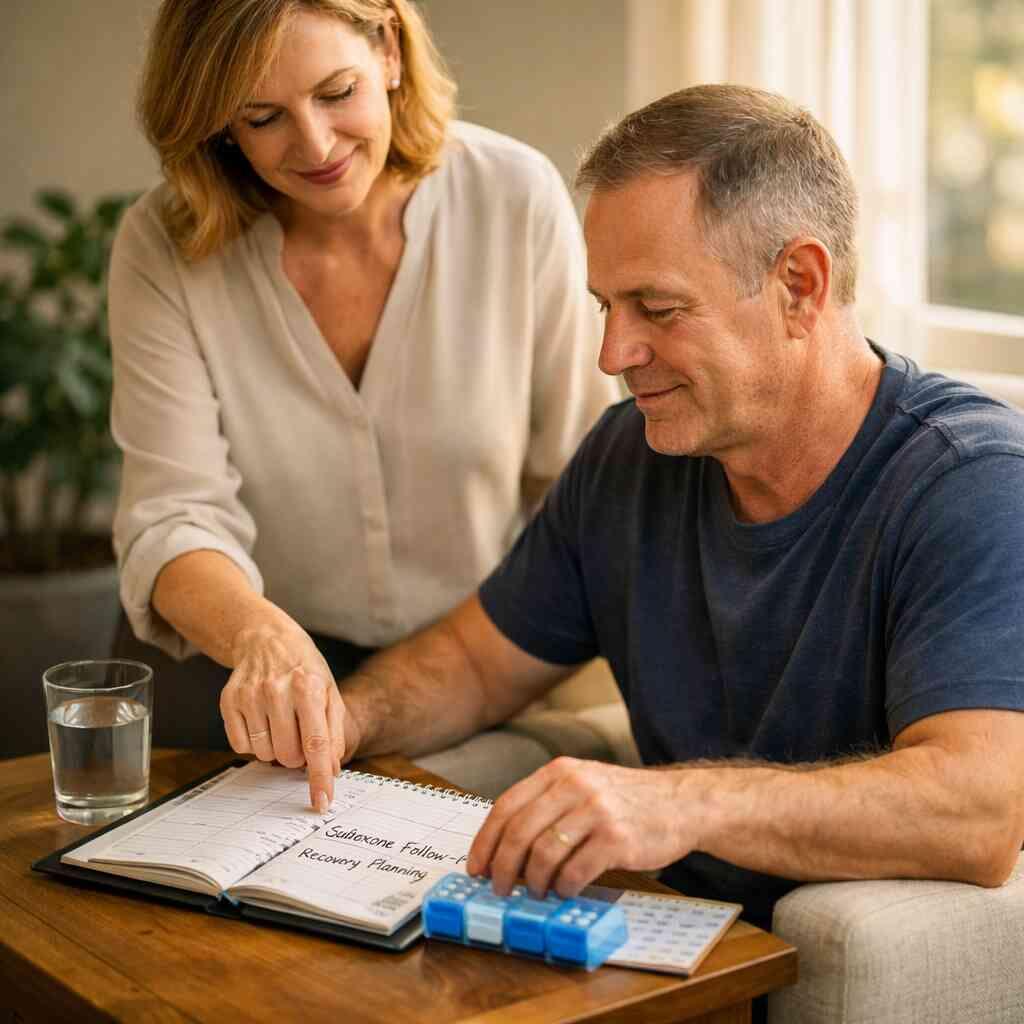
A balanced plan may include both formal therapy and peer support recovery. If shame has been loud, nonjudgmental groups can help. If structure helps, meetings can anchor the week. Peer support recovery and support groups for long-term healing can fit alongside medication without friction.
What aftercare planning, sober living resources, and recovery coaching should cover before discharge
Good aftercare starts before discharge. It should cover appointments, medication refills, transportation, relapse warning signs, and who to call if stress spikes. If sober living is needed, the plan should explain expectations clearly. Recovery coaching can help bridge the gap between treatment and home.
Here is the part almost no one mentions: a discharge plan should be boring in the best way. Predictable. Clear. Easy to follow on a bad morning. Aftercare planning and sober living resources for recovery should feel like a map, not a speech.
The local realities that shape opioid recovery in Delray Beach and South Florida
Delray Beach has its own recovery rhythm. There is the coastal calm, the bustle near Atlantic Avenue, and the reality that life keeps moving whether someone is ready or not. That is why local treatment should fit the person, not force the person to fit the schedule.
Why outpatient opioid treatment near Atlantic Avenue can work well for people who need structure and flexibility
Outpatient care works best when someone can stay connected to work, family, or school while still getting treatment. In Delray Beach, that balance matters. People often need care that fits around traffic, caregiving, and the realities of South Florida living. A rigid plan can fail for practical reasons.
Outpatient opioid treatment near Delray Beach and South Florida gives structure without full separation from daily life. That can be a smart match for stable patients on Suboxone maintenance. It is especially useful when the home environment is supportive but still stressful.
How South Florida detox, partial hospitalization program care, and intensive outpatient support compare for different levels of need
Different levels of care serve different needs. Detox is for acute withdrawal and safety. PHP offers more daily structure. IOP provides strong support with more flexibility. The best level depends on recent use, withdrawal risk, mental health symptoms, and safety.
Level of careBest forSupport intensityDetoxAcute withdrawal, medical riskHighest short-term supervisionPHPEarly stabilization, frequent monitoringMost daytime structureIOPOngoing support with home lifeModerate to high, flexibleIf you are comparing intensive outpatient program for opioid recovery in South Florida with partial hospitalization program for stabilization and clinical monitoring, think about how much support you need each day. If you still feel fragile, more structure may help. If you can manage more independence, IOP may be enough.
What families should know about Florida addiction treatment options, insurance verification, and self-pay choices
Families usually want three things at once: answers, speed, and affordability. That is understandable. Insurance verification can clarify what is covered, what needs authorization, and what the out-of-pocket piece may be. Self-pay options may also be available when coverage is limited.
A practical review of Florida addiction treatment options in Delray Beach should include level of care, medication support, and mental health services. If you are comparing providers, ask about insurance, out-of-network benefits, and program fit. Clarity now prevents frustration later.
How trauma therapy South Florida, beachside recovery settings, and a calm coastal environment can support healing without pretending life gets easy
A calm setting helps, but it does not cure addiction. It can lower noise, reduce stress, and make it easier to focus. That matters in treatment. Delray Beach offers a coastal environment that many people find grounding, especially when life has felt chaotic for a long time.
Still, healing does not happen because of palm trees. It happens because the care is organized, the people are skilled, and the plan is realistic. A calm setting can support that work. It should never replace it.
Where medication-assisted treatment fits for people looking for opioid rehab Delray, fentanyl treatment, heroin recovery, or prescription pill addiction help
MAT belongs inside a broader care plan for opioid rehab Delray, heroin recovery, and prescription pill addiction. It is also used for people leaving cocaine detox Florida programs who later disclose hidden opioid use. That happens more often than people think. Substance histories are rarely simple.
For some, MAT is the bridge that keeps treatment alive long enough to matter. For others, it is the long-term anchor. Either way, it can reduce chaos while the rest of recovery gets built.
What to do next when Suboxone is helping but recovery still needs a plan
If Suboxone is helping, that is important information. It means the treatment is doing part of its job. The next question is not “Should I rush off it?” The better question is “What plan keeps me stable and moving forward?”
How to know whether to stay on maintenance, taper slowly, or revisit the treatment plan with a licensed clinician
Staying on maintenance may make sense if cravings return quickly, life stress is high, or relapse risk remains strong. Tapering may make sense later, but it should be slow and supervised. A rushed taper often recreates the same instability that started the cycle.
Use function as your guide. Are you sleeping, working, caring for yourself, and thinking clearly? If not, the plan may need adjustment. A licensed clinician can help you decide whether to continue, reduce, or change course.
What long-term recovery planning should include for relapse prevention, coping skills, and overdose prevention with naloxone education
Long-term recovery planning should cover triggers, sleep, stress, social supports, and what to do if urges spike. It should also include naloxone education and overdose prevention. That matters even when someone feels stable. Risk can rise fast after a lapse.
A good plan includes:
- Recognizing warning signs early
- Having naloxone available
- Knowing who to call
- Practicing coping skills before a crisis
These pieces support relapse prevention in a way that feels concrete, not abstract. They give you something to do when thinking gets foggy.
Why integrated psychiatric care matters when dual diagnosis treatment is part of the picture
If depression, anxiety, bipolar disorder, OCD, or PTSD is present, addiction care should not ignore it. Symptoms often overlap. Poor sleep can look like agitation. Anxiety can look like craving. Depression can look like “not trying.” Integrated psychiatric care untangles that.
That is why psychiatry support for addiction recovery and co-occurring disorders matters so much. The right plan treats the whole picture. It also reduces the odds that one untreated condition will keep feeding the other.
How to use RECO Integrated Psychiatry resources for admissions, program matching, family support, and continuing care
If you are comparing private rehab, outpatient options, or South Florida recovery resources, start with a conversation about fit. Ask what level of care matches current symptoms. Ask how medication and therapy work together. Ask how family can be involved.
RECO Integrated Psychiatry offers outpatient psychiatry in Delray Beach, with telepsychiatry for Florida residents. Our team can help with admissions, medication planning, and continuing support. If you want a closer look at our Delray Beach, Florida recovery resources and outpatient care, begin there and then ask the hard questions. That is how informed decisions get made.
What a practical next conversation looks like if you are comparing private rehab, outpatient program Delray Beach options, or broader South Florida recovery resources
The best next conversation is specific. Bring a medication list, a short substance history, and your biggest fear. Ask what level of care fits. Ask how Suboxone would be monitored. Ask what happens if anxiety, sleep, or cravings worsen.
You do not have to sort all of this out tonight. Start with one call, one verified insurance check, or one intake question. If you are ready to talk through next steps, RECO can help you compare options with care that is steady, direct, and human.
Frequently Asked Questions
Question: How does Suboxone maintenance fit into opioid use disorder treatment at RECO Integrated Psychiatry in Delray Beach?
Answer: Suboxone maintenance is often used as part of medication-assisted treatment for opioid use disorder when the goal is to reduce cravings, improve withdrawal symptom control, and create a more stable foundation for recovery. At RECO Integrated Psychiatry, that means treatment is not limited to medication alone. We look at the full picture, including opioid recovery support, co-occurring disorders, relapse prevention, and the practical realities of daily life in South Florida recovery settings. For many people, especially those dealing with fentanyl recovery support, heroin recovery treatment, or prescription opioid addiction, a stable outpatient plan can make recovery feel possible again. Our team uses clinical monitoring, medication adherence support, and evidence-based recovery care to help patients move through the stabilization phase with more confidence and less chaos.
Question: What should I expect during the intake process if I am considering buprenorphine maintenance therapy or MAT for opioid use disorder?
Answer: The intake process should be careful, respectful, and clinically thorough. At RECO Integrated Psychiatry, we start by reviewing substance use history, current symptoms, mental health concerns, and any co-occurring disorders that may affect the treatment plan. That can include depression and addiction, anxiety treatment needs, bipolar disorder therapy, PTSD treatment, or other dual diagnosis treatment concerns. We also consider whether a patient needs South Florida detox, a partial hospitalization program, or an intensive outpatient program before or alongside outpatient opioid treatment. The goal is to match the level of care to the person, not force the person into a rigid system. If Suboxone maintenance is appropriate, we build a plan that supports long-term recovery planning, craving management, and medication adherence while keeping recovery realistic and human.
Question: How does Guide to Suboxone Maintenance for Opioid Recovery in 2026 relate to counseling for opioid addiction, CBT, and DBT?
Answer: The blog title reflects a simple truth: medication can stabilize recovery, but counseling is what helps people build new habits, cope with triggers, and protect progress over time. At RECO Integrated Psychiatry, counseling for opioid addiction is often paired with cognitive behavioral therapy and dialectical behavior therapy to support coping skills development, trigger management, and relapse prevention. CBT can help patients identify thoughts that lead to use, while DBT offers practical tools for emotion regulation and distress tolerance. This is especially important for people with trauma-informed care needs, PTSD and addiction treatment concerns, or other co-occurring disorders. In many cases, combining Suboxone maintenance with therapy creates a more durable path than detox alone or medication alone.
Question: Can RECO Integrated Psychiatry help if I need dual diagnosis treatment, trauma therapy South Florida, or support for depression and addiction at the same time?
Answer: Yes. Many people seeking opioid recovery support also need integrated psychiatric care for depression and addiction, anxiety treatment, bipolar disorder therapy, OCD, ADHD, or PTSD treatment. That is why dual diagnosis treatment is such an important part of what we do. If trauma is part of the picture, trauma-informed care and EMDR trauma therapy may be considered when clinically appropriate. For some patients, unresolved trauma can intensify cravings, disrupt sleep, and make relapse prevention harder. A treatment plan that addresses both the substance use and the mental health condition is usually more effective than treating one while ignoring the other. RECO Integrated Psychiatry is built around that integrated model, with evidence-based recovery care delivered by licensed clinicians who understand how psychiatric symptoms and substance use interact.
Question: What outpatient program Delray Beach options are available if I need aftercare planning, sober living resources, or peer support recovery after starting Suboxone maintenance?
Answer: RECO Integrated Psychiatry can help patients think beyond the prescription and build a recovery plan that actually supports long-term stability. That may include outpatient program Delray Beach services, aftercare planning, sober living resources, recovery coaching, family therapy, group therapy, and referrals to 12-step alternatives or SMART Recovery depending on what fits best. We also help patients plan around daily realities like work, transportation, and home stress so the plan is usable, not just ideal on paper. Strong aftercare should cover medication follow-up, clinical monitoring, relapse prevention, naloxone education, and clear next steps if cravings or withdrawal symptoms return. If someone needs a higher level of care first, we can also discuss whether partial hospitalization program or intensive outpatient care makes more sense before transitioning into ongoing outpatient support. The goal is steady, individualized care that supports healing in the real world.
“I had a wonderful, powerful, exceptional experience in recovery at RECO Integrated psychiatry/intensive,as well as all around mental,emotional and addictive therapy. The staff is wonderful , it is a safe space clean and modern . The exercises in mental health therapy was an amazing opportunity and full whole person addiction mental, physically and emotionally treatment. Very structured program, each day has a specific direction that follows a wonderful whole person treatment plan. Great therapist,peer to peer work as well . I enjoyed one on one and group sessions. I personally took part in PHP,IOP and they offer OP as well . The facility took us to meetings and groups almost every night except the day(s) they brought the meeting to the sober house I stayed in. We had outings and activities every week , equine therapy too. I can’t say enough about this facility,program and staff . I would recommend to anyone any age to consider RECO for a complete and thorough treatment facility. I have remained sober after coming home ,I am regaining confidence, lost relationships and a sober community since treatment . RECO gave me skills and realized dreams to stay clean and sober .”– A.LeeGNV, a 5 star review from RECO Integrated Psychiatry on Google Business Reviews