Top 10 Coping Skills for Anxiety Treatment This Spring 2026
If you are reading this because your chest feels tight and your thoughts will not slow down, take a breath. That feeling is common, and it deserves real attention. Spring can make anxiety feel louder, not softer, especially when daylight shifts your routine and your nervous system stays on alert. At RECO Integrated Psychiatry in […]


If you are reading this because your chest feels tight and your thoughts will not slow down, take a breath. That feeling is common, and it deserves real attention. Spring can make anxiety feel louder, not softer, especially when daylight shifts your routine and your nervous system stays on alert. At RECO Integrated Psychiatry in Delray Beach, we see this pattern often in outpatient psychiatry, especially when worry has started affecting sleep, work, or family life. The good news is that anxiety coping skills can be learned, practiced, and paired with evidence-based treatment.
I loved my time at RECO. I felt the staff truly cared about my experience and progress. The structure at RECO allows you to stay on track while also enjoying more freedom than at most residentials. The alumni coordinators still stay in touch with me and are very passionate about what they do*- Daniel S., a 5 star review from our business on Google Business Reviews
-
Why your anxiety feels louder in spring and what your nervous system is trying to say
Why seasonal changes, schedule shifts, and more daylight can make anxiety spike
Spring can stir up anxiety in ways people do not expect. Longer days, busier calendars, and social pressure to “feel better” can all increase stress management demands. Some people also notice more symptoms after changes in sleep, exercise, or routine. In South Florida, the pace can feel even sharper near Atlantic Avenue, where life looks bright on the outside while your body feels overstimulated inside. That mismatch can be exhausting.
Here is the part most people miss: anxiety is not always random. It often reflects a nervous system that has decided it must stay ready. In the people we support, many describe feeling “off” before they can name why. A spring wellness routine can help, but it should not be a costume you wear over real distress. If your symptoms keep building, anxiety coping skills for spring 2026 may need to include treatment, not just habit changes.
How to tell the difference between stress, panic, and a trauma response
Stress usually tracks with a real demand. Panic can arrive fast, with chest pressure, dizziness, or a sense that something terrible is happening. A trauma response often feels older and deeper, as if your body reacted before your mind had time to catch up. That distinction matters because the coping skill changes with the pattern. Grounding, breathing, and trauma-informed care do different jobs.
A client once described driving past a hospital in Palm Beach County and suddenly feeling “frozen and far away.” That was not ordinary stress. It was a trauma cue. When people understand the difference, they stop blaming themselves for reactions that are actually protective alarms. That is where panic disorder and generalized anxiety support in Delray Beach, Florida can help you sort symptoms without judgment.
When anxiety starts affecting sleep, work, eating, or relationships in a way that deserves treatment
Anxiety deserves treatment when it starts shrinking your life. You may sleep lightly, skip meals, avoid calls, or snap at people you care about. You may also lose focus at work or start canceling plans on purpose. Those are not small problems. They are signs that your coping system needs support.
If your symptoms are affecting daily function, outpatient psychiatry for anxiety support can be a strong next move. In some cases, a higher level of care is more appropriate, especially when fear, panic, or depression overlap. RECO Integrated Psychiatry offers outpatient psychiatry for anxiety support for people who need care that is personal, steady, and close to home in Delray Beach.
-
The 10-second grounding move that interrupts spiraling thoughts before they take over
How grounding exercises work when the body is stuck in fight or flight
Grounding exercises work by moving attention out of the fear loop and into the present moment. That sounds simple, but it matters when your body is stuck in fight or flight. Your brain cannot fully calm down if it thinks danger is right in front of you. Grounding gives it new information. It says, “Look here. This moment is safe enough.”
The 10-second version is blunt on purpose. Name five things you see. Touch one surface. Feel your feet. This can interrupt spiraling thoughts before they take over. For a more detailed skill set, grounding exercises for panic and spiraling thoughts are often taught alongside cognitive behavioral therapy. This is one of the most practical coping skills for anxiety treatment because you can use it in a parking lot, at work, or in traffic.
The 5 4 3 2 1 method and other sensory resets that are practical in real life
The 5 4 3 2 1 method is popular because it is concrete. You name five things you see, four you feel, three you hear, two you smell, and one you taste. If that feels too long, start smaller. The goal is not perfection. The goal is to get your attention back into your body and the room around you.
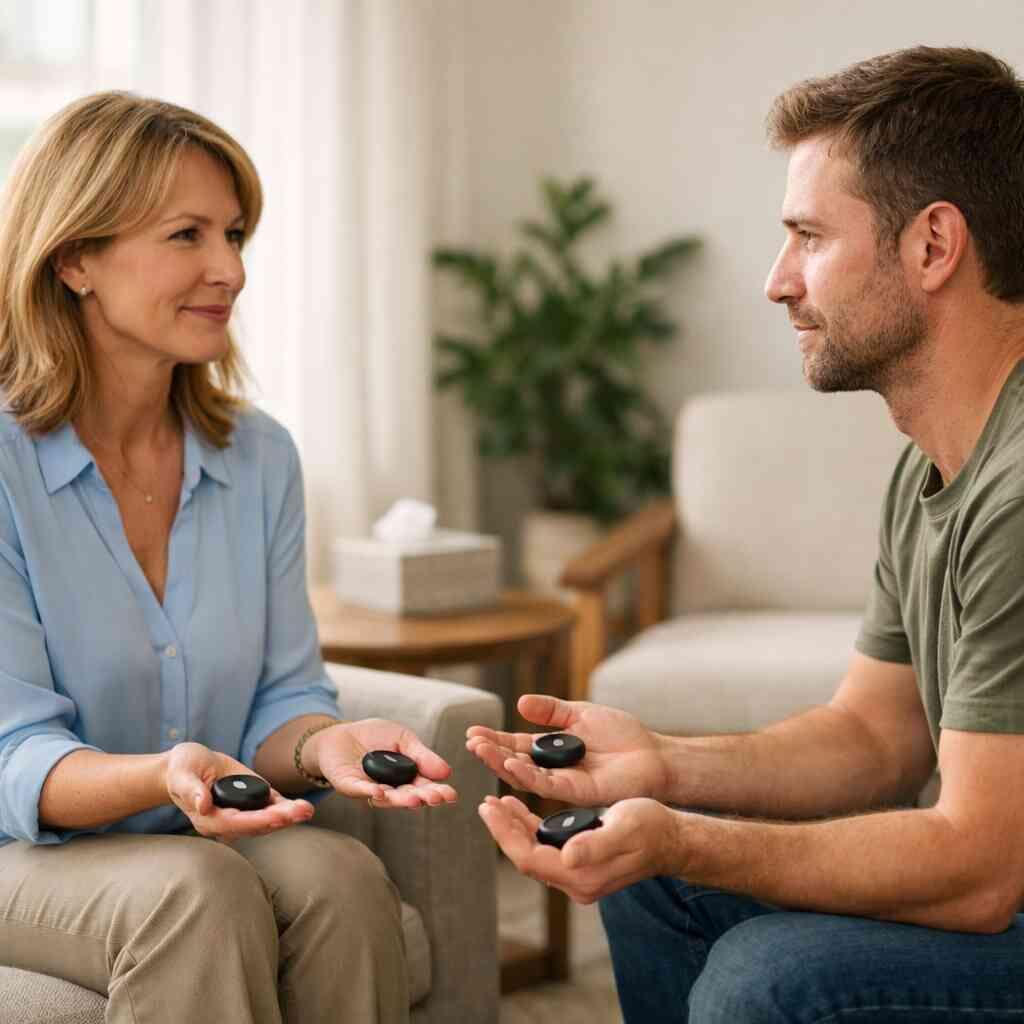
Other sensory resets can also help. Hold a cold cup. Press your hands together. Notice the weight of your phone. Some people keep a textured item in a pocket for this reason. These are not magic tricks. They are nervous system regulation tools. When grounding feels hard, start with the smallest possible cue. On a busy day in Delray Beach, that small cue can be enough to keep a panic wave from growing.
What to do when grounding feels impossible during a panic surge
Sometimes grounding does not work right away. That is normal. During a strong panic surge, your system may be too activated to follow a full script. In that moment, shorten the skill. One sense. One object. One breath. Then repeat.
If panic is frequent, professional support matters. Evidence-based treatment often pairs grounding with CBT, exposure work, and careful assessment. That combination helps because you are not only calming the moment. You are also retraining the fear response. For many people, South Florida anxiety treatment with licensed clinicians gives the structure needed to make those skills stick.
-
Breathing exercises for anxiety that calm the body without forcing calm feelings
Why slow breathing can lower physical panic even if the mind is still worried
Slow breathing is useful because it speaks to the body first. You do not need to feel calm for it to help. Anxiety often speeds breathing and tightens the chest. Slowing the breath can ease that loop. It is one of the most reliable breathing exercises for anxiety and nervous system regulation strategies because it fits real life.
The key is gentle pacing, not huge breaths. Try inhaling through the nose for four counts and exhaling for six. That longer exhale can cue the body to reduce alarm. If your mind keeps worrying, that does not mean the exercise failed. It means your body and thoughts are changing at different speeds.
Which breathing rhythms are easiest to use at work, in traffic, or before bed
Simple rhythms work best when life is messy. Try box breathing for short bursts. Use 4-4-4-4 if you want structure. Use 4-6 if you want something easier. Before bed, many people do better with a slow exhale and a quiet count instead of forcing a full meditation.
A common mistake is over-breathing. Another is waiting until anxiety is unbearable. Skill use works best before the peak. Here is a practical list you can keep on your phone:
- Inhale for four, exhale for six.
- Breathe low into the belly.
- Relax your jaw and shoulders.
- Repeat for one to two minutes.
- Stop if you feel dizzy and reset.
Common mistakes that make breathing exercises feel useless or frustrating
People often expect breathing to erase anxiety. It usually does not. It helps lower the body’s alarm so the mind can follow. Another mistake is trying to breathe too deeply, too fast. That can make dizziness worse. Some people also judge themselves when the thought stream keeps going. Do not do that.
Breathing works best when it is part of a plan. A plan may include medication management, psychotherapy, or outpatient care. If you are looking for medication management for anxiety treatment, breathing skills can support the medication instead of replacing it. That combination is often more durable than either tool alone.
-
When cognitive behavioral therapy becomes the missing skill set for anxious thinking
How cognitive behavioral therapy for anxiety helps separate facts from fear
Cognitive behavioral therapy for anxiety helps you notice the link between thoughts, feelings, and actions. Fear talks fast. Facts move slower. CBT teaches you to pause and ask what evidence supports the worry. That separation is one reason cognitive behavioral therapy for anxious thinking is so widely used.
This matters when your brain keeps forecasting disaster. If you think, “I will embarrass myself,” you may avoid the event. Avoidance lowers anxiety briefly, but it teaches your brain that fear was right. CBT interrupts that cycle. It helps you test the thought instead of obeying it.
Which thought patterns keep worry alive and how to challenge them gently
The most common patterns are catastrophizing, mind reading, and all-or-nothing thinking. Catastrophizing turns a problem into a crisis. Mind reading assumes you know what others think. All-or-nothing thinking leaves no room for nuance. These patterns feel convincing because they are fast.
Challenge them gently. Ask, “What is the actual evidence?” Ask, “What would I tell a friend?” Ask, “Is there a middle path?” Those questions create space. They also reduce shame, which is important because shame often keeps anxiety sticky. In our experience, people improve faster when the work feels curious instead of punishing.
How exposure therapy support helps people stop avoiding the places and situations that keep anxiety growing
Exposure therapy support means approaching feared situations in a planned, gradual way. It is not about forcing yourself. It is about teaching your brain that avoidance is not the only option. This can be especially helpful with driving, social events, or crowded stores. It may also help with specific fears that keep your life small.
Exposure work is most effective when paired with a clear plan and compassionate pacing. For some people, it fits inside outpatient psychiatry. For others, it needs more structure. If you have been avoiding Delray Beach recovery community events, work meetings, or errands for months, therapy can help you practice before fear becomes a lifestyle. That is where Delray Beach outpatient program for anxiety recovery can fit naturally.
-
Why dialectical behavior therapy skills help when anxiety and emotion storms hit together
What emotion regulation means in plain language
Emotion regulation means learning how to respond to feelings without getting swept away by them. It does not mean suppressing emotion. It means noticing what is happening, naming it, and choosing a skillful response. That is a core part of dialectical behavior therapy skills for emotion regulation. DBT can be especially useful when anxiety mixes with anger, shame, or overwhelm.
This matters because many people think anxiety is only about fear. It is often more complicated. You may feel keyed up, then ashamed, then exhausted. DBT gives language and structure to that storm. It can make the experience less mysterious and less lonely.
Which DBT skills help when anxiety comes with anger, shame, or overwhelm
DBT skills work well when emotions spike together. “Check the facts” helps you test whether the emotional intensity fits the situation. “Opposite action” helps when fear pushes you to avoid but your values say to engage. “Wise mind” helps you slow down and make a balanced choice. These skills sound simple, but they take practice.
Some people keep a short card in their wallet with three reminders:
- Check the facts.
- Slow the body.
- Choose the next useful action.
That small structure can be powerful during a hard afternoon in South Florida traffic or after a tense family call. It is practical, not abstract. It gives you something to do with the feeling.
How distress tolerance can keep a hard moment from turning into a full relapse in coping
Distress tolerance helps you get through a hard moment without making it worse. That might mean stepping outside, holding ice, or using paced breathing until the surge passes. It also means avoiding the old pattern of “I need to escape now.” When used well, distress tolerance prevents one rough hour from becoming a full day of spiraling.
This is especially important for people with co-occurring disorders. Anxiety can push people toward substances, isolation, or impulsive choices. Distress tolerance creates a gap between feeling and action. That gap protects recovery. If anxiety and substance use overlap, dual diagnosis treatment for co-occurring anxiety and depression may be the right clinical frame.
-
The spring reset habits that keep anxiety from feeding on exhaustion
Why sleep hygiene is a treatment skill, not just a wellness tip
Sleep hygiene is not a luxury. It is treatment. Anxiety gets louder when sleep gets shallow or broken. A tired brain reads more danger into ordinary events. A consistent bedtime, less screen time, and a predictable wind-down can make a real difference. The same applies to sleep hygiene and exercise for mental health routines that support the whole day, not just the night.
If your sleep is bad, start small. Keep the same wake time. Reduce late caffeine. Make the bedroom cooler and darker. None of that fixes everything. It does, however, lower the background load on your nervous system.
How exercise for mental health changes tension, energy, and mood over time
Exercise helps because it gives anxiety somewhere to go. Walking, swimming, stretching, and light strength work can reduce muscle tension and help regulate mood. You do not need a hard workout plan. You need consistency. In a beachside recovery environment like Delray Beach, even a short walk can help reset the body after a tense morning.
The effect is gradual. That is important. Exercise is not a quick cure. It is a stabilizing habit. Over time, it can improve sleep, mood, and focus. It also gives your body repeated evidence that activation does not always mean danger.
Where journaling for anxiety, mindfulness meditation, and self-compassion practices fit into a daily routine
Journaling for anxiety works best when it is brief and specific. Write the worry. Write the evidence. Write the next useful action. Mindfulness meditation can help you notice thoughts without getting pulled into them. Self-compassion practices help when your inner voice turns harsh. Those are all part of holistic recovery, even when the treatment focus is psychiatric.
Use them in a way you can repeat. Ten minutes is enough. Three minutes is enough on hard days. The goal is not to build a perfect routine. It is to build a repeatable one that fits your life in South Florida.
-
When medication management for anxiety belongs in the plan and when it should not be the whole plan
How a psychiatric evaluation helps sort out anxiety, depression, ADHD, and trauma symptoms
A psychiatric evaluation can clarify what is driving your symptoms. Anxiety can look like restlessness, poor focus, irritability, or insomnia. ADHD and trauma can look similar. Depression can hide under worry. A careful assessment helps avoid guessing. It also helps your clinician choose the right treatment path. That matters because not every symptom should be treated the same way. A good evaluation asks what started first, what worsens the symptoms, and what helps. It also considers co-occurring disorders and life stress. If you need telepsychiatry in Florida for anxiety follow-up care, that can make regular check-ins easier when travel or work is part of the problem. 
What medication management can and cannot do for worry, panic, and insomnia
Medication management can reduce symptom intensity. It may help lower panic frequency, improve sleep, or make therapy easier to use. What it cannot do is teach coping by itself. It also cannot erase stressors, heal trauma, or replace therapy skills. That is why psychiatric medication and anxiety relief should be framed as one part of care, not the whole answer.
The best plan is usually integrated. Medication can create room for breathing work, CBT, and lifestyle changes. In some cases, treatment may involve FDA-approved options or careful adjustments by a licensed clinician. If the plan is not helping, it should be reviewed. That is normal, not a failure.
When telepsychiatry for Florida residents can make follow-up care easier for Delray Beach and South Florida patients
Telepsychiatry can be a practical advantage for follow-up visits. It can reduce travel, help with continuity, and make it easier to stay engaged. That matters for busy adults in Delray Beach, Boca Raton, West Palm Beach, and nearby communities. Regular follow-up often makes treatment safer and more responsive.
If you are looking for Florida telepsychiatry for medication follow-up, it can support ongoing care without disrupting your schedule. That is especially useful when anxiety makes leaving home harder than it should be. Consistent contact helps clinicians notice patterns early and adjust care before symptoms escalate.
-
What to do when anxiety is tied to trauma, PTSD, or co-occurring disorders
Why trauma-informed care matters when the body reacts before the mind catches up
Trauma-informed care assumes your reactions make sense in context. That changes the conversation. Instead of asking, “What is wrong with you?” clinicians ask, “What happened, and what still feels unsafe?” This approach matters because trauma can live in the body long after the event is over. It can show up as hypervigilance, panic, shutdown, or sleep problems.
For people with PTSD, anxiety treatment often needs more than symptom control. It needs safety, pacing, and trust. That is why trauma-informed care for PTSD and anxiety is such an important piece of the treatment picture. It allows care to move at a pace your system can tolerate.
How EMDR trauma therapy, group therapy, and family therapy can support deeper recovery
EMDR trauma therapy can help some people process distressing memories in a structured way. Group therapy can reduce shame and create perspective. Family therapy can improve communication and reduce the tension that often keeps symptoms alive at home. These supports work best when they are coordinated.
If your anxiety is tied to family stress, the family program may help relatives understand what helps and what accidentally escalates symptoms. That can be a relief for everyone involved. Trauma recovery often improves when the whole system has better language and clearer roles.
Why dual diagnosis treatment matters when anxiety shows up with depression and addiction
Anxiety, depression, and addiction often travel together. One can feed the other. A person may drink to quiet panic, then feel worse the next day. Or they may use substances to sleep, then wake up more anxious. That cycle is why dual diagnosis treatment matters.
The National Institute on Drug Abuse notes that co-occurring mental health and substance use disorders should be treated together. That is not just a slogan. It is a clinical necessity. If this is your pattern, dual diagnosis treatment for co-occurring anxiety and depression can help you address both conditions with one integrated plan.
-
The treatment setting that fits your level of need from outpatient psychiatry to PHP and IOP
How to tell whether outpatient psychiatry, partial hospitalization program, or intensive outpatient program fits best
The right setting depends on how much support you need. Outpatient psychiatry works well when symptoms are manageable but still disruptive. A partial hospitalization program offers more structure when anxiety is severe or unstable. Intensive outpatient program care sits in the middle. It gives repeated support without full-day treatment.
Here is a simple comparison:
Level of careBest forTime structureOutpatient psychiatryOngoing symptom managementWeekly or as neededIntensive outpatient programStructured support with flexibilitySeveral sessions per weekPartial hospitalization programHigher acuity, more daily supportMost of the dayIf you are unsure, start with an evaluation. A careful clinician can help you match symptoms to the setting that fits.
What a mental health IOP can look like for people who need structure without inpatient care
A mental health IOP can include therapy groups, individual sessions, skills training, and medication coordination. It is useful when you need more than weekly therapy, but inpatient care is not necessary. People often use IOP to stabilize a flare-up, learn coping skills, and stay connected to work or family. It can also support relapse prevention for anxiety by giving structure to the week.
If you want a closer look at intensive outpatient program for structured anxiety treatment, the point is not punishment. The point is support. Structure helps when your own routine has become too unstable to carry the load alone.
How a Delray Beach outpatient program can support recovery while life keeps moving
A good outpatient program should fit real life. That means care that respects work, school, family, and transportation limits. It should also feel personal, not processed. In Delray Beach, many adults need care that can keep pace with daily demands while still offering clinical depth. That is where Delray Beach outpatient program for anxiety recovery can be a strong fit.
At RECO Integrated Psychiatry, care is built around integrated psychiatric services and licensed clinicians who understand South Florida anxiety treatment. If you are balancing treatment with the rest of your life, that flexibility matters. It can make the difference between dropping out and staying engaged.
-
The coping skills that actually hold up after the hard week is over
Why relapse prevention for anxiety starts with repeatable habits, not perfect moods
Relapse prevention for anxiety is not about never feeling anxious again. It is about knowing what to do when symptoms return. That means repeatable habits, early warning signs, and a plan you can use on hard days. Good coping skills are boring in the best way. They are stable.
The people who do best usually keep it simple:
- Use grounding before spiraling.
- Keep sleep steady.
- Practice breathing daily.
- Notice avoidant habits early.
- Ask for help sooner, not later.
That is the difference between a bad day and a widening pattern. Skills work when they are practiced before the storm, not only during it.
How support groups, family therapy, aftercare support, and coping skills training work together
Support groups reduce isolation. Family therapy improves understanding. Aftercare support keeps momentum after the active phase of treatment. Coping skills training gives you tools you can actually use at home. Together, they make recovery more durable.
This matters in the Delray Beach recovery community, where people often need support that extends beyond one office visit. If the question is “What keeps me well after treatment feels less urgent?”, the answer is usually connection plus routine. Alumni support and continuing care best practices help make that connection real.
What to ask for next if anxiety treatment needs to be more structured, more personal, or more local to South Florida
If your anxiety still feels too big for what you are doing now, ask for a more tailored plan. Ask about CBT, DBT, medication review, trauma work, or a higher level of care. Ask about local support that fits your schedule in Delray Beach or elsewhere in South Florida. If insurance is part of the question, it is reasonable to check benefits early through insurance verification.
You do not need to solve everything today. Start with one call and one honest conversation. If you want a treatment plan that feels grounded, personal, and clinically sound, RECO Integrated Psychiatry can help you sort the next move with care and clarity.
Frequently Asked Questions
How long does anxiety treatment usually take?
It depends on symptom severity, history, and treatment goals. Some people improve with short-term skills work. Others need longer support, especially if anxiety overlaps with trauma, depression, or substance use. A careful evaluation helps set realistic expectations.
What is the difference between PHP and IOP?
PHP is more intensive and usually takes more of the day. IOP offers structured care with more flexibility. If you need frequent support but not round-the-clock treatment, IOP may fit. If symptoms are more severe, PHP may be better.
Can telepsychiatry help with anxiety follow-up care?
Yes. Telepsychiatry can make medication checks and symptom reviews easier for Florida residents. It can also help people stay consistent with care when travel, work, or anxiety about leaving home makes in-person visits harder.
What if I have anxiety and depression together?
That is common, and it deserves integrated care. Co-occurring anxiety and depression can make symptoms feel heavier and more persistent. Treatment may include therapy, medication management, and coping skills training together.
Is family involved in treatment?
Often, yes. Family therapy or family programming can help loved ones understand anxiety, reduce conflict, and support recovery at home. The level of involvement depends on your needs and your treatment plan.
What should I ask at the intake process?
Ask about level of care, therapy options, medication follow-up, insurance, and how aftercare works. If trauma, addiction, or ADHD are part of the picture, ask how those are assessed. Clear answers early can save time and stress.