
What Is Ketamine Therapy for Treatment Resistant Depression
When antidepressants keep missing the mark and the mind will not let up There is a special kind of exhaustion that sets in when you have tried medication after medication and still feel trapped in the same heavy place. If you are reading this because the pills helped a little, then stopped helping, that frustration […]


When antidepressants keep missing the mark and the mind will not let up
There is a special kind of exhaustion that sets in when you have tried medication after medication and still feel trapped in the same heavy place. If you are reading this because the pills helped a little, then stopped helping, that frustration makes sense. Many people in Delray Beach and across South Florida quietly keep pushing through work, family, and traffic on Atlantic Avenue while their mood keeps sinking. That is often the point where ketamine therapy for treatment-resistant depression enters the conversation.
What treatment-resistant depression usually looks like in real life
Treatment-resistant depression does not always look dramatic from the outside. Sometimes it looks like getting through the day on autopilot, answering texts late, and feeling flat even during good news. Other times it looks like sleep that never refreshes, a mind that will not stop racing, and a body that feels glued to the couch. People often say they have already tried standard medication management for depression and still feel stuck in the same loop.
The hardest part is that the struggle can make you doubt yourself. You may wonder if you are doing something wrong, or if you should simply try harder. Here is the part most people miss: depression that has not improved with antidepressants is not a moral failure. It is a clinical problem that may need a different tool set, including advanced depression treatment and a careful psychiatric reassessment.
Why ketamine is being discussed when standard medication management has stalled
Ketamine is being discussed because it works differently from SSRIs and similar antidepressants. Those medications usually aim to shift mood chemistry gradually over time. Ketamine can affect brain circuits tied to mood, stress, and thought loops in a faster way. That is why clinicians now discuss rapid-acting depression relief when standard care has stalled.
A woman in her forties once described it to a clinician here as “feeling like my thoughts were locked in a room.” She had tried several antidepressants, plus therapy, and still woke up with dread every morning. Her story is common in outpatient psychiatry. The point is not that ketamine fixes everything. The point is that it may create enough movement for other care to work again.
Which symptoms make psychiatric evaluation urgent rather than optional
Some symptoms mean you should not wait. If depression is driving thoughts of self-harm, inability to care for yourself, or severe panic, a psychiatric evaluation is urgent. The same is true if you are using alcohol or pills to dull emotional pain. In South Florida psychiatry, that combination often signals dual diagnosis treatment needs, not just a medication tweak.
Watch for these warning signs:
- Thoughts of suicide or wanting to disappear
- Severe insomnia lasting days
- Not eating, bathing, or leaving bed
- Mixing depression with heavy alcohol or drug use
- Feeling detached from reality or highly agitated
If any of that fits, call for help quickly. A careful evaluation can decide if mental health treatment in Delray Beach, a higher level of care, or a specialist referral makes sense.
Why ketamine can calm a depressed brain differently than SSRIs ever could
Ketamine is not simply “stronger antidepressant medicine.” It acts through a different pathway and may help the brain loosen rigid patterns. That matters in refractory depression, where the mind keeps returning to the same painful track. Many people feel relief not because the whole problem vanished, but because the pressure eased enough to think again. That can be a meaningful opening.
How ketamine therapy for treatment-resistant depression works in plain language
In plain language, ketamine may help the brain form new connections more easily. Researchers think it influences glutamate signaling, which is different from how SSRIs usually work. Glutamate is a major brain messenger involved in learning, mood, and flexibility. That is why clinicians describe ketamine-assisted psychiatry as part of innovative depression therapies, not a simple substitute for older medication.
The effect can feel subtle or noticeable, depending on the person. Some notice less hopelessness, less mental “stuckness,” or fewer intrusive negative thoughts. Others feel more emotionally open for a period of time. Still, ketamine is not a cure-all. It works best when it sits inside evidence-based psychiatric care with ongoing follow-up.
What rapid-acting depression relief means and what it does not promise
Rapid relief sounds appealing, especially when depression has dragged on for months or years. Yet rapid does not mean instant, and it does not mean permanent. It means symptoms may shift sooner than with standard antidepressants. That matters when a person is barely holding it together.
What it does not promise is a complete life reset. It does not erase trauma, fix relationships, or replace therapy. It does not mean you can stop every other treatment. The most useful way to view it is as a window of relief that may help you do deeper work. That is why psychiatric ketamine treatment is usually paired with a broader plan.
How monitored ketamine sessions fit into evidence-based psychiatric care
Monitored sessions matter because ketamine can affect perception, coordination, and blood pressure. Careful supervision protects you while the medicine works. It also helps clinicians notice whether the response is helpful, partial, or not the right fit. In a well-run setting, monitored ketamine sessions are not casual appointments. They are structured medical visits.
In practices that do this well, the best results come from treatment that feels calm and organized. Patients do better when they know what the room will feel like, how long they will stay, and who is watching their safety. That is especially true in Delray Beach outpatient psychiatry, where people often balance treatment with work, family, and recovery responsibilities.
The decision points that separate ketamine infusion therapy from Spravato and other advanced depression treatment
Not all ketamine-related treatment is the same. Some people are better suited to one path than another, depending on their history, safety needs, and access. In Delray Beach, that decision often happens inside a broader discussion about integrated psychiatry, insurance, and whether you need more than medication alone. The right choice depends on fit, not hype.
When outpatient ketamine treatment makes sense in Delray Beach
Outpatient treatment can make sense when you are medically stable and able to follow a structured plan. It often works for adults who need a higher-level depression intervention but do not need inpatient care. People living near the beach, downtown Delray, or nearby Palm Beach County sometimes prefer this model because it can fit into weekly routines. That convenience matters when a person is trying to keep a job or care for family.
For some, outpatient ketamine treatment is part of a stepped plan that also includes therapy and medication follow-up. For others, it is one layer among several. If depression mixes with alcohol, opioids, or prescription pill misuse, the plan may need dual diagnosis treatment for depression and addiction first. In those cases, depression care and addiction care should move together.
How Spravato treatment is different from off-label ketamine therapy
Spravato is the brand name for esketamine, a related medicine with a specific FDA-approved indication for depression under certain conditions. Off-label ketamine therapy uses ketamine itself in a different medical framework. The difference matters because the two treatments follow different protocols, monitoring rules, and access pathways. People often compare them because both sit inside interventional psychiatry. 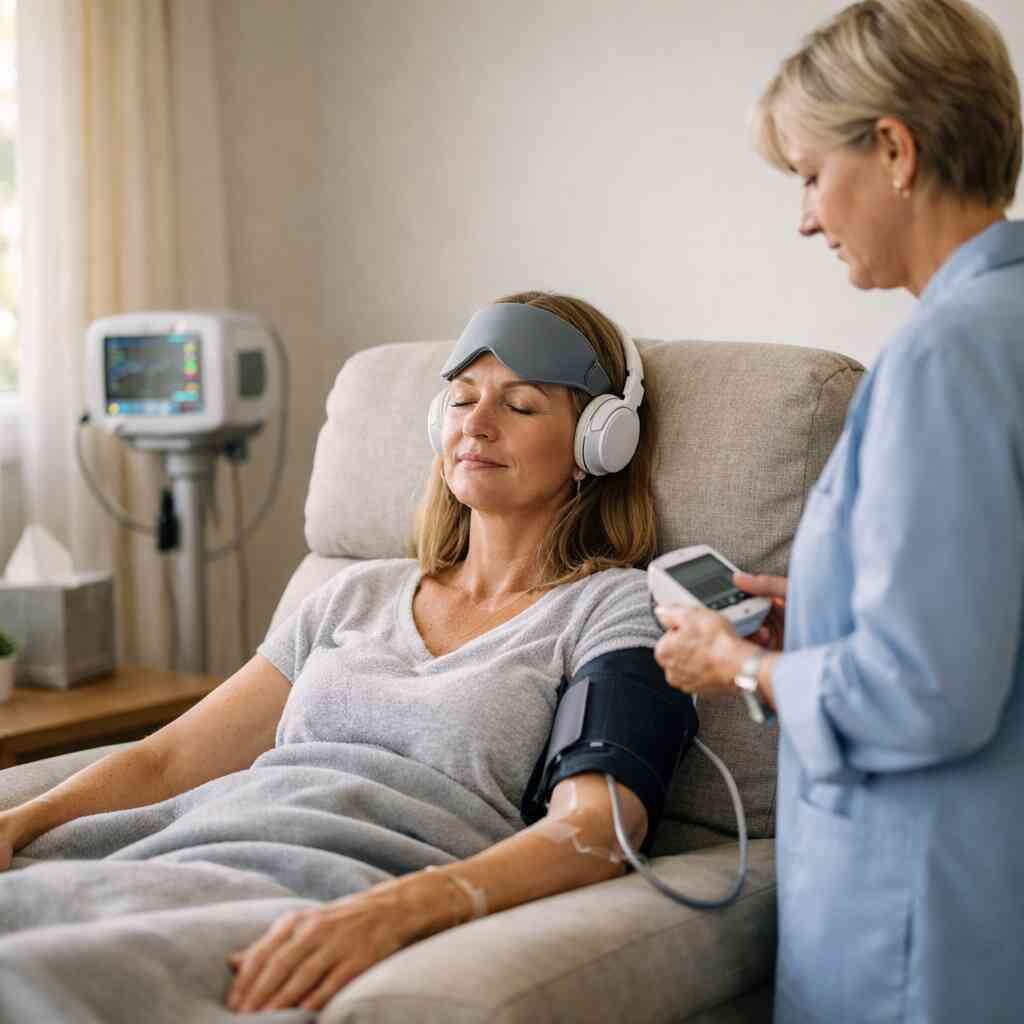
FeatureKetamine infusion therapySpravato treatmentFormIV ketamineNasal esketamineSettingMedical infusion settingCertified treatment settingUseOften off label for depressionFDA-approved for certain depressive disordersMonitoringContinuous clinical supervisionRequired in-office observationThe best choice depends on your evaluation, your history, and what your clinician recommends. If you want a deeper look at the service side, the outpatient ketamine infusion treatment for refractory depression page can help frame that discussion.
Where TMS therapy, psychotherapy, and medication management for depression still belong in the plan
Ketamine should not crowd out other useful care. Transcranial magnetic stimulation can help some people, especially when medication has not done enough. Psychotherapy matters because symptoms often return when the underlying patterns remain untouched. Medication management for depression still has a place, especially when mood disorder treatment must address sleep, anxiety, or bipolar features.
A simple way to think about it is this: ketamine may open the door, but the rest of the plan helps you walk through it. That often includes cognitive behavioral therapy, dialectical behavior therapy, and structured follow-up with licensed clinicians. If you want a closer look at combined care, transcranial magnetic stimulation for depression support and DBT therapy and CBT support for depression recovery are both relevant comparisons.
What the road map looks like before the first dose is ever given
The safest ketamine plans start before any medicine is given. That is where a real evaluation separates someone who is a candidate from someone who needs another approach. For many people, this part feels uncomfortable because they want relief now. That feeling is normal. Still, a careful setup prevents avoidable problems later.
How a psychiatric evaluation for ketamine decides if someone is a fit
A psychiatric evaluation looks at more than diagnosis. It asks how long depression has lasted, which treatments you have already tried, and whether trauma, OCD, anxiety, or bipolar disorder is part of the picture. It also asks about substance use, because depression and addiction often travel together. In practice, that evaluation helps decide whether ketamine, Spravato, TMS, or something else fits best.
At RECO Integrated Psychiatry, the evaluation also considers the bigger recovery context. That matters in a region where people may be balancing mental health with alcohol use, benzodiazepine withdrawal, or prescription pill addiction. If the clinical picture is complex, the plan may include psychiatric evaluation for advanced depression treatment and a broader review of treatment-resistant depression care options.
What medical screening, blood pressure checks, and safety monitoring usually cover
Ketamine can temporarily raise blood pressure, so screening matters. Clinicians usually review your medical history, current medicines, and any cardiovascular concerns. They also check how you respond during the session and after it ends. Safety monitoring is not a formality. It is the backbone of responsible care.
Typical monitoring includes:
- Blood pressure and pulse checks
- Review of current medications
- Observation during and after treatment
- Assessment of dissociation or dizziness
- Clear discharge instructions for the rest of the day
People sometimes expect the session to feel clinical and cold. Good care feels calm, clear, and humane. It should also be specific about risks, limits, and follow-up. That is one reason a medication management visit can be a useful companion to ketamine care.
How dual diagnosis treatment changes the plan when depression and addiction meet
Depression and addiction can feed each other fast. A person drinks to shut off pain, then feels worse the next day. Another uses pills to sleep, then wakes up more anxious and hopeless. In these cases, ketamine alone is not the whole answer. The treatment plan must address both conditions.
NIDA and SAMHSA both emphasize the co-occurring disorder model, which means treating mental health and substance use together. That may involve sobriety supports, medication-assisted treatment, and therapy that addresses shame and triggers. If this is your situation, dual diagnosis treatment for depression and addiction is the right frame. In South Florida, that can matter as much for a person stepping down from Florida addiction treatment as for someone seeking severe depression support.
What happens next if ketamine is only one part of the recovery picture
Some people feel a lift after ketamine and then ask, “What now?” That question is important. Symptom relief can create enough breathing room to do deeper work, but structure still matters. This is where psychotherapy, family support, and ongoing care keep the gains from slipping away. In Delray Beach, where recovery resources range from the coast to the broader Palm Beach County treatment centers network, that continuity can make a real difference.
How RECO Integrated Psychiatry connects ketamine care with CBT, DBT, and EMDR trauma therapy
Ketamine may lower the weight of depression, but therapy helps change the pattern that built it. CBT can challenge the harsh thoughts that keep showing up. DBT can help with emotion regulation and distress tolerance. EMDR trauma therapy can be useful when depression is tied to trauma that still feels alive in the body.
What almost no online guide mentions is how important timing can be. Therapy often works better when the person has enough relief to engage, but not so much that they stop the plan. If you want a broader look at how a psychiatry team can coordinate this, integrative psychiatry for complex mood disorder care is the right lens. That is especially true for OCD and depression treatment, bipolar disorder depression, and anxiety treatment with psychiatry.
Why family therapy, aftercare planning, and relapse prevention matter after symptom relief
Depression does not live in a vacuum. It affects sleep, work, parenting, and trust inside the household. Family therapy can help loved ones understand what helps and what hurts. Aftercare planning matters because good days can make people underestimate the need for structure. That is when relapse prevention becomes practical, not theoretical.
Here is a concrete example. A middle-aged professional in South Florida felt better after treatment, then quickly slid back when work stress piled up and sleep broke down. The turning point came when treatment shifted from crisis response to routine support, including coping skills and check-ins. That pattern is common. Family support, aftercare support, and sober living resources can all help keep the plan steady.
When telepsychiatry for Florida residents and an outpatient program in Delray Beach keep progress moving
Not everyone can come in person every week. Telepsychiatry can keep treatment moving when you live elsewhere in Florida, travel for work, or need a lighter logistical load. That is useful for follow-up visits, medication changes, and check-ins after ketamine care starts. In-person care still matters for procedures and deeper evaluations, but virtual visits can fill the gaps.
For many people, the best next move is an outpatient structure that matches the severity of symptoms. That may mean a partial hospitalization program, intensive outpatient support, or a steady outpatient psychiatry plan. If you are exploring local care, outpatient and partial hospitalization programs in South Florida can help you compare options. And if travel is hard, telepsychiatry for Florida residents seeking depression care may keep momentum going without adding strain.
If you are comparing next-step options, the what is PHP vs IOP for South Florida recovery guide can also help you understand the difference between levels of support.
You do not have to solve every piece today. Start with one conversation, especially if depression has stopped responding to the treatments you already tried. If you are in Delray Beach or elsewhere in South Florida, RECO Integrated Psychiatry can help you sort out what level of care makes sense and what should come next. Reach out, ask the hard questions, and let the plan be built around your life.
Frequently Asked Questions
How long does ketamine treatment usually take for depression?
A ketamine visit is usually measured in hours, not days. The medicine itself is only part of the appointment. You also need screening, monitoring, and time to recover before leaving. The overall treatment plan often spans several visits, followed by ongoing care. Your clinician should explain the schedule clearly before anything starts.
Is ketamine the same as Spravato?
No. Ketamine and Spravato are related but not identical. Spravato is esketamine and has its own FDA-approved use for certain depressive disorders. Ketamine therapy may be offered off label in a medical setting. The right choice depends on your diagnosis, medical history, and treatment goals.
Can ketamine help if I also have anxiety or trauma?
It may help some people, but it should never replace full psychiatric care. Anxiety, PTSD, and trauma often need therapy and a broader treatment plan. Ketamine can sometimes reduce the pressure enough to engage in CBT, DBT, or EMDR more effectively. Your evaluation should address all active symptoms.
What if depression and addiction are both part of the picture?
That is common, and it changes the plan. Depression and substance use should be treated together through dual diagnosis treatment. The clinician may review sobriety needs, medication safety, and relapse risk before recommending ketamine or another option. This is where integrated care matters most.
Does RECO Integrated Psychiatry only treat depression?
No. RECO Integrated Psychiatry also treats anxiety disorders, OCD, bipolar disorder, ADHD, and complex psychiatric conditions. The team can combine medication management, psychotherapy referrals, TMS, Spravato, and ketamine when appropriate. If you are in South Florida, that integrated model can help when symptoms overlap.
What if I need help but I am not sure I need rehab?
That is a fair question. Depression care and addiction care can overlap, but they are not the same. If substance use is not the main issue, outpatient psychiatry may be enough. If you are unsure, a psychiatric evaluation can clarify whether you need mental health treatment, addiction support, or both.