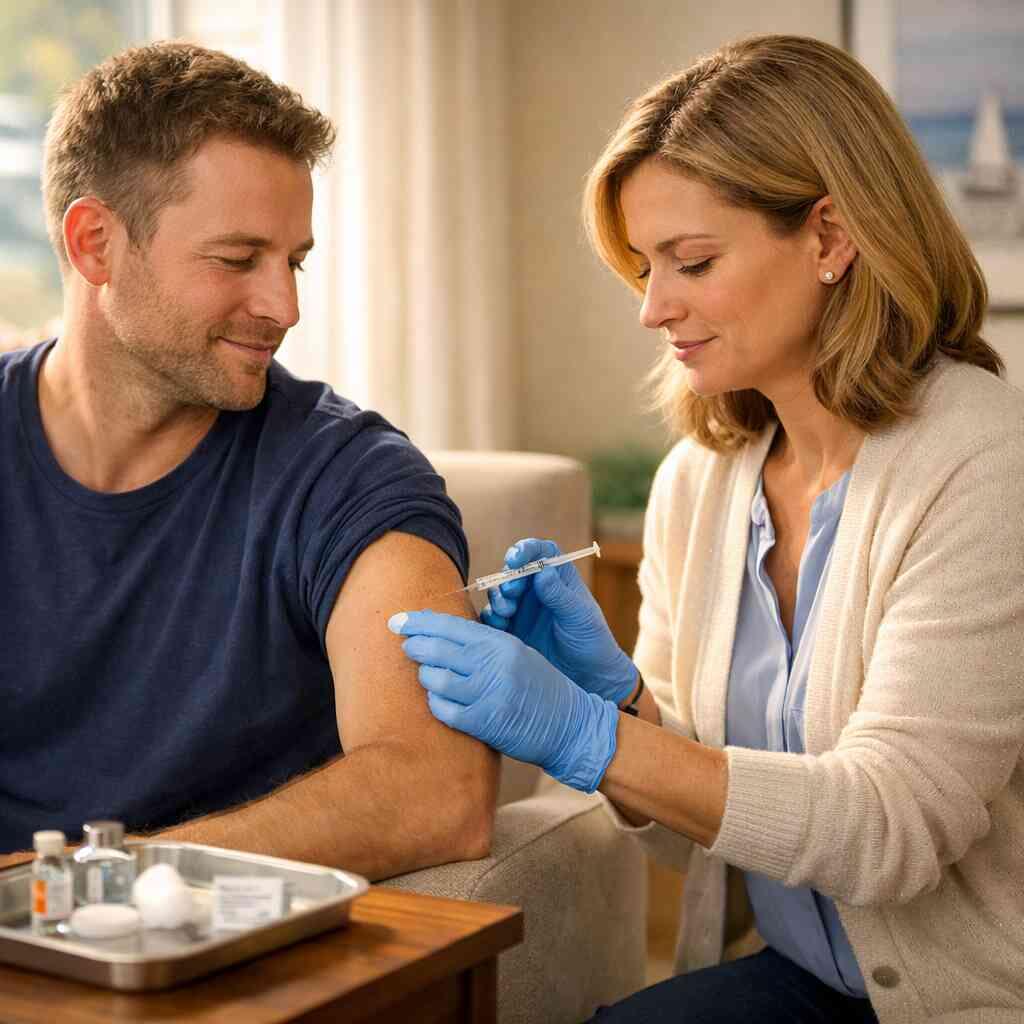
What Is Vivitrol and Who It Helps in Alcohol Recovery
Why a pill alone is not the whole story when alcohol keeps winning If you are searching for Vivitrol for alcohol addiction, you may already feel tired of starting over. That exhaustion is real. The fear is real too. Many people searching for Delray Beach rehab are not asking for perfection; they are asking for […]


Why a pill alone is not the whole story when alcohol keeps winning
If you are searching for Vivitrol for alcohol addiction, you may already feel tired of starting over. That exhaustion is real. The fear is real too. Many people searching for Delray Beach rehab are not asking for perfection; they are asking for something that can finally hold. Vivitrol can help, but it works best inside a larger recovery plan.
What Vivitrol is and how extended-release naltrexone works in plain language
Vivitrol is the brand name for extended-release naltrexone. It is a monthly injection that helps block the rewarding effects of alcohol and opioids. It does not “cure” alcohol use disorder. Instead, it can lower the pull toward drinking and support relapse prevention. For many people, that reduction in urge creates space for real change.
Naltrexone has been used in medication-assisted treatment for years. The injection form can help people who do not want to manage a daily pill. It also removes the burden of remembering a tablet when life feels chaotic. In an alcoholism treatment center, that can matter more than people expect.
Why a naltrexone injection can help with alcohol cravings reduction after detox
Here is the part most people miss. Cravings often surge after detox, not during it. Once the body steadies, the brain can still scream for alcohol. Vivitrol may help with alcohol cravings reduction during that window. That is why clinicians often discuss medication-assisted recovery after detox rather than during active withdrawal.
One client in the Lake Worth area described the post-detox week as “the quiet before the storm.” The room was calm, but every smell, song, and routine felt loaded. That is exactly where a medication like Vivitrol can help. It does not erase stress. It can reduce the chemical reinforcement that makes one drink turn into many.
Who usually gets the most from medication-assisted treatment and who should not start it yet
Vivitrol often helps people who want sobriety maintenance and can stay engaged in follow-up care. It may suit someone leaving inpatient rehab Palm Beach County, a partial hospitalization program, or an outpatient program Delray Beach. It can also support people who want abstinence support without daily opioid-like effects. The best candidates are usually medically stable and motivated for ongoing treatment.
It is not for everyone right away. People with current opioid use need careful screening first, because naltrexone can trigger withdrawal if opioids remain in the system. The same caution applies if detox is still underway. A good clinician will check timing, substance use history, and current medications before moving ahead.
How Vivitrol fits into dual diagnosis treatment when depression and addiction or anxiety and addiction overlap
Alcohol recovery rarely exists in a vacuum. Many people also live with depression and addiction, anxiety and addiction, bipolar disorder, PTSD, or OCD. That is where dual diagnosis treatment matters. If you treat only alcohol use, the untreated mood or anxiety problem may keep driving relapse. If you treat only mood symptoms, drinking may keep undoing the gains.
RECO Integrated Psychiatry in Delray Beach works in that overlap every day. In some cases, dual diagnosis care for depression and addiction becomes the most important frame. Vivitrol may be one tool among several, alongside psychiatric medication management, cognitive behavioral therapy, and structured follow-up. That layered approach is often what makes recovery feel less fragile.
*”I have to thank reco for saving my life. I was on a long downward spiral and just couldn’t stop. I was mentally, emotionally, spiritually, and physically exhausted. Reco is hands down the best treatment center for treatment and therapy/mental health i have been to. I am eternally grateful to reco for giving me a solid start on my recovery journey.”- David B., a 5 star review from our business on Google Business Reviews
The recovery gate you must pass through before Vivitrol makes sense
Vivitrol is not usually the first move on day one of a crisis. That surprises people. Yet the body has to be stable before relapse prevention medication can help. If you are in withdrawal, dehydrated, or medically shaky, the priority is safety. That is why alcohol withdrawal support comes first.
Why alcohol withdrawal support and medical stabilization matter before the injection
Alcohol withdrawal can range from shaky and miserable to dangerous. Some people need monitoring for blood pressure changes, tremor, confusion, or seizures. The word “detox” sounds simple, but the process is not. That is why South Florida detox programs and medical stabilization are so important before starting Vivitrol.
A clinician must also make sure you are not still using opioids. Naltrexone can block opioids and cause severe withdrawal if they are still present. That is a hard stop. Safety comes before speed, every time.
What patients usually need after South Florida detox before starting relapse prevention medication
After detox, most people still need structure. They may need sleep support, nutrition, hydration, and close symptom monitoring. They may also need help sorting out triggers, family stress, or job pressure. If alcohol was used to quiet panic or numb sadness, those symptoms often surface quickly after detox.
That is why our medical detox process and related step-down care matter. A smart plan often includes therapy, medication review, and clear relapse prevention steps. Some patients also need case management, life skills training, or support for sober living resources. The goal is not just to stop drinking. The goal is to stay steady enough to build a new pattern.
How alcohol use disorder treatment changes when opioids are also in the picture
When alcohol use is paired with opioids, the treatment plan changes fast. A person may need a different medication path, especially if they use heroin, fentanyl, or prescription pain pills. In those cases, naltrexone might still be an option later, but only after the right opioid-free window. If the substance pattern includes fentanyl treatment or opioid rehab Delray, the order of care matters.
Here is a simple comparison.
GoalVivitrolSuboxoneMain useAlcohol relapse prevention and opioid blockadeOpioid use disorder stabilizationFormMonthly injectionDaily film or tablet maintenanceKey cautionMust be opioid-free before startingUsed for active opioid recovery under supervisionThis is why clinicians do not guess. They assess. They match the medication to the problem.
What an outpatient program Delray Beach can add once the body is steady and cravings are the main problem
Once the body is stable, outpatient care can carry the work forward. A strong intensive outpatient track can help you practice coping skills while staying in daily life. That is often where Vivitrol becomes most useful. It reduces the intensity of urges while therapy teaches the rest.
For many people, an outpatient program Delray Beach offers a workable balance. You can keep showing up for work, family, or school while receiving structured support. If symptoms are more severe, a mental health IOP or partial hospitalization program may fit better. The level of care should match the level of risk, not the level of hope.
Who Vivitrol helps most and when another path is the better call
The right medication can make recovery more stable. The wrong level of care can leave you feeling blamed or let down. That is why matching matters. Some people need Vivitrol plus therapy. Others need a higher level of support first.
How to tell whether relapse prevention is the real goal or whether higher level care is needed
Ask a simple question: are cravings the main problem, or is life still on fire? If you are still drinking heavily, unsafe, or unable to manage daily tasks, you may need more structure than a medication visit. That might mean residential treatment facility care, partial hospitalization program, or a higher-support plan. Vivitrol can help with relapse prevention, but it does not replace stabilization.
The mistake we see most often is trying to skip a level of care. People want the fastest answer. I get that. Yet recovery works better when the plan fits the actual symptoms, not the wish for an easier month.
Why people with co-occurring disorders may need psychiatric medication management plus therapy
People with co-occurring disorders often need more than an injection. They may need medication for depression, anxiety, bipolar disorder, or ADHD. They may also need trauma work if alcohol was covering old pain. This is where psychiatric medication management and therapy can work together.
For example, someone with panic attacks may drink to blunt the physical rush. If the panic stays untreated, alcohol may keep filling the gap. That is why evidence-based treatment should include both symptom care and addiction care. In our experience, that combination often improves follow-through.
How Vivitrol can support sobriety maintenance for people leaving inpatient rehab Palm Beach County or a partial hospitalization program
After higher levels of care, the first weeks back in the community can feel exposed. The schedule gets looser. The triggers get louder. That is where Vivitrol can fit well for people leaving inpatient rehab Palm Beach County or a partial hospitalization program in Palm Beach County for recovery. It can support the transition while new habits take root.
Think of it as one layer of protection, not the whole wall. People still need therapy, accountability, and a plan for weekends, evenings, and stressful phone calls. That is why aftercare planning for sobriety maintenance should start early, not after discharge. The handoff matters.
When prescription pill addiction benzodiazepine withdrawal or fentanyl treatment needs a different plan than alcohol recovery medications
Not every substance problem should be treated the same way. Prescription pill addiction may require a different medication approach than alcohol use alone. Benzodiazepine withdrawal needs careful tapering and medical oversight. Fentanyl treatment often requires opioid-specific care, not alcohol relapse prevention medication. That is why a detailed intake matters. A person may come in asking about alcohol, but the full picture may include pills, cannabis, stimulants, or past overdose risk. Good care looks at the whole picture. It does not stop at the first label. 
The treatment web around Vivitrol that keeps recovery from slipping through the cracks
A monthly injection can help, but it does not teach new skills by itself. Recovery needs a web. That web includes therapy, family support, peer support, and practical planning. Without those pieces, medication may hold for a while and then feel thin.
How CBT, DBT, and group therapy activities support medication-assisted recovery
Cognitive behavioral therapy helps you spot the thought loops that lead to drinking. Dialectical behavior therapy adds tools for distress tolerance, emotional regulation, and impulse management. Group therapy activities make the process feel less solitary and more real. Together, they support medication-assisted recovery by changing the habits that keep cravings alive.
If you want a practical resource, cognitive behavioral therapy for relapse prevention is often a strong fit. It teaches concrete skills. That matters when your brain is tired and your willpower is low. Skills beat speeches.
Why family therapy and sober living resources can matter as much as the injection itself
Alcohol recovery affects the whole household. Family members may be scared, angry, or exhausted. They may also be helping in ways that accidentally keep the cycle going. Family therapy gives everyone a better map. It can reduce blame and improve boundaries.
Alcohol recovery support with family therapy can be especially helpful after relapse or repeated conflict. Sober living resources may also provide stability between intensive treatment and full independence. For many people, that bridge lowers the odds of slipping back during lonely evenings or high-stress weekends.
Where trauma therapy South Florida, EMDR, and mindfulness meditation fit for PTSD treatment and alcohol recovery
Trauma and alcohol often sit close together. Someone drinks to dull flashbacks, avoid nightmares, or shut down constant alertness. That is where trauma therapy in South Florida services such as EMDR can matter. EMDR is a structured therapy that helps the brain process distressing memories in a safer way.
Trauma therapy in South Florida for co-occurring disorders can pair with mindfulness meditation and breathing work. These tools do not erase the past. They reduce the body’s alarm response. For many people with PTSD treatment needs, that makes sobriety feel more possible.
How SMART Recovery, 12-step alternatives, and life skills training build long-term recovery beyond the clinic
Not everyone connects with 12-step language. That is fine. Some people prefer SMART Recovery or other 12-step alternatives. What matters is the structure, the reflection, and the follow-through. Recovery support should fit the person, not force the person to fit the program.
SMART Recovery and 12-step alternatives can help you build repetition and accountability. Life skills training also matters, especially for young adults, professionals, and people rebuilding after a long alcohol run. Sleep, meals, budgeting, and routine are not small things. They are recovery tools.
What aftercare planning, case management, and alumni support should look like after the first injection
The first injection is not the finish line. It is the start of a new support cycle. Good aftercare planning should include medication follow-up, therapy appointments, and a relapse response plan. It should also include case management when housing, work, or insurance are unstable.
Aftercare planning for sobriety maintenance should be specific. Who do you call if cravings spike? What happens if you miss a visit? What support is in place if shame starts talking loud again? Alumni program contact can help keep people connected when formal treatment gets lighter.
What happens next in Delray Beach if you are ready to ask for help
If you live near Atlantic Avenue, the beach, or anywhere in South Florida, getting help should feel practical. You do not need a dramatic moment. You need a clear plan. That often starts with an evaluation that sorts out alcohol, mood, anxiety, and any other substance use.
How an intake process at RECO Integrated Psychiatry can sort out alcohol use disorder treatment and mental health IOP needs
At RECO Integrated Psychiatry, the intake process can clarify whether Vivitrol is a fit. It can also identify whether you need alcohol use disorder treatment, a mental health IOP, or a different level of care first. That matters because alcohol rarely travels alone. Anxiety, depression, trauma, and sleep problems often arrive with it.
If you want a closer look at the local setting, RECO’s Delray Beach location at 140 NE 4th Avenue Delray Beach FL 33483 sits near the energy of the Atlantic Avenue corridor. That can be helpful for follow-through. Familiar surroundings sometimes make the hard work a little easier to keep doing.
What insurance verification, self-pay options, and out-of-network benefits may mean for Florida rehabs that take insurance
Cost worries keep a lot of people from calling. That is common. A good admissions team can explain insurance verification, self-pay options, and out-of-network benefits without pressure. If you are comparing Florida rehabs that take insurance, ask for plain language and written details.
You can start with insurance verification for Florida rehab services. That step can reduce guesswork fast. It also helps you compare treatment choices with less stress. Clear numbers beat vague assumptions.
How to compare Vivitrol with Suboxone maintenance, medication-assisted treatment, and other recovery support for alcoholism
People often ask how Vivitrol compares with Suboxone. They are not interchangeable. Vivitrol is commonly used for alcohol relapse prevention and opioid blockade. Suboxone maintenance is designed for opioid use disorder. If alcohol is the main issue, Vivitrol may be more relevant.
OptionBest forMain pointVivitrolAlcohol recovery support and opioid blockadeMonthly injection after an opioid-free periodSuboxoneOpioid use disorderStabilization and maintenanceTherapy onlyMild cases or added supportHelpful, but may not be enough aloneA careful clinician will not choose based on trends. They will choose based on diagnosis, timing, and risk.
Why a local plan near Delray Beach Atlantic Avenue and the South Florida recovery community can make follow-through easier
Recovery works better when the plan fits your real life. In Delray Beach, the local recovery community is active, and that can help with consistency. South Florida traffic, weather, and work schedules can make long drives draining. A nearby plan reduces friction.
That is one reason people search for drug rehab near me, Boca Raton outpatient, or West Palm Beach mental health support and then choose a place that feels reachable. The best plan is the one you can actually keep. Proximity matters more than people expect.
When to reach out for an outpatient evaluation and what a calm practical next step can look like
If alcohol is affecting your sleep, work, mood, or safety, reach out for an evaluation. If you have tried to quit and keep sliding back, that is reason enough. If depression or anxiety makes drinking feel like relief, that is also reason enough. You do not need to wait for a crisis.
A calm next step can be simple: call, verify benefits, and ask what level of care fits your current symptoms. If you want to compare options, ask about medication-assisted recovery after detox and whether Vivitrol belongs in your plan. You do not have to solve the whole thing today. Start with one conversation, and let the plan get clearer from there.
Frequently Asked Questions
Question: What is Vivitrol for alcohol addiction, and how does RECO Integrated Psychiatry use extended-release naltrexone in a medication-assisted treatment plan?
Answer: Vivitrol is the brand name for extended-release naltrexone, a monthly injection used in medication-assisted treatment to help reduce alcohol cravings and support relapse prevention. It does not cure alcohol use disorder on its own, but it can make sobriety maintenance more manageable by lowering the reward response tied to drinking. At RECO Integrated Psychiatry in Delray Beach, Vivitrol is considered as part of a broader, evidence-based treatment plan that may include psychiatric medication management, cognitive behavioral therapy, group therapy activities, and aftercare planning. This integrated approach is especially helpful for people who are looking for alcohol rehab near me support and want care that addresses the whole picture, not just the drinking behavior.
Question: Why does Vivitrol work best after South Florida detox, and who is it a good fit for in Delray Beach rehab and outpatient program Delray Beach care?
Answer: Vivitrol is usually most helpful after detox because alcohol withdrawal support and medical stabilization come first. Once the body is steady, extended-release naltrexone may help reduce cravings that often spike after detox is complete. It is often a good fit for people who want abstinence support, are medically stable, and can stay engaged in follow-up care through an outpatient program Delray Beach, mental health IOP, or partial hospitalization program. It may also be useful after inpatient rehab Palm Beach County or a residential treatment facility when someone is transitioning into long-term recovery. At RECO Integrated Psychiatry, the intake process is used to determine whether Vivitrol is appropriate or whether a different level of care is needed first.
Question: How does RECO Integrated Psychiatry approach dual diagnosis treatment when depression and addiction or anxiety and addiction are both part of the picture?
Answer: Dual diagnosis treatment is often essential when alcohol use overlaps with depression and addiction, anxiety and addiction, bipolar disorder, PTSD treatment needs, or other co-occurring disorders. In those cases, treating alcohol use alone is rarely enough. RECO Integrated Psychiatry focuses on integrated care that may include psychiatric medication management, cognitive behavioral therapy, dialectical behavior therapy, trauma therapy South Florida services, and mindfulness meditation strategies alongside medication-assisted recovery. This matters because untreated mood symptoms can keep driving drinking, and drinking can keep worsening mood symptoms. By addressing both sides at once, the plan is more aligned with evidence-based treatment and more supportive of long-term recovery.
Question: How does Vivitrol compare with Suboxone maintenance, and when would someone need opioid-specific care such as opioid rehab Delray or fentanyl treatment instead?
Answer: Vivitrol and Suboxone are not the same medication and are not used for the same primary purpose. Vivitrol injections are commonly used for alcohol cravings reduction and opioid blockade, while Suboxone maintenance is designed for opioid use disorder stabilization. If someone is dealing with prescription pill addiction, fentanyl treatment, heroin recovery, or opioid rehab Delray needs, the clinician must evaluate whether opioid-specific care is the better path. Vivitrol also requires a period of opioid-free status before starting, so careful screening is critical. RECO Integrated Psychiatry uses a careful assessment process to make sure the medication matches the actual substance use pattern, rather than guessing based on symptoms alone.
Question: What ongoing support does RECO Integrated Psychiatry recommend after the first Vivitrol injection to protect sobriety maintenance and long-term recovery?
Answer: The first Vivitrol injection is only one part of recovery support for alcoholism. Ongoing care often includes aftercare planning, case management, family therapy, group therapy activities, and relapse prevention planning. Depending on the person’s needs, RECO Integrated Psychiatry may also recommend intensive outpatient care, a mental health IOP, sober living resources, or connections to 12-step alternatives and SMART Recovery. For many people, skills-based support like cognitive behavioral therapy, life skills training, and trauma therapy South Florida services can make a major difference in staying on track. This layered model helps patients build coping skills, stay connected to care, and create a more stable path toward long-term recovery in the Delray Beach recovery community.
Question: How can someone in Delray Beach get started with RECO Integrated Psychiatry, and do insurance verification and Florida rehabs that take insurance options apply to Vivitrol and alcohol use disorder treatment?
Answer: Getting started is usually straightforward. A person can contact RECO Integrated Psychiatry to begin the intake process, discuss signs of addiction, review current symptoms, and determine whether alcohol use disorder treatment, mental health IOP, or another level of care is most appropriate. The team can also help explain insurance verification, self-pay options, and out-of-network benefits for people comparing Florida rehabs that take insurance. Because alcohol recovery often overlaps with depression and addiction, anxiety and addiction, or other co-occurring disorders, it helps to choose a clinic that can coordinate psychiatric care and medication-assisted treatment in one place. RECO Integrated Psychiatry’s Delray Beach location at 140 NE 4th Avenue Delray Beach FL 33483 serves South Florida residents who want a practical, compassionate, and evidence-based path forward.