Best 5 Questions About TMS Therapy for Depression Relief 2026
Which depression picture makes TMS worth asking about If you are reading this while feeling stuck, that matters. Many people reach that point after months of medication changes, therapy sessions, and careful effort. The hardest part is not always the depression itself. It is the slow realization that the current plan is not working. When […]

-
Which depression picture makes TMS worth asking about
If you are reading this while feeling stuck, that matters. Many people reach that point after months of medication changes, therapy sessions, and careful effort. The hardest part is not always the depression itself. It is the slow realization that the current plan is not working.
When antidepressants and therapy have not moved the needle
TMS therapy for depression can help when standard care has not been enough. That often means antidepressants brought side effects, partial relief, or no real change. It can also mean therapy helped you understand the problem, but your mood still feels heavy. In that setting, medication-resistant depression options deserve a serious look.
We hear this from people across Delray Beach and South Florida. They are not asking for a miracle. They are asking for a plan that finally fits their brain and their life. That is a fair question.
“RECO’s mental health program is excellent. Their integrative approach with therapy and psychiatry helped me overcome anxiety and depression. Compassionate staff and supportive environment. Highly recommend!”– Sabrina F., a 5 star review from our business on Google Business Reviews
How treatment-resistant depression and co-occurring anxiety change the conversation
Treatment-resistant depression rarely shows up alone. Anxiety often rides alongside it, tightening sleep, focus, and appetite. The combination can make every day feel like pushing through wet sand. That is why depression and anxiety treatment often needs a broader psychiatric lens.
NIDA and SAMHSA both support the co-occurring disorder model. In plain language, that means you treat the whole picture, not one symptom at a time. If you have panic, rumination, or constant dread, TMS may still fit. But your clinician should also review trauma, sleep, medications, and safety.
Who is a candidate for outpatient TMS psychiatry in Delray Beach
A good candidate for outpatient TMS psychiatry in Delray Beach is usually an adult with major depressive symptoms that have not responded well enough to medication or therapy alone. You may also be dealing with bipolar depression, provided the treatment plan is carefully matched. Some people ask after a long stretch of fog, missed work, or withdrawn family time. Others ask after trying several prescriptions without lasting relief.
The best answer comes from a full psychiatric evaluation. That visit should review your diagnosis, past treatments, medical history, and current goals. It should also consider whether you need more intensive support first. For some people, psychiatric care for treatment-resistant depression is the right next step.
Why brain stimulation for depression is not the same as ECT or medication changes
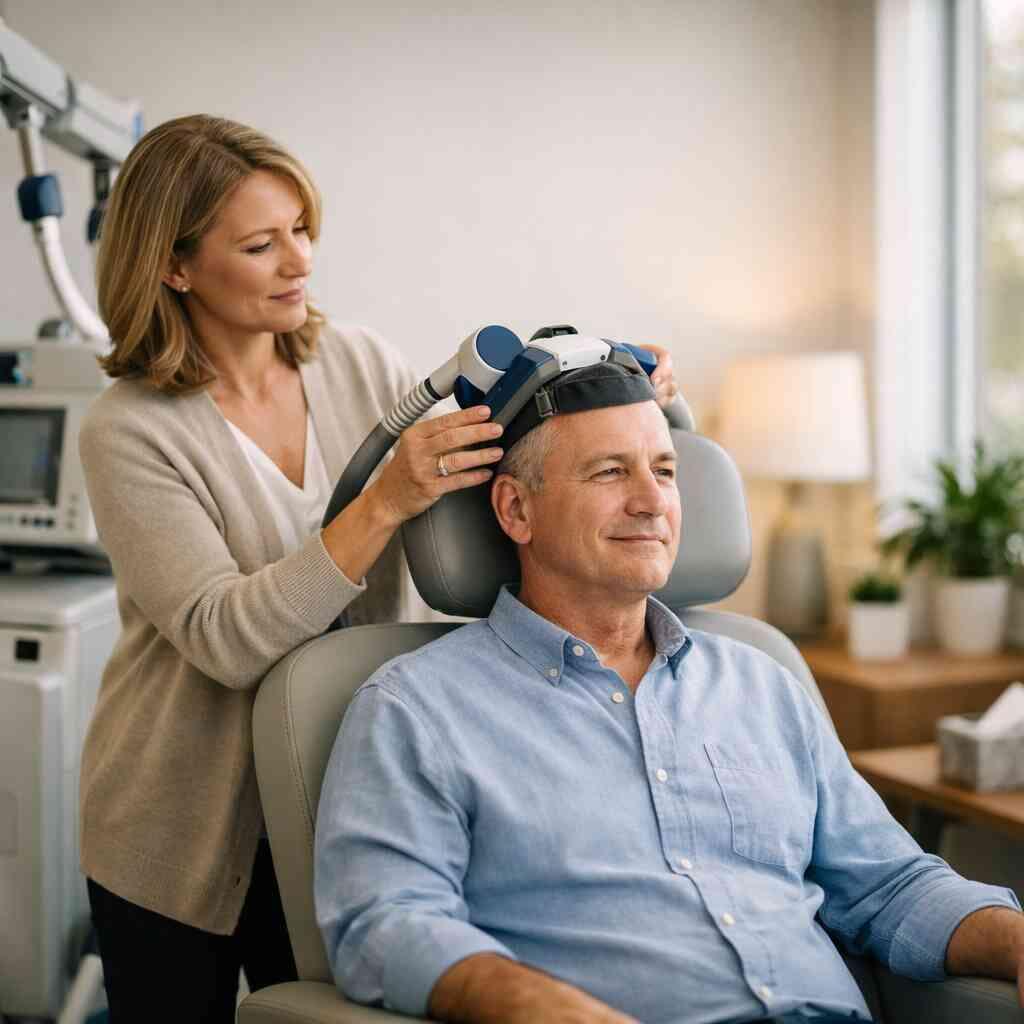
People often worry that brain stimulation sounds extreme. TMS is not ECT. It does not use anesthesia, and it does not aim to cause a seizure. Instead, it uses focused magnetic pulses to stimulate specific brain regions linked to mood. That is why many people view it as a noninvasive depression treatment.
It also differs from simply increasing or switching medication. Medication changes affect the whole body. TMS works locally and is often well suited to people who want a more targeted option. If you want a clearer overview, start with what is TMS therapy for major depressive disorder.
-
What happens inside a TMS session and why the process feels less invasive than people expect
Most people imagine TMS as complicated. The reality is more ordinary than they expect. That calm, structured feel matters when depression has already made life feel loud and unpredictable. Good care should lower that stress, not add to it.
How transcranial magnetic stimulation for depression relief works in plain language
Transcranial magnetic stimulation for depression relief uses magnetic pulses that pass through the scalp and reach brain circuits involved in mood regulation. There is no incision. There is no sedation. Most people stay awake, alert, and able to return to normal activity after the visit. For a clinical overview, see brain stimulation for depression relief.
On the projects we’ve finished this year, the biggest relief for patients has been predictability. They wanted to know what each visit would feel like. They wanted to know if they could drive afterward. They wanted to know whether it would hurt. Those are practical questions, and they deserve direct answers.
What the first TMS consultation in Delray Beach usually focuses on
A first TMS consultation in Delray Beach usually centers on eligibility, safety, and fit. The clinician should review your depression history, medication trials, any seizure risk, and whether you have metal in or near the head. They should also ask about sleep, substance use, trauma, and anxiety. If you need a fuller program alongside TMS, outpatient mental health services in South Florida may matter too.
At RECO Integrated Psychiatry, the conversation stays grounded in your goals. Some people want help getting out of bed. Others want enough relief to work, parent, or attend recovery meetings. The consultation should name the plan clearly, without pressure. If you are comparing options, that clarity is the point.
What a typical appointment feels like from check-in to heading back to Atlantic Avenue
A typical TMS visit is usually straightforward. You check in, settle into a chair, and the team confirms placement and comfort. Then the device delivers brief pulses while you sit awake. Most appointments are not long enough to feel like a disruption, which is why many people can fit them around work or school.
A client once described it as “less dramatic than I feared.” That surprised him, because he had spent weeks imagining a hospital-like setup. After the session, he walked out, grabbed coffee near Atlantic Avenue, and went back to his routine. That kind of ordinary finish often matters more than the treatment itself. It helps people keep going.
How TMS side effects and safety are discussed by licensed psychiatric clinicians
Any honest talk about TMS should include safety. Common side effects can include scalp discomfort, headache, or mild fatigue. Those effects are usually discussed before treatment begins. Good clinicians also screen for contraindications and explain what to report right away.
Here is what almost no online guide says: the safety conversation should feel specific, not generic. Ask how the clinic monitors comfort during treatment. Ask what they do if you have anxiety in the chair. Ask who is adjusting the settings. That kind of detail is a sign of thoughtful, evidence-based depression care.
-
The five questions that separate a good TMS decision from a rushed one
This part is genuinely confusing for most people. The term “TMS” sounds precise, but clinics can still vary in their process, follow-up, and coordination. You are not just choosing a device. You are choosing a care model. The questions below help you slow the process down enough to make it real.
What every patient should ask about FDA-approved depression therapy and evidence-based care
Ask whether the clinic offers FDA-approved depression therapy for the diagnosis being treated. Ask how they define progress, and what they do if symptoms stall. Ask whether the care plan fits evidence-based depression treatment standards, including careful screening and follow-up. If you want a deeper clinical frame, How RECO Integrated Psychiatry Uses TMS for Depression 2026 can help you compare options.
A strong clinic should answer plainly. You should hear about measurement, monitoring, and collaboration. You should also hear what happens if TMS is not enough by itself. That is not a weakness. It is good psychiatric practice.
How long TMS treatment takes and what consistency means for antidepressant alternatives
TMS is not a one-and-done visit. Consistency matters because the brain responds through repeated sessions. Many patients ask for a quick estimate, but the real answer depends on diagnosis, history, and response. If you are weighing alternatives to antidepressants, the schedule is part of the decision.
A simple way to think about it:
- Ask how often sessions occur.
- Ask how many weeks are typical.
- Ask how progress is measured.
- Ask what happens if you miss visits.
- Ask how the plan changes over time.
That structure can help you compare personalized psychiatric treatment options without guessing. It also makes it easier to plan around work, childcare, and transportation.
Which medication management and psychotherapy supports may still matter during TMS
TMS does not erase the rest of psychiatric care. Many people still need medication management for depression, especially when anxiety, sleep problems, or bipolar features are present. Others benefit from therapy at the same time. CBT, which means cognitive behavioral therapy, can help you challenge distorted thoughts. DBT, or dialectical behavior therapy, can help with emotional regulation and distress tolerance. If trauma is part of the picture, EMDR may also matter. That is one reason integrated psychiatric treatment often works best. RECO’s model is designed for that kind of coordination, and it fits a real-world recovery plan better than a single-tool approach. For a broader view of their approach, see evidence-based depression care. ### When Spravato and ketamine alternatives belong in the same decision tree 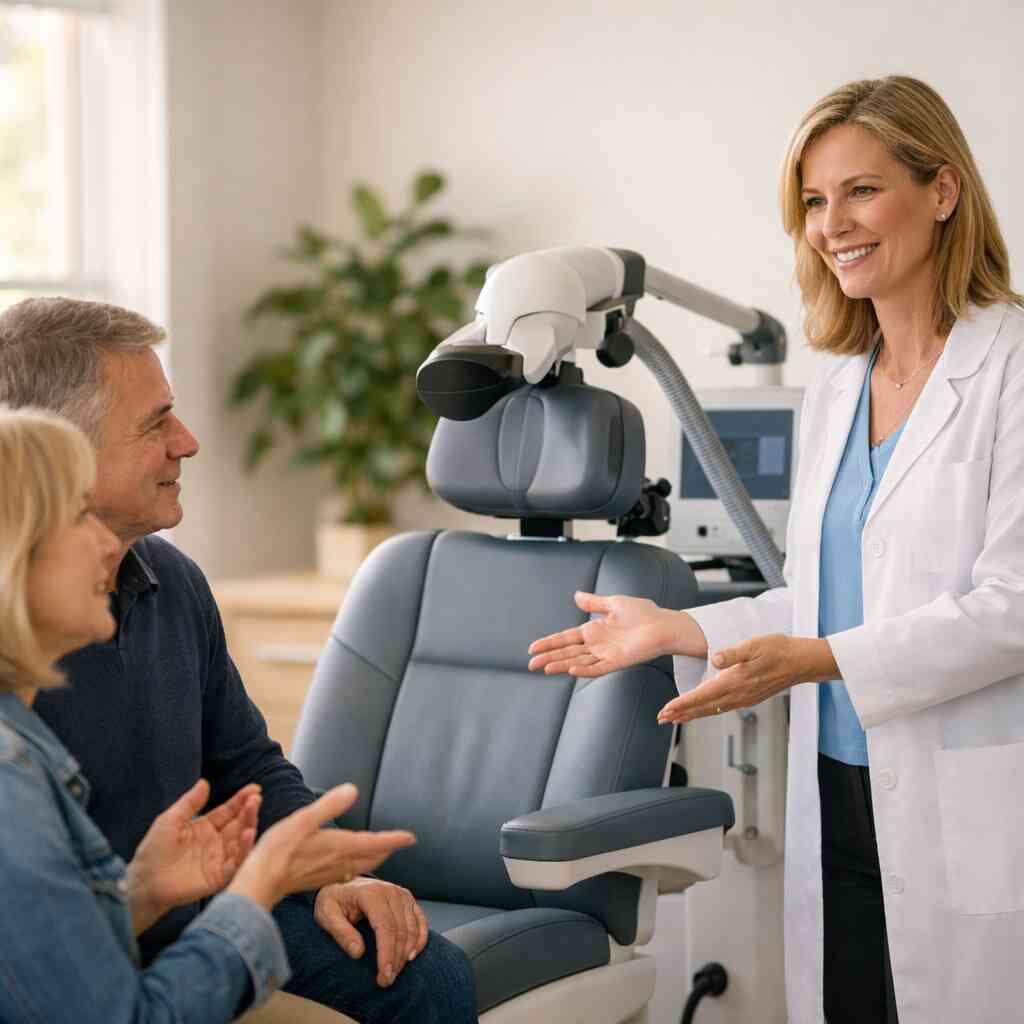
Spravato and ketamine are not the same as TMS, but they may belong in the same conversation. That is especially true if depression is severe, urgent, or tied to suicidal thinking. They also matter when a person has tried multiple medication paths. Spravato and ketamine alternatives can offer a different route, though each has its own screening and monitoring needs.
A clinician should explain why one option fits better than another. The question is not, “Which treatment sounds newest?” The question is, “Which treatment matches your symptoms, history, and tolerance for the process?” If you want a clearer comparison point, ask for an alternatives to antidepressants discussion during your visit.
How insurance verification and out-of-network benefits affect access to care in South Florida
Access matters. The best plan is useless if you cannot keep it. Before starting, ask for insurance verification and a breakdown of out-of-network benefits or self-pay options. That matters in South Florida, where people often balance care with commuting, work, and family demands. For practical help, review our insurance verification page.
A good office should not make you decode benefits alone. It should tell you what is covered, what needs authorization, and what you might owe. That clarity can reduce stress before treatment starts. It also helps you compare clinics in Palm Beach County without surprises.
-
When TMS fits a broader depression plan instead of standing alone
Sometimes TMS is the center of care. Sometimes it is one piece. The difference depends on what else is driving symptoms. Trauma, unstable routines, family conflict, and substance use can all shape how depression behaves. Good psychiatry respects that complexity.
How trauma-informed psychiatric care changes the plan for PTSD and depression
Trauma can keep the nervous system on alert long after the danger has passed. That is why trauma-informed psychiatric care matters for PTSD and depression. A clinician should ask about triggers, sleep, hypervigilance, and avoidance. They should also explain how trauma can intensify mood symptoms and make recovery slower.
This is especially important in South Florida, where many people come in carrying layered stress. Some have moved here for a fresh start. Others are trying to rebuild after years of strain. TMS may help, but the plan often works better when trauma is named clearly.
Why CBT, DBT, and EMDR trauma therapy may strengthen relapse prevention
Therapy is not a backup plan. It is often the thing that helps gains last. CBT, DBT, and EMDR trauma therapy each play a different role. CBT helps with thought patterns. DBT helps with intense emotion and impulsive reactions. EMDR helps process traumatic memories without having to retell everything in detail.
Those tools can support relapse prevention for depression by improving how you respond to stress. They also help when depression and addiction overlap. In those cases, the old coping habit often returns first. Therapy gives you something else to reach for.
How partial hospitalization program and intensive outpatient mental health care compare when symptoms stay heavy
If symptoms are heavy, TMS alone may not be enough. A partial hospitalization program offers a higher level of daily support without an overnight stay. Intensive outpatient mental health care gives structured treatment with more flexibility. The right choice depends on safety, functioning, and how much help you need each week. For some people, intensive outpatient mental health care provides the balance they need.
A family we spoke with described the choice as “wanting more support, but not wanting to disappear from life.” That is a common tension. The answer usually comes from severity, home stability, and risk. A careful evaluation should make the difference clear.
What family therapy and aftercare support add when the home environment feels unstable
If home feels tense, treatment gets harder. That is where family therapy and aftercare support matter. Loved ones may need help understanding depression, medication schedules, warning signs, and how to respond without panic. RECO’s family program can be part of that conversation when appropriate.
Aftercare is not an add-on. It is how progress gets protected. A good clinic helps you plan for setbacks, routines, refills, and follow-up. That continuity supports long-term recovery better than a short burst of care ever can.
-
The decision frame that turns uncertainty into a real next move
At this point, most readers are not asking for more theory. They want a clean way to decide. That is sensible. Good decisions feel smaller when you break them into concrete questions and local options.
How to compare outpatient mental health services in Delray Beach and Palm Beach County
Start by comparing outpatient mental health services in Delray Beach and nearby Palm Beach County clinics on process, not hype. Ask who evaluates you, how often you are seen, and how care is adjusted. Ask whether the clinic treats depression, anxiety, bipolar disorder, and co-occurring disorders in one place. That is often a sign of more stable coordination.
A local advantage matters too. Delray Beach has a dense recovery community, and proximity to Atlantic Avenue can make follow-up simpler. People who live in Boca Raton, West Palm Beach, or nearby neighborhoods often appreciate that access. The goal is not just treatment. It is treatment you can keep showing up for.
What to bring to a TMS consultation if you are balancing work, family, and recovery
Bring a medication list, prior treatment history, and any records you have from past psychiatry visits. If you are in recovery, include current supports and triggers. If you are balancing work and family, write down your schedule limits before you arrive. That makes the visit more useful.
A few items help a lot:
- Current prescriptions and supplements
- Past antidepressant trials
- Any hospital or program history
- Insurance card and benefit questions
- Notes about sleep, anxiety, and alcohol or drug use
That preparation keeps the visit focused. It also helps the clinician see the full picture faster.
When telepsychiatry for Florida residents makes more sense than in-person visits
Telepsychiatry can be a smart fit for follow-up, medication questions, and planning. For many Florida residents, it removes commuting stress and saves time. It may be especially useful when work hours are tight or the weather makes driving harder than usual. It is not a replacement for every visit, but it can support continuity.
RECO Integrated Psychiatry offers telepsychiatry for Florida residents who are eligible, which can help keep care steady. That matters when depression makes logistics feel oddly huge. Sometimes the best plan is the one you can repeat without dreading the drive.
Which signs mean it is time to ask for psychiatric care for treatment-resistant depression now
If you have been losing interest, missing work, withdrawing from people, or relying on alcohol or pills to get through the day, pay attention. If sleep, appetite, or concentration have changed for weeks, that matters too. If you have tried treatment and still feel stuck, it is time to ask again. Psychiatric care for treatment-resistant depression is not a last resort. It is a more precise response.
If you need a place to start, use our TMS consultation page and ask for a straightforward evaluation. You do not have to solve everything today. Start with one call, one intake, and one honest conversation about what has and has not worked.
Frequently Asked Questions
Question: What is TMS therapy for depression, and who is a candidate for outpatient TMS psychiatry in Delray Beach?
Answer: TMS therapy for depression, or transcranial magnetic stimulation for depression relief, is a noninvasive depression treatment that uses magnetic pulses to stimulate brain regions involved in mood regulation. It is often considered when medication-resistant depression options have not brought enough relief, or when antidepressants have caused side effects that make it hard to keep going. Many adults with treatment for major depressive disorder, co-occurring anxiety and depression, or other mood disorder treatment needs may be candidates, but the right answer always comes from a full psychiatric evaluation. At RECO Integrated Psychiatry in Delray Beach, the goal is to look at the whole picture, including sleep, trauma, medication history, safety, and daily functioning, before recommending outpatient TMS psychiatry or another evidence-based depression treatment.
Question: How does Best 5 Questions About TMS Therapy for Depression Relief 2026 help me decide whether I should schedule a TMS consultation in Delray Beach?
Answer: Best 5 Questions About TMS Therapy for Depression Relief 2026 is designed to help you slow down and make a thoughtful decision about care, instead of guessing based on marketing language alone. It walks through the most important questions to ask about TMS treatment, including how TMS works for depression, what TMS side effects and safety look like, whether FDA-approved depression therapy is appropriate for your symptoms, and how the clinic coordinates follow-up support. If you are comparing alternatives to antidepressants, depression and anxiety treatment options, or integrated psychiatric treatment, this kind of guide can help you understand what matters before your TMS consultation in Delray Beach. RECO Integrated Psychiatry encourages this kind of informed decision-making because personalized psychiatric treatment works best when you understand the plan.
Question: What should I expect during a TMS consultation in Delray Beach at RECO Integrated Psychiatry?
Answer: A TMS consultation in Delray Beach usually starts with a careful review of your depression history, prior medication management for depression, therapy experience, and any co-occurring disorders such as anxiety, bipolar disorder, OCD, or PTSD. The clinician should also ask about trauma, sleep, substance use, and whether you may need a broader support plan such as outpatient mental health services, intensive outpatient mental health care, or a partial hospitalization program. At RECO Integrated Psychiatry, the consultation is meant to be practical and compassionate, not rushed. You should leave with a clearer understanding of whether brain stimulation for depression is a fit, whether you may also benefit from medication management for depression, CBT, DBT, EMDR trauma therapy, or Spravato and ketamine alternatives, and how care can be coordinated for long-term recovery support.
Question: How does RECO Integrated Psychiatry support depression and addiction together if I am also seeking Florida addiction treatment or dual diagnosis treatment?
Answer: RECO Integrated Psychiatry is part of the RECO treatment network, so we understand that depression and addiction often overlap and should be treated together through dual diagnosis treatment and co-occurring disorders care. For many people, untreated depression can worsen alcohol use, prescription pill addiction, benzodiazepine withdrawal, or relapse risk after detox or rehab. Our outpatient psychiatry model can complement South Florida detox, inpatient rehab Palm Beach County, outpatient program Delray Beach, or mental health IOP services by helping stabilize mood, anxiety, sleep, and medication needs. We also emphasize aftercare planning, relapse prevention for depression, family therapy when appropriate, and ongoing support that fits real life. If you are searching for Florida addiction treatment, opioid rehab Delray, fentanyl treatment, heroin recovery, or cocaine detox Florida resources, psychiatric coordination can be an important part of staying well.
Question: Do you offer telepsychiatry for Florida residents, and can it support ongoing outpatient mental health services?
Answer: Yes, telepsychiatry for Florida residents can be a helpful option for follow-up visits, medication check-ins, and ongoing outpatient mental health services when in-person care is not necessary. Many people in South Florida are balancing work, family, recovery meetings, and transportation challenges, so the ability to stay connected without extra travel can make treatment much more sustainable. At RECO Integrated Psychiatry, telepsychiatry can support adults who are engaged in depression care near Palm Beach County, bipolar disorder therapy, anxiety treatment, or co-occurring anxiety and depression care. It can also be useful for continuity after a higher level of care such as a partial hospitalization program or intensive outpatient, especially when aftercare support and regular monitoring matter. If you are comparing how to choose a rehab or psychiatric provider, accessibility is often just as important as clinical quality.
Question: What makes RECO Integrated Psychiatry a strong choice for evidence-based depression treatment in Delray Beach and South Florida?
Answer: RECO Integrated Psychiatry offers adult outpatient psychiatry with a compassionate, evidence-based treatment approach that is tailored to the person, not just the diagnosis. Our team provides care for treatment-resistant depression, depression and anxiety treatment, bipolar disorder therapy, OCD, ADHD, and complex psychiatric conditions, with innovative therapies for depression such as TMS, Spravato, and ketamine treatment when appropriate. We also work within a broader recovery framework that can include trauma-informed psychiatric care, holistic depression care, family therapy, medication management for depression, and coordination with outpatient mental health services across South Florida. Located at 140 NE 4th Avenue, Delray Beach, FL 33483, we are close to the Delray Beach recovery community and serve patients seeking depression care near Palm Beach County, Boca Raton outpatient support, West Palm Beach mental health care, and broader South Florida depression care. For people comparing private rehab, outpatient program Delray Beach options, or integrated psychiatric treatment, our focus is on clear communication, licensed psychiatric clinicians, and a plan that fits real life.