Best 5 Ways RECO Intensive Rehab Supports Sober Living
Why sober living falls apart when the aftercare plan is vague If you are reading this while worrying about what happens after treatment, that fear makes sense. The quiet after discharge can feel louder than the rehab unit ever did. A vague plan leaves too much room for cravings, old contacts, and stress. That is […]

-
Why sober living falls apart when the aftercare plan is vague
If you are reading this while worrying about what happens after treatment, that fear makes sense. The quiet after discharge can feel louder than the rehab unit ever did. A vague plan leaves too much room for cravings, old contacts, and stress. That is where sober living gets shaky fast. RECO Intensive reviews often point to structure as the difference between white-knuckling and real progress.
“Go to treatment to get sober, go to RECO to learn to STAY sober. Always a great community. Staff is 5 stars. Caring, Compassionate, Loving, Helpful. It really is another family. They don’t just help you with alcohol/substance abuse, they help you with the underlying issues that cause the alcohol/substance abuse. You discharge with an effective aftercare plan that includes accountability and continued support. Brock goes above and beyond to find clients a sponsor before leaving if they choose to work a 12 step program. I really can’t say enough good about this place. I have nothing but love for RECO”– Justin T. , a 5 star review from RECO Integrated Psychiatry on Google Business Reviews
How RECO Intensive turns discharge into a real relapse prevention map
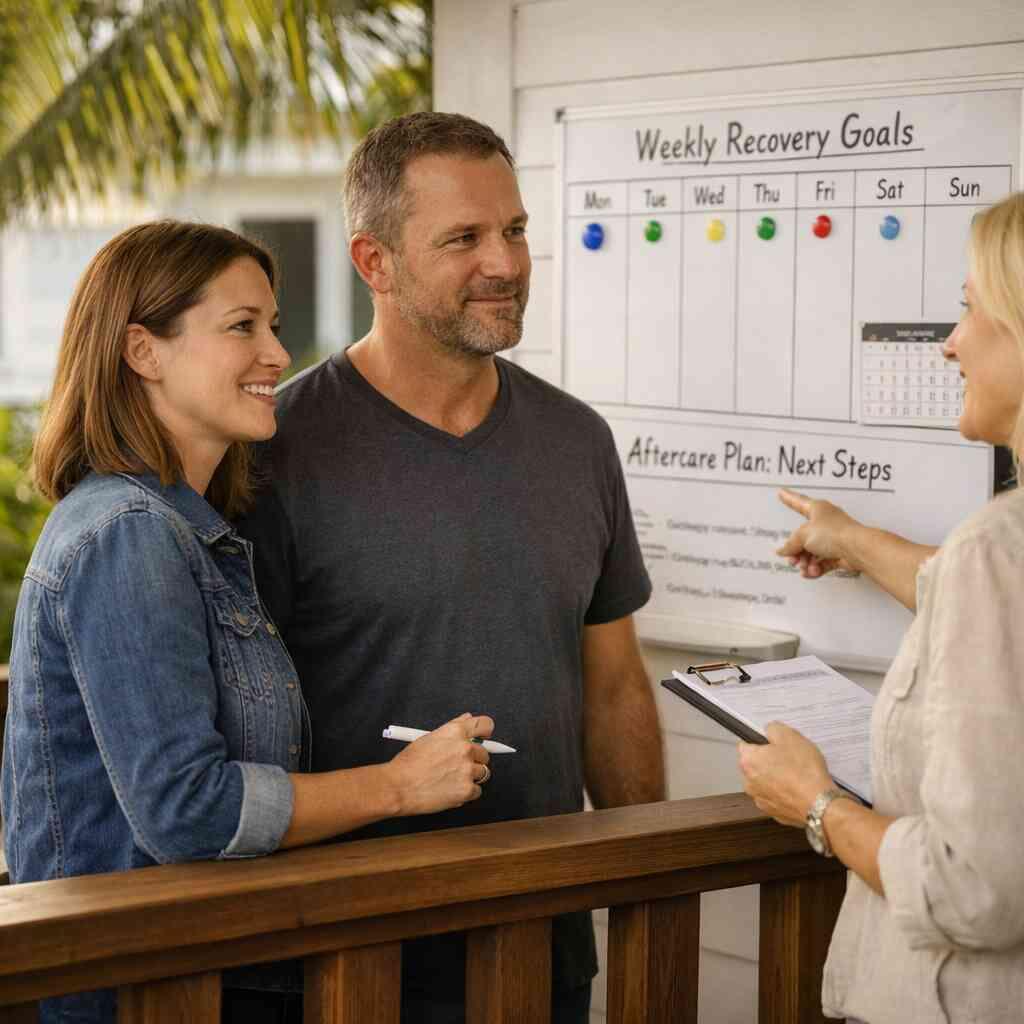
A solid aftercare plan should not read like a polite wish list. It should spell out what you do on hard mornings, who you call at night, and where you go when temptation spikes. In practice, the outpatient program in Delray Beach for continuing care helps connect treatment goals to daily life. That matters in Delray Beach rehab, where real-world stress does not pause just because formal care ends. Good planning also fits the SAMHSA model of continuing care, which supports step-down services after higher levels of treatment.
On the ground, relapse prevention works best when it is specific. You need routines, triggers, warning signs, and response steps. A person leaving a partial hospitalization program or intensive outpatient track may have new coping skills, but those skills still need repetition. Here is the part most people miss: the plan has to fit your actual life, not an ideal one. If your commute, work shift, or home situation changes, the plan should change too.
Why case management matters when housing, work, and cravings collide
Recovery gets complicated fast when housing is unstable or work stress piles up. Case management helps sort those pressures before they become a relapse trigger. That can include sober living resources, appointment coordination, transportation planning, and referrals for South Florida recovery supports. It also matters for people searching for drug rehab near me after a scare with opioids, cocaine, or prescription pill addiction. The crisis rarely exists in one box.
One client in the Boca Raton corridor came in after leaving a structured program too soon. He had motivation, but no plan for rent, work, or evenings alone. Case management helped him map his week, line up support, and reduce the gaps where cravings had room to grow. That kind of practical support often matters as much as therapy. In a coastal area like Palm Beach County, stability is built one detail at a time.
How alumni support and sober living resources keep structure after PHP and IOP end
The end of PHP or IOP should not mean the end of support. It should mean a smarter level of support. RECO Intensive alumni support for long-term sobriety extends accountability after the schedule gets lighter. That gives people a place to check in, rebuild confidence, and catch small problems before they become large ones. Alumni contact also reinforces that recovery is a process, not a single event.
There is a reason the best aftercare models use layers. They pair sober living resources, peer support, and ongoing clinical touchpoints. They also help people move from crisis thinking to maintenance thinking. That shift can feel boring at first. It is not boring at all. It is how long-term recovery starts to hold.
-
The five daily anchors that make recovery livable outside treatment
Recovery outside treatment needs rhythm. Motivation comes and goes. Routine stays. That is why the best sober living support is built around daily anchors you can repeat on a tired Tuesday or an anxious Sunday. In Florida addiction treatment, especially around Delray Beach and South Florida recovery hubs, routine often becomes the quiet engine behind change.
Why routine beats motivation when cravings and stress spike
Cravings grow louder when your day has too much empty space. A clear schedule reduces that risk. It can be as simple as waking at the same hour, eating breakfast, attending a meeting, and calling a support person before work. Those small actions create momentum. They also lower decision fatigue, which often hits people in early recovery harder than they expect.
A strong outpatient program Delray Beach patients can rely on usually teaches people to build the day before the day builds them. That sounds simple, but it changes outcomes. Many people leaving South Florida detox or an alcoholism treatment center feel fine at noon and unsettled by evening. Routine helps you survive the hours that usually turn into trouble. It is the most ordinary tool, and often the most effective one.
How life skills training, coping skills, and nutritional counseling support stability
Recovery is harder when basic life tasks feel scrambled. Life skills training can cover meal planning, sleep habits, budgeting, job routines, and communication. Coping skills then help you handle the stress that used to trigger drinking or drug use. Nutritional counseling matters too, especially after cocaine recovery or opioid recovery patients have gone through a rough stretch physically. Bodies need repair before minds can settle.
What we have seen in 2026 specifically is that people often underestimate the link between food, mood, and cravings. Skipping meals can make irritability feel like a relapse warning. Drinking too much caffeine can mimic anxiety. A balanced breakfast is not a cure, of course. Still, it can make the rest of the day easier to manage.
Here is a simple anchor list many people use:
- Wake up at the same time each day.
- Eat within an hour of waking.
- Move your body for ten minutes.
- Attend one support contact or meeting.
- Prepare for the next day before evening.
Where mindfulness meditation, yoga therapy, and art therapy fit into a sober week
Not every tool has to feel clinical to be useful. Mindfulness meditation teaches you to notice a craving without obeying it. Yoga therapy can calm the body after long stress cycles. Art therapy gives shape to feelings that are hard to explain out loud. These approaches fit well inside holistic recovery when used alongside evidence-based treatment. They do not replace therapy. They support it.
A young adult in a mental health IOP once told staff that five minutes of breathing before group changed everything. That may sound small. It was not small to him. It gave him enough distance to stay in the room and speak honestly. That is how recovery often works. Small tools, used often, become real protection.
-
When co-occurring disorders need more than abstinence
Some people think sobriety alone will fix everything. It does not always work that way. Depression, anxiety, bipolar disorder, PTSD, and substance use often show up together. That is why dual diagnosis treatment matters. If the mental health piece stays untreated, alcohol or drugs often return as self-medication.
How dual diagnosis treatment helps depression and addiction stay on the same treatment plan
Dual diagnosis means a person has both a substance use disorder and a mental health condition. NIDA and SAMHSA both support treating these conditions together, not in isolation. That approach matters for depression and addiction, anxiety treatment, bipolar disorder therapy, and co-occurring disorders. The plan should address mood, sleep, energy, cravings, and safety in one framework. If you only treat one side, the other side often pulls the person back.
RECO Integrated Psychiatry is built around that reality. The psychiatric team supports capable adults who need careful medication management and ongoing evaluation. That is especially useful for people looking for a Florida addiction treatment setting that also understands mental health IOP needs. The model is direct, steady, and deeply human. It respects that symptoms can overlap and shift.
When trauma therapy South Florida patients need CBT, DBT, or EMDR trauma therapy
Trauma often sits underneath substance use. Sometimes it is obvious. Sometimes it hides under anger, shutdown, or perfectionism. That is where trauma therapy South Florida patients may need cognitive behavioral therapy, dialectical behavior therapy, or EMDR trauma therapy. These approaches have strong evidence bases for many trauma-related symptoms and coping problems. They can help people track thoughts, tolerate distress, and process painful memories more safely. 
One person with heroin recovery needs may use substances to blunt flashbacks. Another with benzodiazepine withdrawal history may feel constant alarm even after detox ends. In either case, therapy has to match the nervous system, not just the diagnosis. A clinical plan that ignores trauma usually feels incomplete. A plan that names it can feel like finally getting the right map.
Why medication management and MAT options like Suboxone maintenance or Vivitrol injections may matter
Some recovery plans need medication-assisted treatment. That can include Suboxone maintenance for opioid use disorder or Vivitrol injections for alcohol or opioid relapse prevention, when clinically appropriate. Medication management does not replace counseling. It supports stabilization so therapy can work better. That is especially important for fentanyl treatment, opioid rehab Delray, and prescription pill addiction recovery.
A practical comparison helps:
NeedClinical supportOpioid cravings and withdrawal riskSuboxone maintenanceAlcohol relapse preventionVivitrol injectionsMood instabilityPsychiatric medication managementTrauma symptomsCBT, DBT, or EMDR trauma therapyFor people searching for dual diagnosis treatment for co-occurring disorders, the key question is not “medication or therapy.” It is “which combination helps you stay stable enough to live your life?”
-
What family, peers, and the Delray Beach recovery community can do that will not
Recovery rarely holds in isolation. You can do a lot on your own. Still, family, peers, and community change the pressure around you. That pressure matters. A person can have strong will and still get worn down by conflict, shame, or loneliness. The Delray Beach recovery community gives people more than meetings. It gives rhythm, familiarity, and proof that change is possible nearby.
How family therapy and family weekend reduce the pressure that fuels relapse
Family systems can support recovery or strain it. Sometimes both happen in the same week. Family therapy for recovery and sober living stability helps relatives learn how to speak clearly, set limits, and stop rescuing or blaming. Family weekend can also reduce confusion by giving everyone shared language. That matters when a parent, spouse, or adult child keeps trying to help but keeps landing on the wrong approach.
We hear this from families almost every week: “We do not want to say the wrong thing.” That fear is real. Good family work answers it with structure. It teaches people how to respond to a lapse, how to support a meeting schedule, and how not to become the entire recovery plan. That balance is healthier for everyone involved.
Why group therapy activities and 12-step alternatives or SMART Recovery widen the support net
Peer support works because it lowers shame. Group therapy activities give people a place to hear familiar stories without feeling studied. Group therapy activities for relapse prevention can also help people practice honesty, repair, and listening. Some people connect with 12-step alternatives. Others prefer SMART Recovery. Both can be useful when they fit the person.
This is where access matters. A person in Broward County rehab or West Palm Beach mental health care may need options that match schedule, belief, and comfort. Recovery support should not force one script. It should widen the net. For many, that flexibility is what keeps them engaged after treatment ends.
How a coastal healing environment near Atlantic Avenue and Palm Beach County helps sober living feel possible
Environment does influence recovery. A calm morning near the beach can lower stress enough to make a meeting feel reachable. The bustle of Atlantic Avenue can also remind you that life is still moving. In Delray Beach, the mix of ocean air, walkable streets, and a visible recovery community creates a setting many people find grounding. It is not magic. It does help.
One woman who had left a residential treatment facility described her evenings as the hardest part. She started walking after dinner near quiet side streets instead of sitting alone with her phone. That small change helped her get through the danger window. On days like that, beachside recovery feels less like a slogan and more like a practical advantage.
-
The decision point that tells you whether RECO Intensive is the right next move
Choosing care can feel overwhelming. The labels blur together. Residential treatment facility, partial hospitalization program, intensive outpatient, aftercare support — it can all sound similar when you are stressed. The real question is simpler. What level of support do you need right now to stay safe and stable?
How to compare an outpatient program Delray Beach option with residential treatment facility care
A residential setting offers the most structure. It works well when the home environment is unstable, use is severe, or safety is a concern. An intensive outpatient program in Delray Beach support gives more freedom while keeping frequent clinical contact. A partial hospitalization program in Delray Beach recovery sits between those levels. The right choice depends on symptoms, housing, work, transportation, and relapse risk.
Level of careBest fitResidential treatment facilityHigh structure and safety needsPHPDaily treatment with some independenceIOPStrong support while living at homeOutpatientSteady follow-up and maintenanceIf you are comparing options like Delray Beach rehab or inpatient rehab Palm Beach County programs, ask how each level handles cravings, family stress, and co-occurring disorders. That is where the answer usually becomes clear.
What to ask about insurance verification, self-pay options, and out-of-network benefits before admission
Money worries can delay care. They also deserve direct answers. Ask about insurance verification, out-of-network benefits, self-pay options, and what documentation the intake process needs. Many Florida rehabs that take insurance can help you understand Aetna, Cigna, and Blue Cross Blue Shield coverage, but specifics vary. You should never guess about coverage when you are already overwhelmed.
Ask these questions before admission:
- What is covered at each level of care?
- What forms do you need from my plan?
- Are telepsychiatry visits available for Florida residents?
- How do you handle private rehab billing?
- What happens if benefits change during treatment?
That conversation should feel clear, not rushed. If it does not, keep asking until it does.
Why long-term recovery improves when aftercare planning, vocational support, and the alumni program stay active
The best programs do not end at discharge. They keep the thread going. Sober living support and aftercare planning in long-term recovery works best when vocational support, coping skills, and alumni contact remain active. That continuity matters for young adult rehab clients, professionals, LGBTQ+ affirmative treatment needs, veterans addiction help, and gender-specific treatment concerns. Different lives need different supports, but the principle stays the same.
RECO Integrated Psychiatry fits into the larger RECO Health Network, which helps people move between services without losing momentum. That is useful when someone needs psychiatric care for depression and addiction, or follow-up for bipolar disorder therapy and anxiety treatment. The RECO Intensive for continuing recovery support model aligns with continuing care best practices because it treats recovery as maintenance. If you are weighing next steps, start with one honest conversation. Ask what level of care fits your life now, not your best-case version of it. You do not have to map the whole road today, but you can choose the next turn with more clarity.
Frequently Asked Questions
Question: How does Best 5 Ways RECO Intensive Rehab Supports Sober Living connect with RECO Integrated Psychiatry’s outpatient psychiatry and aftercare planning?
Answer: The blog title reflects a core idea we support every day: sober living works best when treatment continues after the most intensive phase ends. At RECO Integrated Psychiatry in Delray Beach, our role is to help connect aftercare planning, relapse prevention, and ongoing psychiatric support so people are not left guessing once PHP or intensive outpatient care ends. That may include medication management, follow-up for depression and addiction, anxiety treatment, bipolar disorder therapy, and support for co-occurring disorders. We also help patients think through real-life factors like routines, triggers, housing, work stress, and transportation, because recovery is not just clinical — it is practical. For people seeking Florida addiction treatment or an outpatient program Delray Beach residents can access, this kind of step-down support can make sober living more stable and more realistic.
Question: What makes dual diagnosis treatment important for people leaving Delray Beach rehab or South Florida detox?
Answer: Many people leaving Delray Beach rehab or South Florida detox are managing more than one issue at the same time. Dual diagnosis treatment matters because substance use and mental health symptoms often reinforce each other. If anxiety, PTSD, bipolar disorder, OCD, or depression are left untreated, relapse risk can increase because alcohol or drugs may have been used to cope with distress. At RECO Integrated Psychiatry, we approach these concerns with evidence-based treatment and careful psychiatric evaluation so that the plan supports both recovery and mental stability. Depending on what is clinically appropriate, that may involve medication management, therapy coordination, or discussion of options such as Suboxone maintenance or Vivitrol injections for relapse prevention. The goal is not to treat one problem while ignoring the other; it is to build a plan that supports long-term recovery and a safer return to daily life.
Question: Do you offer support for trauma therapy South Florida patients who need CBT, DBT, or EMDR trauma therapy?
Answer: Yes, we work with patients whose recovery is complicated by trauma, whether that trauma is tied to PTSD treatment needs, chronic stress, or painful life experiences that have affected substance use. Trauma therapy South Florida patients often need more than abstinence-based care. They may need cognitive behavioral therapy, dialectical behavior therapy, or EMDR trauma therapy as part of a broader treatment plan. These approaches can help people understand triggers, manage distress, and reduce the urge to self-medicate. At RECO Integrated Psychiatry, we try to match the level of care to the person, not just the diagnosis. For someone in mental health IOP, or someone transitioning from an alcoholism treatment center or opioid rehab Delray program, trauma-informed care can be a major part of stabilizing symptoms and supporting sober living resources for the long term.
Question: How do medication management and treatment options like TMS, Spravato, and ketamine fit into recovery support at RECO Integrated Psychiatry?
Answer: Medication management can play an important role when someone is dealing with treatment-resistant depression, anxiety disorders, OCD, bipolar disorder, or complex psychiatric conditions during recovery. At RECO Integrated Psychiatry, we offer outpatient psychiatry in Delray Beach with access to FDA-approved innovative therapies such as Transcranial Magnetic Stimulation (TMS), Spravato (esketamine), and ketamine treatment when clinically appropriate. These options are not substitutes for therapy or sober living support, but they can be valuable tools when symptoms are getting in the way of progress. For a person navigating prescription pill addiction recovery, heroin recovery, fentanyl treatment, or benzodiazepine withdrawal history, it is often essential to stabilize psychiatric symptoms so coping skills and aftercare support can actually take root. We focus on careful evaluation and evidence-based treatment, always with the understanding that every recovery path is different.
Question: What should I know before choosing between a residential treatment facility, partial hospitalization program, or intensive outpatient care in Delray Beach?
Answer: The right level of care depends on your symptoms, safety, home environment, and relapse risk. A residential treatment facility offers the most structure, which may be appropriate if the home setting is unstable or use is severe. A partial hospitalization program provides daily treatment with more independence, while intensive outpatient allows people to live at home while still receiving meaningful clinical support. At RECO Integrated Psychiatry, we help patients think through what is realistic for their life now, not just what sounds ideal. If you are comparing a partial hospitalization program to an outpatient program Delray Beach residents use for ongoing support, we can help you understand how psychiatric care, medication management, and follow-up fit into that decision. We also work alongside the broader RECO network, which supports continuity across South Florida recovery needs. For many people, the best choice is the one that makes aftercare planning sustainable, not overwhelming.
Question: Do you help with insurance verification, self-pay options, and access for Florida rehabs that take insurance?
Answer: Yes. We understand that cost questions can delay care, so we encourage people to ask about insurance verification, out-of-network benefits, and self-pay options early in the intake process. Many patients want to know whether their plan may help with outpatient psychiatry, dual diagnosis care, or other services connected to long-term recovery. While coverage depends on the plan, we can help patients sort through the basics and understand what information is needed before treatment begins. That is especially important for people searching for Florida rehabs that take insurance, or those comparing options in Palm Beach County treatment centers, Broward County rehab, or West Palm Beach mental health settings. Our goal is to make the process clearer and less stressful so people can focus on getting help instead of trying to decipher benefits alone.