Best 6 Depression and Addiction Resources for South Florida
When depression and addiction start feeding each other in South Florida If you are reading this while feeling worn down, scared, or stuck, that makes sense. Depression and addiction often blur together quickly. You may wonder which problem started first, and that question can keep people frozen for months. In Delray Beach and across South […]

-
When depression and addiction start feeding each other in South Florida
If you are reading this while feeling worn down, scared, or stuck, that makes sense. Depression and addiction often blur together quickly. You may wonder which problem started first, and that question can keep people frozen for months. In Delray Beach and across South Florida, the better question is simpler: what kind of care helps both at once?
Why a dual diagnosis lens matters more than guessing which problem came first
A dual diagnosis lens looks at co-occurring disorders, meaning mental health symptoms and substance use are happening together. That matters because alcohol, cocaine, fentanyl, prescription pill addiction, and even benzodiazepine withdrawal can intensify depression and anxiety. At the same time, untreated depression can lead to more substance use. NIDA and SAMHSA both support integrated care for this exact reason. If you only treat one side, the other side often pulls everything back down.
One client in the Lake Worth area had been cycling between late-night drinking and days spent in bed. He kept asking whether the drinking caused the depression, or the depression caused the drinking. The real answer was both. Once the care plan addressed mood, sleep, cravings, and safety together, things became less confusing and far more manageable.
The signs that point to co-occurring disorders rather than a single issue
The warning signs are often clear once you know what to look for. You may notice low mood, irritability, poor sleep, missed work, social withdrawal, and increasing substance use. You may also see panic, shame, or sudden mood shifts that do not match the situation. If you are using alcohol or drugs to get through the day, that is a major clue. So is needing more to feel the same effect.
Other common signs include repeated relapse, self-medicating after conflict, and feeling worse after using rather than better. People with bipolar disorder, OCD, ADHD, or trauma histories can face this pattern too. In South Florida, many families call asking about depression and addiction resources in South Florida because the whole picture feels too tangled for one appointment. That feeling is real. It usually means the situation needs a broader clinical lens.
Why Delray Beach recovery resources need to fit both mental health and substance use at once
Delray Beach has a strong recovery community, but not every resource fits every need. Some people need a residential treatment facility. Others need a partial hospitalization program, a mental health IOP, or an outpatient program in Delray Beach they can attend while keeping work or family duties. The right fit depends on risk, stability, and how much support you need each week.
Here is the part most people miss: the best plan is rarely just detox or just therapy. It is usually a blend of medication management, evidence-based treatment, coping skills, and practical support. At RECO Integrated Psychiatry, our model is built for that overlap, and our South Florida recovery resources near Delray Beach reflect that integrated approach. That matters when you are trying to heal without feeling processed through a system.
-
Depression and addiction resource one: outpatient program Delray Beach
Not everyone needs to step away from life completely. Some people need structure, but they also need to keep working, caring for children, or staying connected to school. That is where outpatient care earns its place. In South Florida, a strong outpatient track can bridge the gap between crisis and stability without forcing a full residential stay.
Who benefits when structured care is needed without full residential treatment
Outpatient care can help if you are medically stable but still struggling with cravings, mood swings, or repeated relapse. It can also help if you have finished detox and need consistent follow-up. People with dual diagnosis often do best when psychiatry and addiction support are part of the same plan. That is especially true for depression and addiction, where mood changes can quickly affect substance use.
This level of care can fit young adults, professionals, parents, and people who need privacy. It can also help if you are looking for a private rehab feel without living on campus. Some patients want support near the coast, near Atlantic Avenue, but still need to sleep at home. That is a real need, not a luxury.
How PHP and intensive outpatient differ when life still has to keep moving
A partial hospitalization program, or PHP, gives more structure than intensive outpatient. It usually means more hours per week, more clinical contact, and more daytime support. IOP, or intensive outpatient, is lighter but still structured. If you are asking what is PHP vs IOP, the answer usually comes down to intensity, schedule, and symptom severity.
Level of careGeneral structureBest forPHPMore weekly clinical hoursHigher symptoms, recent instability, need for daily supportIOPFewer weekly hoursSteadier patients who still need therapy and accountabilityIf you want a deeper comparison, this PHP vs IOP in Delray Beach guide helps clarify the difference. If you are already stable enough for flexible care, intensive outpatient care in Delray Beach may fit better. The right answer depends on risk, support, and how much structure your week can hold.
What a strong outpatient track should include from group therapy to case management
A solid outpatient program should not feel thin or generic. It should include psychiatric evaluation, medication management, therapy groups, relapse planning, and case management. It should also address sleep, anxiety, family stress, and work pressure. If trauma is part of the picture, trauma therapy should be available, not treated as an afterthought.
Strong programs often include cognitive behavioral therapy, dialectical behavior therapy, family therapy, and practical coordination with sober living resources. Some also offer vocational support, nutritional counseling, mindfulness meditation, and aftercare planning. At RECO, our outpatient program in Delray Beach for mental health and addiction is designed to support this kind of layered care. That structure can make the difference between drifting and actually building momentum.
-
Depression and addiction resource two: South Florida detox and medication support
Detox can sound simple from the outside. It rarely is. If you are using alcohol, opioids, or benzodiazepines, stopping suddenly can be medically risky. That is why South Florida detox should be treated as a clinical decision, not a tough-it-out challenge.
When detox belongs in a licensed setting instead of being managed at home
Detox belongs in a licensed setting when symptoms could become dangerous, unpredictable, or severe. That includes heavy alcohol use, opioid dependence, fentanyl use, or benzodiazepine withdrawal. It also includes people with depression who may have suicidal thoughts, severe anxiety, or unstable sleep. If you are not sure how long detox is for your situation, a medical assessment is the safest place to start.
On the projects we’ve finished this year, the biggest mistake we see is people trying to detox alone because they feel embarrassed. That shame is understandable, but it can delay care. If you are searching for a South Florida detox and medication support option, look for monitoring, clear symptom tracking, and psychiatric oversight. That is especially important when withdrawal overlaps with depression.
How alcohol, opioid, and benzodiazepine withdrawal change the level of care
Alcohol withdrawal can include tremors, sweating, agitation, high blood pressure, and, in some cases, seizures. Opioid withdrawal often brings muscle aches, nausea, diarrhea, and intense cravings. Benzodiazepine withdrawal can be even more complex, with rebound anxiety, insomnia, panic, and seizure risk. That is why cocaine detox Florida, opioid rehab Delray, fentanyl treatment, and heroin recovery often require different care plans.
Most people do not realize how quickly these symptoms can change. A person can seem stable in the morning and much worse by nightfall. That is why licensed monitoring matters. It gives the team a chance to respond before symptoms become a crisis. For families near Boca Raton, West Palm Beach, or Fort Lauderdale, that level of support can reduce panic and improve safety.
Where medication-assisted treatment such as Suboxone maintenance and Vivitrol injections may fit
Medication-assisted treatment can help reduce cravings and lower relapse risk for some patients. Suboxone maintenance is often used for opioid use disorder. Vivitrol injections may also fit in certain recovery plans, especially when ongoing craving prevention is needed. These medications do not replace therapy. They support it.
At RECO, medication decisions are made carefully and individually. That means reviewing history, current symptoms, and goals before starting anything. If you are looking for what to know about medication management after detox, the main point is simple: medication works best when it is part of a larger recovery plan. That plan should include therapy, monitoring, and realistic next steps.
-
Depression and addiction resource three: trauma therapy South Florida
Trauma often sits under the surface of depression and addiction. Sometimes it is obvious. Sometimes it hides behind overworking, numbness, rage, or constant self-blame. If you have ever used substances to quiet your nervous system, you already know how deeply trauma can shape behavior.
Why unresolved trauma can keep relapse and depression locked together
Unresolved trauma can keep the body stuck in alert mode. That can look like hypervigilance, shutdown, insomnia, panic, or emotional flooding. People often drink or use drugs to escape those sensations for a few hours. Then the shame returns, and the cycle tightens. That is one reason trauma therapy South Florida patients receive should be integrated with addiction care.
This is not about weakness. It is about protection that got stuck. A person may have learned long ago that numbness felt safer than feeling everything. If your depression gets worse after conflict, loss, or memories, trauma may be part of the story. That deserves care with skill and patience.
How CBT, DBT, and EMDR trauma therapy are used for PTSD treatment and anxiety treatment
Cognitive behavioral therapy helps you notice the thoughts that feed depression and relapse. Dialectical behavior therapy teaches emotion regulation, distress tolerance, and better response patterns. EMDR trauma therapy can help process traumatic memories in a structured way. These therapies have evidence behind them, and clinicians use them for PTSD treatment and anxiety treatment because they can reduce suffering over time.
If you are comparing options, ask how the program uses each therapy and why. A good team should explain the method in plain language. If you want a focused resource, what is EMDR therapy for trauma recovery in Palm Beach County can help you understand the basics. Trauma work should feel paced, grounded, and safe.
What family therapy and group therapy activities add when shame has taken over
Shame thrives in secrecy. Family therapy helps bring the truth into the room without turning it into blame. Group therapy activities can also help you hear, very clearly, that your story is not the only one like it. That matters in recovery, especially when isolation has become a habit. 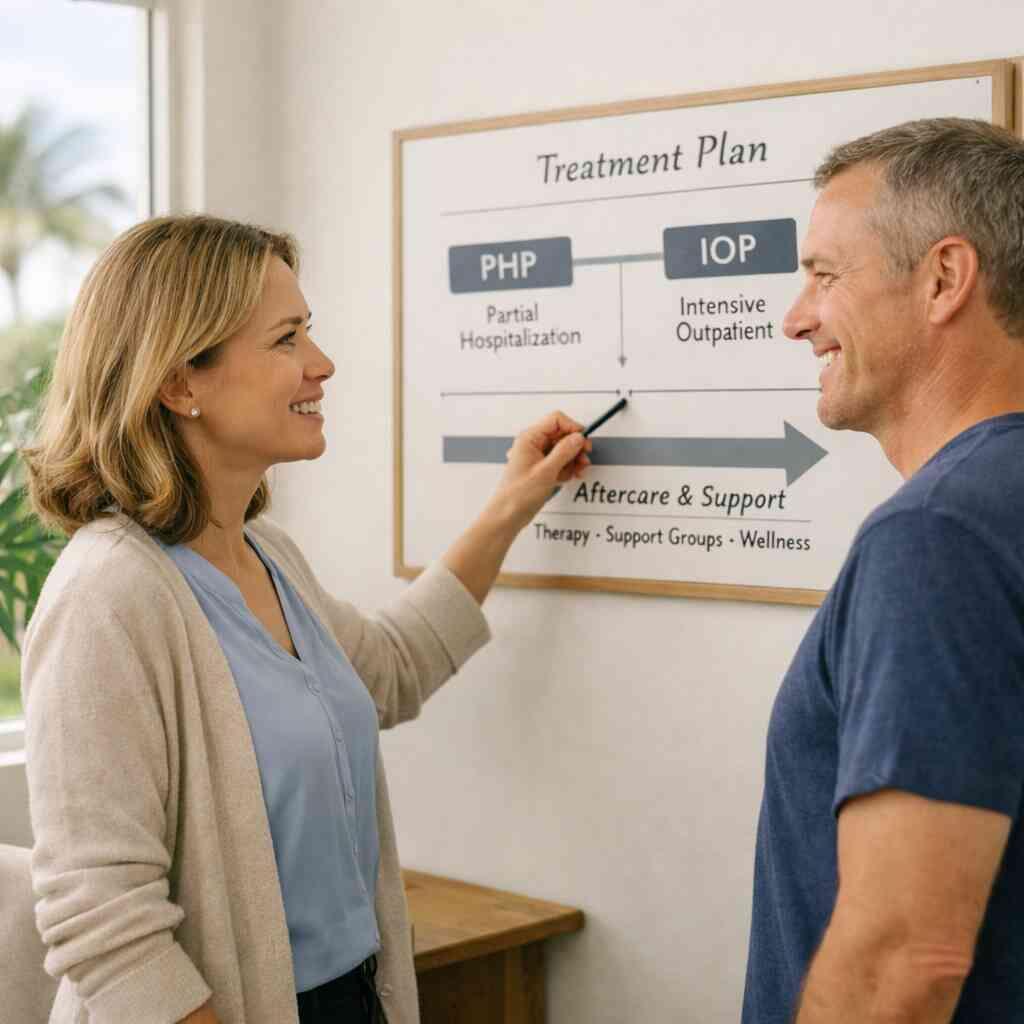
One client from near the Intracoastal said group was the first place he stopped performing. He had spent years sounding fine while quietly unraveling. In group, he heard his own patterns reflected back with honesty, not judgment. That kind of mirror can be powerful. If family support is part of your situation, family therapy for co-occurring disorders can help everyone learn a better way to respond.
“when my closest friend was struggling, I pointed them straight to Rico Psychiatry, and it was one of the best decisions I’ve made. They didn’t just treat them like another case they made them feel heard, valued, and genuinely cared for. I saw them come out stronger, with a smile I hadn’t seen in years. I’m beyond grateful to have such a safe, trusted place to recommend it’s like a second family.”– Todd P., a 5 star review from RECO Integrated Psychiatry on Google Business Reviews
-
Depression and addiction resource four: sober living and aftercare planning
Recovery after a higher level of care can feel strangely fragile. You may leave treatment with more insight, but also more exposure. That is where sober living resources and aftercare planning matter. They help turn short-term progress into long-term recovery.
How sober living resources support long-term recovery after a higher level of care
Sober living can provide structure when home feels too chaotic or too triggering. It can support routines, accountability, and safer social circles. That can matter after detox, PHP, or inpatient rehab Palm Beach County residents may complete before stepping down. Many people also use sober living as a buffer while they build work, housing, or family stability.
The right setting should support recovery without making it feel punitive. You want clear expectations, not constant stress. You also want access to therapy, meetings, and practical help. For many people, that bridge is what makes early recovery possible.
Why relapse prevention works better when coping skills and life skills training are built in
Relapse prevention is not just about saying no. It is about learning what to do when stress, grief, boredom, or loneliness show up. That is why coping skills matter. So do life skills training, vocational support, nutritional counseling, and time planning. If you do not build those pieces in, stress will fill the gap.
Some people do well with 12-step alternatives like SMART Recovery. Others prefer a mix of meetings and therapy. Either way, the goal is the same: create a daily life that is less fragile. If you want a structured model, group therapy for long-term recovery can reinforce those skills while you practice them in real time.
How alumni program support and smart aftercare planning can steady early recovery
An alumni program keeps the connection alive after formal treatment ends. That may include check-ins, peer contact, workshops, or community events. It helps because people often feel a dip in support after discharge. That dip is normal, but it can be risky if it catches you alone.
Smart aftercare planning should include appointments, therapy follow-up, medication review, sober contacts, and crisis steps. It should also answer practical questions: where will you go, who will you call, and what will you do on hard days? If you want to see how continuity is built, how RECO builds aftercare plans for recovery gives a clear example. The goal is not perfection. It is steady support.
-
Depression and addiction resource five: how to choose the right South Florida rehab
Choosing a rehab can feel like comparing strangers who all sound similar. That is frustrating. It should be easier than that. The right center should explain its care clearly, answer direct questions, and respect your limits.
What to look for in licensed clinicians, Joint Commission accreditation, and evidence-based treatment
Start with the basics. Look for licensed clinicians, evidence-based treatment, and clear medical oversight. Ask how the team treats dual diagnosis, co-occurring disorders, and conditions like bipolar disorder therapy or ADHD when needed. Ask whether the program uses CBT, DBT, EMDR, and medication management in a coordinated way.
You can also ask about accreditations and licensing. Joint Commission accreditation is one quality marker, and Florida licensure matters too. If a center cannot explain its clinical model clearly, keep looking. A strong program should sound organized, not vague. For deeper guidance, how to choose a rehab in Florida is a useful place to start.
How to compare Florida rehabs that take insurance including Aetna, Cigna, and Blue Cross Blue Shield
Insurance should not be a guessing game. Florida rehabs that take insurance may accept Aetna, Cigna, Blue Cross Blue Shield, or other plans. But coverage varies, and benefits can change by level of care. That means you need a real verification, not a casual yes.
A useful comparison looks like this:
- What levels of care are covered
- What prior authorization is needed
- Whether the program is in-network or out-of-network
- What your deductible and copay may be
- Whether family therapy and medication visits are included
If you are in Broward County rehab searches, Miami addiction help searches, or West Palm Beach mental health searches, the insurance question still comes first. Cost clarity matters. So does speed.
Why insurance verification, out-of-network benefits, and self-pay options should be clear before intake
You deserve clear numbers before you commit. Ask for insurance verification before intake. Ask what out-of-network benefits apply if the center is private rehab. Ask about self-pay options if your plan is limited. That conversation should happen early, not after the bill arrives.
If you are comparing programs near the coast, near Atlantic Avenue, or anywhere in Palm Beach County treatment centers, do not rush this part. Good care should feel transparent from the start. At RECO, the intake process is designed to be direct and respectful, and our admissions insurance team can help you understand your options. If you are ready, make one call today. You do not have to solve everything at once, and you do not have to keep guessing about what care should look like.
Frequently Asked Questions
How long does detox last at a Delray Beach rehab?
Detox length depends on the substance, how long you have used it, and your overall health. Alcohol and benzodiazepine withdrawal can require closer monitoring than many people expect. Opioid withdrawal may peak and improve faster, but cravings can last longer. A clinical team should assess your symptoms before giving a timeline.
What is the difference between PHP and IOP?
PHP, or partial hospitalization, provides more weekly structure and more clinical hours. IOP, or intensive outpatient, gives support with a lighter schedule. PHP is often better when symptoms are more active or recent. IOP works well when you are stable enough for fewer hours but still need regular therapy and accountability.
Does RECO take my insurance?
Coverage depends on your plan and benefits. RECO can help verify insurance and explain what may apply to your level of care. This includes in-network and out-of-network possibilities, plus self-pay options if needed. The best next step is to request a benefits check before intake.
Can I get help for depression even if I do not have a substance problem?
Yes. RECO Integrated Psychiatry treats depression, anxiety, OCD, bipolar disorder, ADHD, and other psychiatric conditions. If substance use is also present, the care plan can address both. If not, treatment can focus on psychiatry, therapy, and medication management. The right plan depends on your symptoms and goals.
Is family involved in treatment?
Family involvement depends on your needs and consent. In many cases, family therapy can help improve communication, reduce blame, and support recovery at home. That can be especially helpful when co-occurring disorders affect the whole household. Family support is often strongest when everyone understands the plan.
What should I ask before choosing a rehab in South Florida?
Ask about licensing, clinical staff, levels of care, therapy options, and medication support. Ask whether the program treats dual diagnosis and how it handles relapse prevention. Ask about insurance verification, out-of-network benefits, and aftercare planning. Clear answers are a good sign.