Best 6 Family Support Tips for Heroin Recovery in Florida
When a loved one is still using heroin, know what support actually helps If you are reading this while worrying about a loved one, that tight feeling in your chest makes sense. Heroin use can change quickly, and families often feel stuck between hope and fear. The hard part is that panic rarely helps, but […]
-
When a loved one is still using heroin, know what support actually helps
If you are reading this while worrying about a loved one, that tight feeling in your chest makes sense. Heroin use can change quickly, and families often feel stuck between hope and fear. The hard part is that panic rarely helps, but silence helps even less. What actually helps is steady, informed support that matches the risk in front of you.
Reading the early warning signs of opioid relapse without turning every conversation into a confrontation
Early warning signs often show up before a full crisis. You may notice missed calls, new secrecy, sleep changes, smaller pupils, or sudden money problems. Some people also pull away from family, stop showing up on time, or seem flat and disconnected. These patterns do not prove everything, but they do tell you to pay attention.
The mistake we see most often is waiting for an obvious collapse. By then, fentanyl exposure may already be part of the picture. If you are in Delray Beach rehab circles, you already know how quickly a “small lapse” can become an overdose risk. Speak plainly, but keep your tone calm.
Why calm consistency matters more than lectures when fear and shame are already in the room
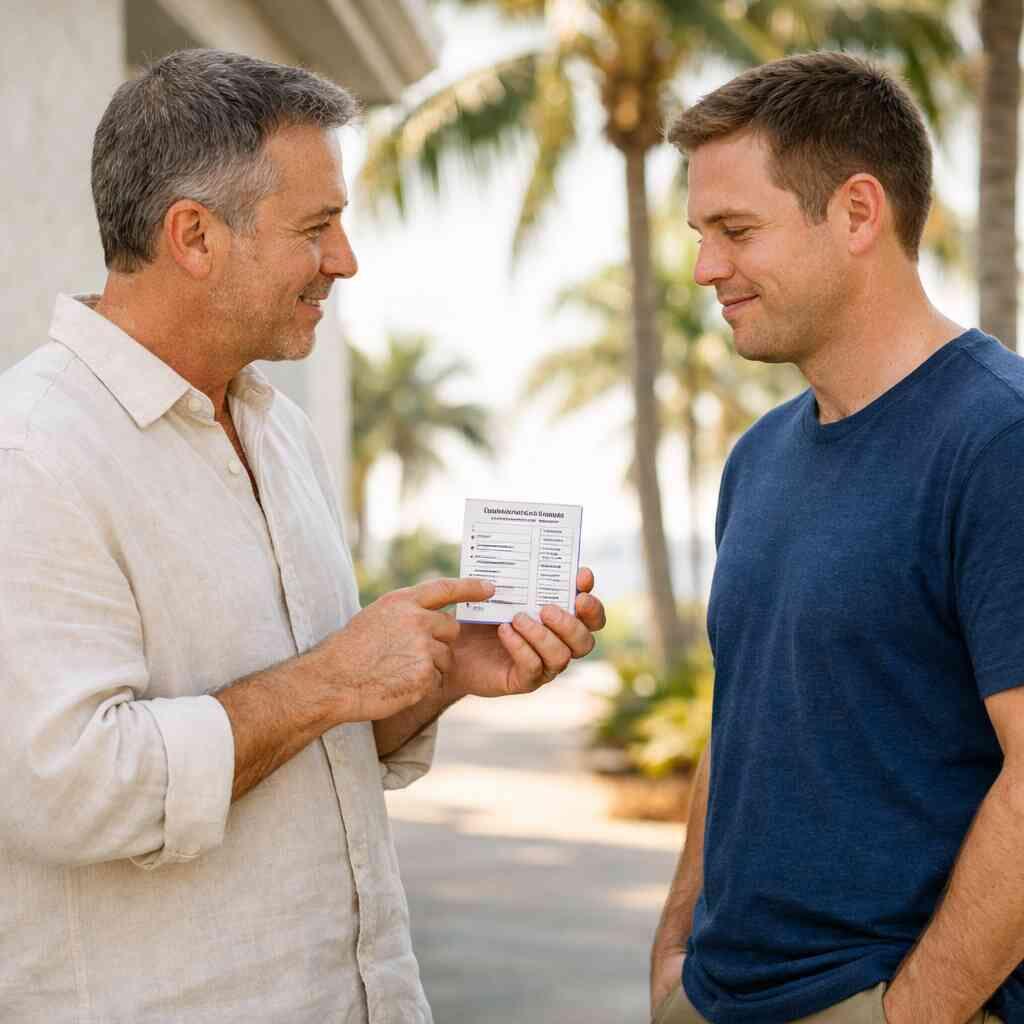
Families often want the perfect words. There usually are none. What matters more is repetition, clarity, and a voice that does not swing between anger and rescue. A person in heroin recovery hears tone as much as content.
One family near Atlantic Avenue told us their evenings felt like landmines. Every question turned into a fight. Once they stopped arguing about every detail and started using short, consistent statements, the house felt less chaotic. That shift did not fix addiction, but it lowered the temperature enough for real help to enter.
How to respond to overdose risk, fentanyl exposure, and detox fears without waiting for a crisis
If overdose risk is possible, treat it seriously. Keep naloxone available, know the signs of slowed breathing, and call emergency services if someone is hard to wake. Fentanyl contamination makes the risk less predictable than many families expect. Detox fears are real too, because heroin withdrawal can feel overwhelming and frightening.
This is where medical detox support can fit into the larger picture. SAMHSA guidance supports medically supervised withdrawal when safety or comfort is a concern. Families do not need to decide everything at once. They do need a plan before the next scare.
Why families in Delray Beach often need both addiction education and mental health support at the same time
Heroin recovery rarely exists in a vacuum. Depression and addiction often travel together. Anxiety, trauma, bipolar disorder, and PTSD can sit underneath the substance use, and untreated symptoms can keep the cycle going. In South Florida, families sometimes focus on the drug first and miss the emotional injury underneath.
That is where addiction education for families matters. So does psychiatric care for opioid addiction recovery. When you understand the clinical side, you stop guessing about motives and start responding to the actual problem. That makes your support more precise and less exhausting.
-
Draw the line between helping and enabling before the pattern hardens
Boundaries feel harsh when you love someone. They are not. Clear limits protect the home, reduce confusion, and keep help tied to recovery rather than repeated harm. If the same pattern has played out for months, stronger boundaries are often the most caring move.
How to set boundaries that protect the household without cutting off care
A boundary should be specific, measurable, and enforceable. You might say, “You cannot use substances in this home,” or “We will only provide rides to treatment.” That is different from a vague threat or a moral lecture. The point is not punishment. The point is safety.
A woman from the Boca Raton side of our service area once described how her family covered every missed shift. They thought they were helping keep his job. Instead, they were shielding the behavior from consequences. Once they stopped making excuses, the family could finally talk about communication skills and boundaries in recovery for families with some honesty.
What to do when money, housing, rides, or legal coverups keep the cycle going
This part is uncomfortable, and that is completely normal. Cash, a spare room, transportation, and calls to employers can all become part of the cycle. The question is not whether you care. The question is whether the support is tied to treatment or tied to continued use.
Here is a simple check:
- Does this action reduce risk?
- Does it increase accountability?
- Does it help the person move toward treatment?
If the answer is no, pause before you do it. Families often need family support for addiction and recovery in Delray Beach to sort through these choices without guilt taking over.
How family therapy helps everyone speak plainly about manipulation, guilt, and broken trust
Family therapy is not about picking sides. It is about naming the impact of addiction without turning the room into a courtroom. People often carry old hurt, and heroin use can intensify every unspoken grievance. A good therapist helps the family slow the conversation down.
At RECO Integrated Psychiatry, family therapy for opioid addiction recovery can support clearer roles and better follow-through. That matters when trust has been damaged. It also matters when manipulation, worry, and resentment are all sitting in the same room. Plain speech is healthier than hidden anger.
When a higher level of care such as PHP or intensive outpatient is the safer move than waiting
Sometimes the family plan is no longer enough. If use continues, cravings are escalating, or the person cannot stay safe, a higher level of care may be the safer route. PHP, or partial hospitalization, offers more structure than standard outpatient care. Intensive outpatient gives strong support with more flexibility.
If you are comparing intensive outpatient and partial hospitalization program options in Delray Beach, the main difference is intensity and time in treatment. PHP usually gives more hours and more clinical oversight. IOP can work well when the person needs structure but can still manage daily life. What almost no online guide mentions is that timing matters as much as level of care.
-
Use treatment language that opens doors instead of closing them
The way you talk about treatment can either lower resistance or raise it. People in heroin recovery often expect judgment before they hear care. If your words feel controlling, they may shut down. If your words sound informed and respectful, they are more likely to listen.
How to talk about medication-assisted treatment like Suboxone maintenance or Vivitrol injections without making the person feel controlled
Medication-assisted treatment is not “replacing one drug with another.” It is a medical tool that can reduce cravings and lower overdose risk. Suboxone maintenance and Vivitrol injections are FDA-approved options used in appropriate cases. The right framing matters. Focus on stability, symptom relief, and safety.
Try saying, “This could help you feel steady enough to think clearly.” That lands better than “You need this.” If the person fears control, remind them that treatment decisions should involve licensed clinicians and informed consent. Families who understand Florida addiction treatment and family support resources tend to speak with less fear and more precision.
Why CBT, DBT, EMDR trauma therapy, and group therapy activities matter when heroin use is tied to trauma South Florida families can relate to
Heroin use often starts as relief before it becomes ruin. That is why trauma work matters. CBT, or cognitive behavioral therapy, helps people identify thoughts that drive use. DBT, or dialectical behavior therapy, teaches distress tolerance and emotion regulation. EMDR can help process trauma when it is clinically appropriate.
These therapies are not abstract. They help people stay in the room with hard feelings without reaching for heroin. Group work also matters because shame grows in isolation. cognitive behavioral therapy and dialectical behavior therapy for coping skills can support the daily practice recovery requires. What is the role of group therapy in long term recovery is another helpful resource for families who want to understand why connection matters.
What dual diagnosis treatment means when depression and addiction, anxiety treatment, or PTSD treatment are part of the picture
Dual diagnosis means treating substance use and mental health together. NIDA and other major addiction bodies have been clear: co-occurring disorders need coordinated care. If the person’s heroin use is tied to depression, anxiety, or PTSD, the substance plan alone will not hold. That is especially true when symptoms flare under stress.
You may also hear the term co-occurring disorders. It means the same thing in plain language. Families in South Florida often need dual diagnosis treatment for depression and addiction because the emotional pain and the drug use feed each other. Treat both, or the loop can keep turning.
How to support intake, insurance verification, and the choice between outpatient program Delray Beach care and residential treatment facility options
Intake can feel like a lot, especially when emotions are already high. Still, a good intake process helps match the person to the right level of care. Sometimes outpatient is enough. Sometimes a residential treatment facility or a partial hospitalization program is the safer setting.
Insurance should be checked early, not after panic sets in. insurance verification and financial options for Florida addiction treatment can reduce delay and guesswork. Ask about out-of-network benefits, self-pay options, and what the plan covers for outpatient program Delray Beach care. A clear answer now can prevent chaos later.
-
Make the recovery home steady enough for the hard days
Recovery gets harder when daily life stays chaotic. The home does not have to be perfect. It does need rhythm. People recover better when sleep, meals, expectations, and support follow a predictable pattern. ### How to build a daily rhythm that supports coping skills, mindfulness meditation, and relapse prevention 
A steady day lowers stress. That sounds simple, but it is powerful. Set a wake-up window, regular meals, and a basic bedtime. Then build in time for movement, quiet, and check-ins. When the day has shape, cravings often have less room to spread.
Mindfulness meditation does not mean sitting still for an hour. It can be three focused breaths before a call, or a short walk without a phone. Coping skills work best when they are repeated under ordinary stress, not saved for emergencies. That is how relapse prevention becomes practical.
What sober living resources, 12 step alternatives, and SMART Recovery can offer when structure at home is not enough
Some people need more structure than home can provide. Sober living resources can offer accountability, curfews, and peer support. Others prefer 12-step alternatives or SMART Recovery because they want a different style of support. The right fit depends on the person, not the label.
Here is the part most families miss: structure is not a punishment. It is scaffolding. On the recovery side of Delray Beach, many people do better when they mix clinical care with peer support. aftercare planning and sober living resources in Palm Beach County can help bridge that gap.
How family weekend, aftercare planning, case management, and life skills training reduce the chance of a return to use
Recovery is not only about stopping heroin. It is also about learning how to live. Family weekend gives relatives a chance to hear the plan, ask hard questions, and align expectations. Aftercare planning helps the person leave treatment with structure instead of a guess. Case management and life skills training make the next month more workable.
That support matters in Palm Beach County, where daily life can look normal on the outside while people are privately struggling. Good aftercare may include rides, appointments, meetings, and home routines. It can also include vocational support and simple budgeting help. Those details protect recovery when motivation dips.
Why nutritional counseling, vocational support, and calm routines matter for long-term recovery in Palm Beach County
Low blood sugar, poor sleep, and chaotic days can all make cravings louder. Nutritional counseling helps stabilize the body, and that supports the mind. Vocational support also matters, because purposeless days can become dangerous. Recovery grows stronger when people have a reason to get up.
Beachside recovery sounds peaceful, and sometimes it is. But calm surroundings do not replace good habits. In South Florida, the weather may invite movement, yet routine still has to be built on purpose. The goal is long-term recovery, not just a quiet week.
-
Keep connection strong after the crisis moment passes
The crisis often gets all the attention. The quieter months after treatment are where many families lose their footing. Once the person is safer, the job shifts from emergency response to durable connection. That takes patience.
How to stay involved without hovering once the person is in treatment or early recovery
Support does not mean constant checking. Hovering can feel like surveillance, and that can backfire. Instead, agree on a few clear check-in points. Ask what kind of contact is helpful, what feels intrusive, and what the family should do if warning signs return.
This is where outpatient program in Delray Beach for heroin recovery can support the transition from structure to independence. A clear plan reduces both panic and power struggles. You stay involved, but you do not become the treatment team.
Why alumni support and continuing family therapy can help when motivation dips or trust is still fragile
Motivation is not constant. Trust is not fixed. People can do well for a while, then hit a rough patch and wobble. Alumni support gives them a place to reconnect before isolation grows. Continuing family therapy gives everyone a place to notice patterns early.
At RECO, RECO Integrated Psychiatry in Delray Beach for coordinated follow-through helps connect psychiatric care, therapy, and next-step planning. That continuity matters when the person is moving from crisis to maintenance. It also matters when the family still needs a place to speak honestly.
How to use local South Florida recovery resources from Delray Beach to Boca Raton and West Palm Beach when support needs to stay close to home
Staying close to home can lower barriers. A person who lives near Delray Beach may need care that fits work, school, and family life. Others may need help that reaches into Boca Raton, West Palm Beach, or nearby parts of South Florida. The right resource is the one they will actually use.
Local connection also helps with practical follow-through. Appointments, transportation, and family participation become easier when support is nearby. When a plan lives in the same region as the person’s real life, it tends to hold better. That is especially true in a busy recovery corridor like Palm Beach County.
When to revisit the plan if symptoms of depression and addiction, trauma, or co-occurring disorders start rising again
If sleep breaks down, shame returns, or old trauma symptoms flare, do not wait. Revisit the plan early. Co-occurring disorders often send warning signs before a major setback. A quieter mood, missed appointments, or a return to secrecy can all matter.
You do not need to panic to respond. You do need to act. That may mean restarting therapy, increasing sessions, or checking whether anxiety treatment and trauma-informed care in South Florida is needed again. The sooner you respond, the more options you usually have.
-
Know when family support should turn into a higher level of action
There comes a point when love, patience, and good intentions are not enough. That is not failure. It is information. If the current plan is not changing the pattern, then the family needs a stronger response.
What signs say the current plan is not enough and the family needs professional intervention services
Professional intervention services may be needed when the person cannot stay safe, refuses repeated offers of help, or keeps cycling through crisis. Repeated overdoses, escalating use, threats, or severe instability all raise the stakes. If the household is becoming unsafe, action should move faster.
This is also the point to involve clinicians who understand both substance use and mental health. Families often wait because they hope things will improve on their own. Sometimes they do not. A structured intervention can turn confusion into a clear treatment path.
How to prepare for the next call if the person needs detox support, cocaine detox Florida care, or opioid rehab Delray options beyond outpatient help
If the next call may be urgent, prepare now. Keep a short list of program names, insurance details, medications, and emergency contacts. If the person needs detox support, the plan may need to include opioid rehab Delray options, not just outpatient help. Some families also need cocaine detox Florida or alcohol-related care when substances overlap.
RECO’s broader network can help families think through levels of care, including partial hospitalization program support in Delray Beach. The key is matching risk to structure. That is safer than hoping the current plan will somehow stretch further.
Why insurance coverage, out-of-network benefits, and self-pay options should be checked before the situation becomes urgent
Insurance questions feel tedious until they become urgent. Then they become central. Find out what the plan covers, what counts as in-network, and whether out-of-network benefits apply. If not, ask about self-pay options and documentation needs.
Early insurance verification can save time during a crisis. It also helps you compare options without guessing. For many families, this step removes one layer of fear. It does not solve everything, but it makes the next call clearer.
How RECO Integrated Psychiatry in Delray Beach fits into a wider South Florida recovery plan with psychiatric care, therapy, and coordinated follow-through
RECO Integrated Psychiatry in Delray Beach supports adults who need psychiatric care alongside substance-related treatment. That matters when depression, anxiety, bipolar disorder, or trauma complicate heroin recovery. The model is coordinated, evidence-based, and built for real life. It also fits a South Florida recovery plan that may include therapy, medication management, and aftercare support.
If you are sorting through insurance verification and financial options for Florida addiction treatment or thinking about next steps, start with one conversation. You do not have to solve the whole year today. You do need a plan that treats both the substance use and the mind behind it. One call can bring the next right step into focus.
Frequently Asked Questions
Question: In Best 6 Family Support Tips for Heroin Recovery in Florida, what should families in Delray Beach do first when they notice signs of addiction or opioid relapse?
Answer: The first step is to respond early, calmly, and with a plan. Families often notice missed calls, secrecy, sleep changes, money problems, or withdrawal from daily life before a full crisis develops. Those signs do not confirm everything, but they do mean it is time to take the situation seriously. The most helpful response is usually not a lecture or a confrontation. It is a clear, steady conversation that opens the door to treatment and reduces shame.
At RECO Integrated Psychiatry in Delray Beach, we help adults and families understand the clinical side of heroin recovery, including relapse prevention, trauma-informed care, and co-occurring disorders like depression and addiction, anxiety treatment, or PTSD treatment. Because heroin use can overlap with fentanyl treatment needs, detox support, or medication-assisted treatment, families should not wait for a crisis to get guidance. If the person may be at overdose risk, keep naloxone available and call emergency services if needed. If the next step is treatment, our team can help with intake process planning, insurance verification, and choosing the right level of care, whether that is outpatient program Delray Beach support, intensive outpatient, or partial hospitalization program care.
Question: How do boundaries in recovery help families avoid enabling while still offering family support for addiction?
Answer: Boundaries are one of the most important tools families can use because they protect the household without cutting off care. Supporting recovery does not mean covering up missed work, giving cash, paying repeated bills, or making excuses that keep the cycle going. A healthy boundary is specific and enforceable, such as no substances in the home or only providing rides to treatment. This approach reduces confusion and helps the person connect support with accountability.
RECO Integrated Psychiatry often helps families talk through enabling vs supporting in a way that feels practical rather than punitive. Through family therapy, communication skills for families, and addiction education for families, we help relatives speak plainly about manipulation, guilt, and broken trust. For some households, a higher level of care like partial hospitalization program, intensive outpatient, or even a residential treatment facility may be safer than trying to manage everything at home. Our role is to help families match the level of support to the level of risk while keeping the focus on long-term recovery.
Question: What treatment options at RECO Integrated Psychiatry can help with heroin recovery, dual diagnosis treatment, and trauma therapy South Florida families often need?
Answer: Heroin recovery is often more successful when substance use and mental health are treated together. That is the core of dual diagnosis treatment, also called co-occurring disorders care. Many people using heroin are also dealing with depression and addiction, anxiety treatment needs, bipolar disorder therapy, trauma therapy South Florida concerns, or PTSD treatment. If those conditions are left untreated, recovery can become much harder to sustain.
At RECO Integrated Psychiatry, our outpatient psychiatry team provides evidence-based care that can include medication management and coordinated support with licensed clinicians. Depending on the person’s needs, treatment may involve CBT, DBT, EMDR trauma therapy, group therapy activities, mindfulness meditation, or medication-assisted treatment such as Suboxone maintenance or Vivitrol injections when clinically appropriate. We do not frame these tools as quick fixes. We use them as part of a thoughtful, individualized plan designed to improve stability, reduce cravings, and support coping skills. For families comparing Florida addiction treatment options or searching for drug rehab near me, it helps to know that integrated psychiatric care can make the recovery plan more complete.
Question: How do I choose between outpatient program Delray Beach care, mental health IOP, PHP, or a residential treatment facility for a loved one?
Answer: The right level of care depends on safety, severity, and how much structure the person needs. Outpatient program Delray Beach care may work when the person is stable enough to live at home and attend therapy and medication appointments consistently. Intensive outpatient, sometimes called mental health IOP, provides more structure and support while still allowing the person to manage daily responsibilities. Partial hospitalization program care usually offers even more clinical time and oversight. A residential treatment facility may be the safer choice if the person cannot maintain safety, is repeatedly relapsing, or needs a more contained environment.
RECO Integrated Psychiatry helps families think through what is actually needed instead of guessing based on urgency alone. We also help with insurance verification, including questions about Aetna, Cigna, Blue Cross Blue Shield, out-of-network benefits, and self-pay options. That matters because delays often happen when families wait too long to compare coverage. If you are trying to understand what is PHP vs IOP, or whether South Florida detox, opioid rehab Delray, or a broader South Florida recovery plan is more appropriate, our team can help you sort through the options with clarity and compassion.
Question: How can families support long-term recovery after detox with aftercare planning, sober living resources, and relapse prevention?
Answer: Recovery does not end when withdrawal ends. The period after detox is often when people need the most structure, consistency, and family support for addiction. Good aftercare planning may include therapy, medication follow-up, family weekend participation, case management, life skills training, vocational support, nutritional counseling, sober living resources, and ongoing relapse prevention work. Some people also benefit from 12-step alternatives, SMART Recovery, or RECO Intensive alumni support when they need ongoing connection.
At RECO Integrated Psychiatry, we encourage families to build a recovery environment that is steady enough for real life. That can mean routines, check-ins, and support for coping skills, cognitive behavioral therapy, dialectical behavior therapy, or mindfulness meditation practices learned in treatment. Families in Palm Beach County, including those near Delray Beach, Boca Raton, and West Palm Beach, often do best when aftercare is local, realistic, and easy to follow. If symptoms of trauma, depression and addiction, or anxiety return, we recommend revisiting the plan early rather than waiting for a setback to become a crisis.
Question: Why do families choose RECO Integrated Psychiatry for heroin recovery, Florida addiction treatment, and coordinated follow-through in South Florida?
Answer: Families choose RECO Integrated Psychiatry because we offer coordinated, evidence-based psychiatric care in Delray Beach with a human approach. We understand that heroin recovery is rarely just about the drug itself. It is often tied to trauma, co-occurring disorders, family conflict, insurance stress, and the need for practical aftercare planning. Our team supports adults through medication management, outpatient psychiatry, telepsychiatry for Florida residents, and connections to the broader RECO treatment network when a higher level of care is needed.
We also help families who are trying to make sense of Florida addiction treatment options, inpatient rehab Palm Beach County searches, or whether a private rehab setting, beachside recovery environment, or outpatient program Delray Beach model is the best fit. Because we work closely with families, we can help with intervention services, intake process questions, insurance verification, and next-step planning without losing sight of the person behind the symptoms. If you are looking for support that is compassionate, professional, and grounded in real clinical care, RECO Integrated Psychiatry is here to help build a plan that supports long-term recovery.