Top 7 Mindfulness Tools for Anxiety in South Florida 2026
If you are reading this with a tight chest and a busy mind, take that seriously. Anxiety can turn a normal morning in Delray Beach into a full-body alarm. The good news is that small, repeatable skills can lower the volume. At RECO Integrated Psychiatry, we often see people feel relieved when they learn anxiety […]


If you are reading this with a tight chest and a busy mind, take that seriously. Anxiety can turn a normal morning in Delray Beach into a full-body alarm. The good news is that small, repeatable skills can lower the volume. At RECO Integrated Psychiatry, we often see people feel relieved when they learn anxiety coping skills that fit real life.
“Staff and environment is unmatched. They are professional and prompt to provide clarity and guidance. Everything about this program is welcoming.”- Jacob, a 5 star review from RECO Integrated Psychiatry on Google Business Reviews
1) Guided breathing exercises that stop anxiety from hijacking your day
Why your breath is one of the fastest ways to calm the nervous system when panic rises
Breathing is one of the fastest mindfulness tools for anxiety in South Florida because it speaks directly to the nervous system. When panic rises, your body reads danger before your thoughts do. Slowing the breath helps signal safety. That matters when your mind is racing and your heart is pounding.
Here is the part many people miss: breathing does not erase the stressor. It gives you a little space so you can respond instead of react. That small space can change the whole day. It also pairs well with cognitive behavioral therapy for anxiety, especially when worry has become a habit.
How to use box breathing and longer exhales during traffic on Atlantic Avenue or in a crowded waiting room
Try box breathing in a simple pattern: inhale, hold, exhale, hold. Keep each part even and unforced. If that feels awkward, lengthen the exhale instead. A longer out-breath often calms the body faster than a deep in-breath.
Picture yourself in Atlantic Avenue traffic or sitting in a crowded waiting room with too much noise around you. You can breathe in for four, out for six, and repeat. That is discreet. It does not draw attention. It also fits well with guided breathing exercises for anxiety relief when you need a quick reset.
One client in Delray Beach described panic hitting while waiting for a school pickup. The shoulders locked up. The hands went cold. We practiced longer exhales with a relaxed jaw, and the goal was not perfection. The goal was enough calm to drive safely and think clearly.
When breathing works best on its own and when it needs CBT or medication management support
Breathing works best for milder spikes, early warning signs, and everyday stress. It may not be enough if you have panic attacks, obsessive worry, or trauma symptoms. In those cases, breathing becomes one tool inside a larger plan. That plan may include CBT for anxiety and coping with anticipatory anxiety or medication management for anxiety.
If your body stays on high alert most days, you may need more support. That is common in adult anxiety treatment. It is also common when anxiety overlaps with depression, bipolar disorder, or substance use. In those situations, psychiatrist-guided mindfulness can help, but it should not stand alone.
2) Grounding techniques for anxiety that pull your mind back into the room
The five senses method for moments when your thoughts sprint ahead of your body
Grounding techniques for anxiety help when your thoughts jump into the future. They bring you back to the room you are in. Start with the five senses. Name five things you see, four you feel, three you hear, two you smell, and one you taste.
This sounds simple because it is. Simple does not mean weak. It means usable when your brain is overloaded. The technique works best when you speak to yourself in plain words. Say, “I see a blue chair. I feel my feet on the floor.” That is present-moment awareness in action.
If panic feels intense, grounding techniques for panic and present-moment awareness can slow the spiral. They are especially useful when your mind is telling you something is wrong, even when the room is safe. That mismatch is exhausting. Grounding helps close the gap.
How cold water, texture, and posture shifts can steady panic without making it obvious to others
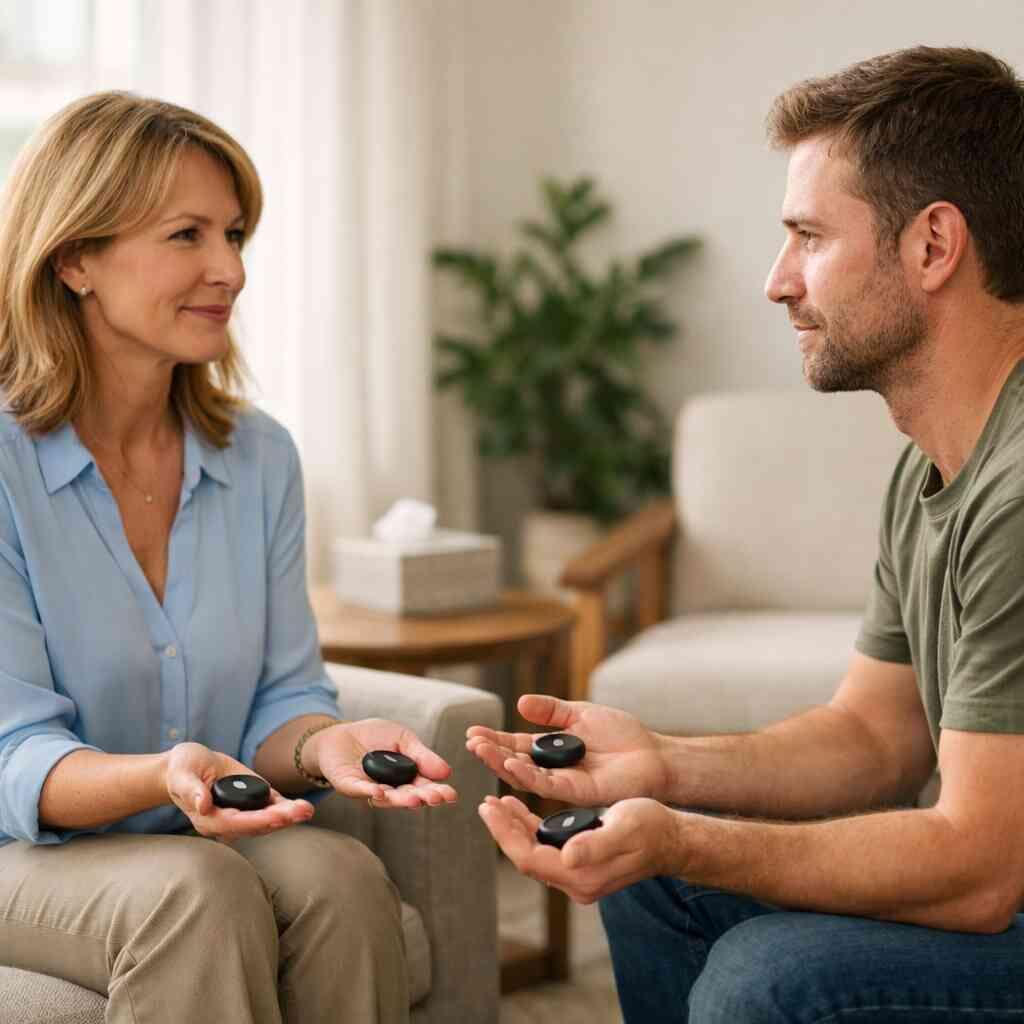
Cold water on your hands can interrupt an anxiety surge. So can holding a textured object, like a smooth stone or a folded napkin. Shifting your posture helps too. Put both feet down. Straighten your spine. Relax your jaw.
These tools are discreet. You can use them in a restaurant, a checkout line, or a family gathering. That matters because anxiety often grows when you worry other people will notice. Quiet tools reduce that second layer of fear.
A simple grounding routine might look like this:
- Press your feet into the floor
- Hold a cool glass or bottle
- Notice one object in detail
- Relax your shoulders on the exhale
- Name one thing that is actually happening now
These are panic attack grounding tools, but they also support emotional regulation skills. They work well alongside DBT skills for distress tolerance. The best tools are the ones you can use without needing privacy or perfect conditions.
Why grounding is especially useful for trauma-informed mindfulness and co-occurring disorders
Grounding matters even more when anxiety is tied to trauma. Trauma-informed mindfulness avoids forcing you to sit with sensations that feel unsafe. Instead, it helps you orient to the present first. That is a key difference. It protects trust in your own body.
Grounding also helps with co-occurring anxiety and substance use. When urges rise, your nervous system may be asking for relief, not just a substance. That is where trauma-informed mindfulness for co-occurring anxiety and substance use fits. It gives you a pause before action.
Here is what almost no online guide mentions: grounding can be a bridge, not a destination. It can help you get to therapy, family support, or an outpatient psychiatry appointment. It can also help during telepsychiatry in Florida, where you may need a fast way to settle before the session begins.
3) Body scan meditation when stress lives in your shoulders, jaw, and chest
How to spot the body signals South Florida heat and poor sleep can make harder to ignore
Body scan meditation helps you notice where anxiety lives in the body. In South Florida, heat and poor sleep can make those signals louder. Your jaw may clench. Your shoulders may ride high. Your chest may feel tight after a long day in the sun or too many late nights.
This tool asks you to observe, not judge. You scan from head to toe and notice what is tense, warm, numb, or heavy. The point is awareness. Awareness gives you choices. That is the heart of body scan meditation for stress reduction.
What we see most often in 2026 is that people notice stress only after it has built up for hours. By then, the body feels like it is carrying bricks. A body scan helps you catch the pattern earlier. That makes coping easier and often prevents the evening crash.
The difference between noticing tension and trying to force it away
Noticing tension is not the same as fighting it. If you force a muscle to relax, you often create more strain. Instead, name the sensation. “My jaw is tight.” “My chest feels heavy.” Then soften around it. That shift is subtle, but it matters.
This practice also helps with stress reduction during high-pressure weeks. A body scan can happen in bed, on a couch, or during a quiet break at work. You do not need a perfect posture. You just need honesty and patience. Learning new skills takes time and practice.
One woman from Boca Raton told us she had been clenching her jaw for months. She thought it was just dental tension. After a few weeks of body scans and slow breathing, she started noticing the clench before headaches followed. That is the kind of early warning system mindfulness can build.
Where body scan practice fits for people using outpatient psychiatry or telepsychiatry in Florida
Body scan meditation works well inside outpatient psychiatry in Delray Beach for anxiety care because it gives your clinician real data. You can describe where anxiety shows up, how long it lasts, and what worsens it. That helps shape treatment. It also helps you track progress beyond “good day” or “bad day.”
It fits nicely with telepsychiatry in Florida for anxiety treatment too. You can do it at home before a session, then report what you found. That makes appointments more useful. It also supports integrated psychiatric care when symptoms are mixed or unclear.
4) Progressive muscle relaxation for the nights when your mind will not shut off
Why tensing and releasing muscles can help with sleep hygiene for anxiety
Progressive muscle relaxation uses contrast. You tense a muscle group, then release it. That contrast teaches your body what relaxation feels like. It can help with sleep hygiene for anxiety because bedtime often reveals how much tension you were carrying all day.
This is one of the most practical relaxation techniques for high stress. Start with your hands, then move to your arms, shoulders, face, chest, stomach, legs, and feet. Keep each squeeze brief. Release slowly. The release matters more than the tension.
If sleep has become a nightly battle, progressive muscle relaxation for sleep hygiene and anxiety can be a useful bridge skill. It will not fix every sleep problem. Still, it can reduce the physical edge that keeps many people awake.
A practical sequence for bedtime, post-work decompression, or pre-flight nerves
For bedtime, dim the lights and work from head to toe. For post-work decompression, focus on the neck, shoulders, and jaw. For pre-flight nerves, use your hands, stomach, and legs, since those areas often tighten before takeoff. Keep the process steady and boring. Boring is good here.
A useful sequence looks like this:
- Inhale gently
- Tense one muscle group for a few seconds
- Exhale and release
- Notice the difference
- Move to the next area
This routine can also help before an early drive across Palm Beach County or after a long day near the coast. It gives the body something concrete to do. That concrete action often quiets racing thoughts better than arguing with them.
When this tool pairs well with medication management for anxiety or treatment-resistant anxiety
Progressive muscle relaxation works well with medication management for anxiety. It can help medication feel more effective by lowering baseline tension. It also gives you a skill to use while treatment is adjusting. That matters when symptoms are changing and you need steadiness. 
For psychiatric medication and medication management, the goal is not to replace skills. It is to combine them wisely. If anxiety stays severe despite solid therapy and coping practice, the issue may be treatment-resistant anxiety. In those cases, our team may discuss other evidence-based options, including innovative care when clinically appropriate.
5) Mindful movement that turns restless energy into calm mind practices
Walking by the beach, stretching at home, or slow yoga therapy for anxiety without turning it into a workout
Mindful movement means moving with awareness, not performance. A slow walk by the beach can help. So can stretching in your living room. Gentle yoga can support anxiety too, especially when it stays slow and easy. The aim is calm, not calorie burn.
This is where mindful movement and yoga-based anxiety support fits well. You notice each step, each stretch, each breath. That notice-and-return pattern is the real medicine. It teaches your attention to settle.
In the projects we have completed this year, people often said movement felt easier than stillness. That makes sense. Restless energy needs somewhere to go. A 20-minute walk near the Intracoastal or through a quiet neighborhood can often help more than another hour of scrolling.
How present-moment awareness changes the way your body handles anticipatory anxiety
Anticipatory anxiety thrives on imagined outcomes. Mindful movement interrupts that loop. When you pay attention to the heel strike, the sway of your arms, or the stretch in your calves, your body stops rehearsing disaster. It starts living in the moment instead.
That shift can be powerful before meetings, social events, or medical appointments. It can also help before driving on busy South Florida roads, where tension often rises without warning. Mindful movement is not about emptying your mind. It is about returning your mind to what your body is doing.
This is also why a daily mindfulness routine for anxiety management often includes movement. A routine that stays on paper will not help much. A routine that fits your life can change how your nervous system responds to stress.
What to do when movement feels unsafe because of panic, dizziness, or trauma history
If movement triggers dizziness, panic, or trauma memories, keep it very small. You can roll your shoulders, flex your toes, or stand and notice your feet. You do not need a full yoga sequence. Safety comes first. Always.
People with trauma histories sometimes feel trapped by body-based practices. That is normal. In those cases, choose options that keep your eyes open and your feet grounded. Combine movement with support from Florida anxiety care and integrated psychiatric treatment. A careful plan can make movement feel less threatening.
6) Self-soothing strategies that make hard moments smaller instead of louder
The difference between comfort and avoidance when you are trying to regulate emotions
Self-soothing is not the same as escaping. Comfort helps you return to balance. Avoidance keeps you stuck. That distinction matters. It helps you choose tools that support growth instead of hiding from discomfort.
These strategies are useful when emotions feel too big to sort through. A warm shower, a calm playlist, or a soft blanket can lower the intensity. So can a short routine that tells your brain, “I am safe enough right now.” That is the spirit behind self-soothing strategies for emotional regulation skills.
How scent, sound, weighted pressure, and simple routines support emotional regulation skills
Scent can anchor you. Sound can steady you. Weighted pressure can calm you. Simple routines can reduce decision fatigue when you are already overwhelmed. These tools work because the body likes predictability.
Try a few options:
- Lavender or another familiar scent
- Low-volume music or nature sounds
- A weighted blanket or firm pillow
- Tea, warm water, or a steady hand lotion routine
- A short night routine with the same three steps
These are not tricks. They are nervous system calming techniques. They support emotional resilience building over time. They also fit well with DBT skills for distress tolerance and self-regulation.
Why these tools matter for social anxiety support, workplace anxiety management, and family stress
Social anxiety often gets worse when you fear visible symptoms. Self-soothing can reduce the internal pressure before a meeting or gathering. Workplace anxiety management gets easier when you have a small routine between tasks. Family stress feels less chaotic when you have a reset plan that does not depend on anyone else.
That matters in South Florida, where life can feel busy and social demands come fast. A few steady habits can make hard moments smaller. They do not solve every problem. They do give you a better starting point.
7) A daily mindfulness routine that holds up in real life, not just on paper
How to build a routine around mornings, commutes, meals, and evenings in South Florida
A daily mindfulness routine works best when it fits the day you actually live. Use mornings for breathing. Use commutes for grounding. Use meals for a pause before the next rush. Use evenings for a body scan or progressive relaxation. Keep it short enough to repeat.
This is the structure behind a daily mindfulness routine for anxiety management. You are not building a perfect ritual. You are building consistency. That consistency matters more than duration. It helps in coastal living, where schedules shift and stress can build fast.
Where mindfulness meditation for anxiety fits with DBT skills, CBT for anxiety, and relapse prevention
Mindfulness meditation for anxiety works best when it sits beside therapy, not above it. CBT helps you challenge catastrophic thoughts. DBT helps you regulate emotion and tolerate distress. Mindfulness ties those skills together. It teaches you to notice what is happening before acting on it.
That combination is especially useful in relapse prevention. Anxiety can push people toward old coping habits. A routine that includes mindfulness, therapy, and support can lower that risk. It is also helpful when family stress, work pressure, or isolation are part of the picture.
What a psychiatrist-guided mindfulness plan looks like when anxiety is tied to depression, bipolar disorder, or substance use
When anxiety travels with depression, bipolar disorder, or substance use, the plan needs more structure. A psychiatrist-guided approach can help you match tools to symptoms. That may include therapy, medication management, and carefully chosen mindfulness. It may also include psychiatrist-guided mindfulness for adult anxiety treatment.
If you need family support, South Florida mental health resources for family support can help loved ones understand what to do and what not to do. If you are seeking outpatient psychiatry in Delray Beach for anxiety care or telepsychiatry in Florida, our team at RECO Integrated Psychiatry can help you match mindfulness with evidence-based care.
A thoughtful next move is simple: pick two tools from this list and use them for one week. Keep notes on what changes, even slightly. If you want a clinical plan that fits your symptoms, our Delray Beach team can help you sort through it without judgment. You do not have to figure it all out today.