Ultimate Guide to Dual Diagnosis Treatment in South Florida
If you are reading this because sleep has gone sideways, pills are disappearing too fast, or depression keeps winning the day, take a breath. That knot in your chest makes sense. Dual diagnosis treatment exists for exactly this kind of overlap, where depression and addiction, anxiety and substance use, or bipolar disorder and addiction keep […]

If you are reading this because sleep has gone sideways, pills are disappearing too fast, or depression keeps winning the day, take a breath. That knot in your chest makes sense. Dual diagnosis treatment exists for exactly this kind of overlap, where depression and addiction, anxiety and substance use, or bipolar disorder and addiction keep amplifying each other. In South Florida, people often search for a drug rehab near me or an alcoholism treatment center and still feel unsure which level of care fits. That confusion is normal. It usually means the real problem is bigger than a single label.
When addiction and mental health start feeding each other in South Florida
The signs that this is more than substance use or more than depression
The hardest part is that the pattern can look ordinary at first. You miss work, cancel plans, or stop answering texts. You may also drink more, use more, or lean harder on a prescription than your body needs. Then mood slips, motivation drops, and shame grows. That is where signs of addiction and mental health symptoms start blurring together.
Here is the part most families miss. When someone has treatment-resistant depression or a severe anxiety disorder, substances can become self-treatment. A person may seem “better” after drinking, taking a pill, or using cocaine, then crash later. That cycle can hide co-occurring disorders for months. A careful team looks for both the symptom and the trigger, not just the most visible problem. If you want a closer look at how this framework works, see our co-occurring disorders care near Delray Beach and our Substance Co Occurring page.
One client from the Boca Raton side of town described it plainly. He thought he had panic attacks every afternoon. After a full review, the pattern pointed to stimulant use, poor sleep, and untreated anxiety. Once the pieces were mapped, the plan finally made sense. That kind of clarity is often the difference between spinning and starting real care.
Why anxiety treatment and bipolar disorder therapy often fail when addiction stays hidden
Anxiety treatment can stall if alcohol is still in the picture. Bipolar disorder therapy can wobble if cocaine, cannabis, or nonmedical pills keep changing sleep and mood. The brain does not care which problem came first. It reacts to both. That is why anxiety treatment and bipolar disorder therapy often need to happen inside a broader dual diagnosis treatment plan.
Substances can mimic psychiatric illness. They can also hide it. Alcohol can deepen depression. Stimulants can look like hypomania. Benzodiazepines can dull panic for a few hours, then worsen it later. What looks like a medication failure may really be an untreated substance pattern. The NIDA co-occurring disorder model and SAMHSA guidance both support integrated care for this reason.
If you are comparing options in South Florida recovery or around the Delray Beach recovery community, ask a simple question: does this program treat both layers at once? If the answer is vague, the program may not be built for the reality you are facing. That matters more than the brochure language. It also matters more than a flashy promise from a private rehab or a generic residential treatment facility.
How trauma, PTSD, and prescription pill addiction can look like one tangled problem
Trauma rarely arrives neatly. It shows up as insomnia, jumpiness, anger, numbness, or constant scanning for danger. It can also show up as a bottle, a pill organizer, or a pattern of taking more than prescribed. That is why trauma therapy South Florida and PTSD treatment often belong in the same conversation as prescription pill addiction and benzodiazepine withdrawal. The symptoms may be different faces of the same wound.
A woman in western Palm Beach County once described it as “living with the volume turned up too high.” She used extra medication to get through the day, then needed more to sleep. Once her trauma history was identified, the treatment plan shifted from “stop using” to “stabilize, process, and build safety.” That is a very different clinical problem. It requires patience, not judgment. It often includes EMDR trauma therapy, cognitive behavioral therapy, and steady medication support.
The Delray Beach and Palm Beach County realities that make dual diagnosis harder to spot
South Florida has real strengths. It also has real pressure. The recovery network is broad, but so is access to alcohol, nightlife, and easy cover for hidden use. In Delray Beach, the coastal pace can look calm while people quietly struggle. In Palm Beach County treatment centers, clinicians often see clients who work, parent, and keep up appearances until they can’t.
Weather matters too. Hurricane season, long humid months, and disrupted routines can worsen mood and relapse risk. A few blocks off Atlantic Avenue, people may look fine while privately trying to manage withdrawal, shame, and work demands. That is why outpatient psychiatry and mental health IOP options matter here. They let people stay connected to daily life while getting structured help. For some, that is the right bridge before anything more intensive.
What actually changes when treatment is built for co-occurring disorders
How a psychiatric evaluation and medication management clarify what is driving the crisis
A good psychiatric evaluation is not a quick symptom checklist. It asks what started first, what changed sleep, what changed appetite, and what substances are in the picture. That is where psychiatric evaluation and medication management become essential. The goal is not just to prescribe. The goal is to understand the engine underneath the crisis.
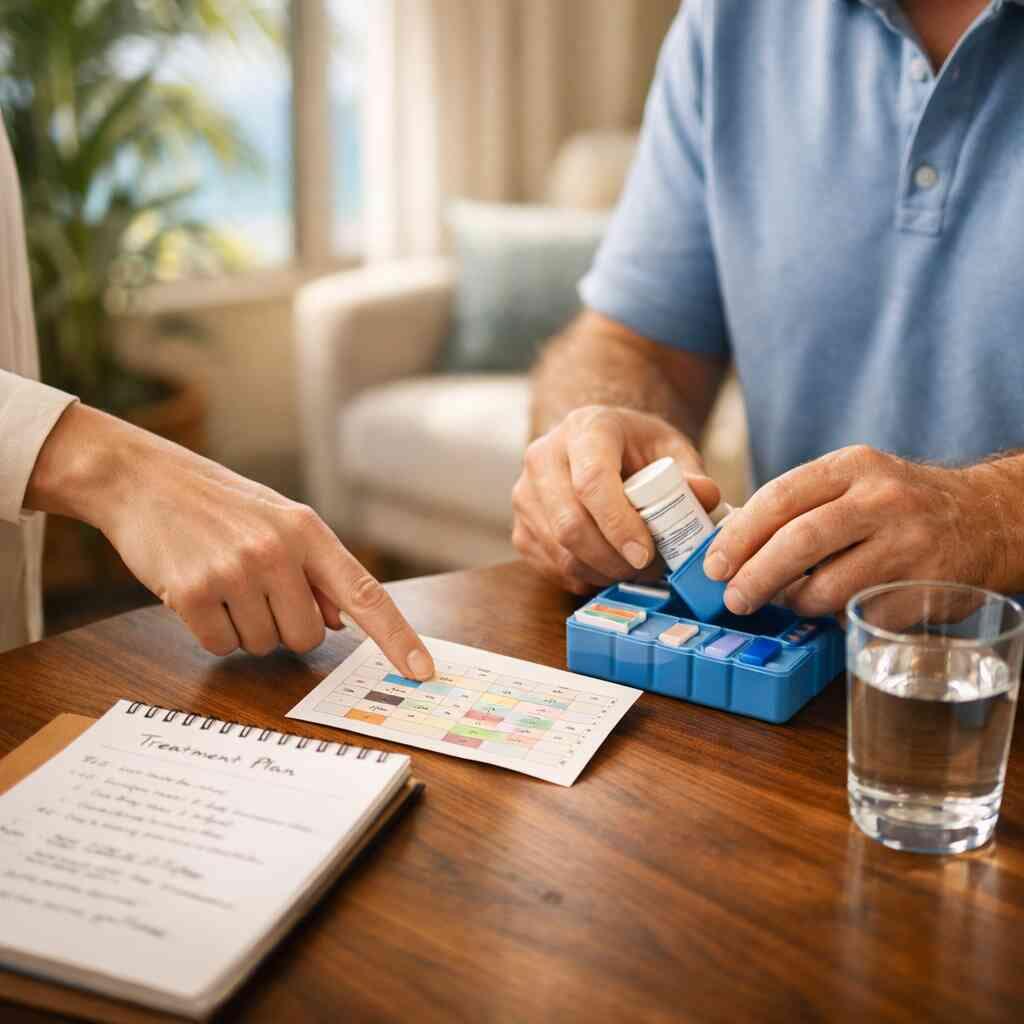
That matters because medication choices can either help or confuse the picture. Someone with panic and insomnia may need a different approach than someone with depression and stimulant use. Someone with bipolar symptoms may need mood stabilization before antidepressants make sense. This is where medication management for co-occurring disorders becomes more than follow-up. It is the ongoing work of matching treatment to the actual diagnosis, not the assumed one.
At RECO Integrated Psychiatry in Delray Beach, our team focuses on that kind of clarity. We work with adults who can participate in their care and want a thoughtful plan, not a rushed one. If medication, therapy, or both are part of the answer, the plan should fit the person in front of you. You can learn more about our psychiatric evaluation and medication management model and how it supports coordinated care.
Why partial hospitalization program and mental health IOP are not the same thing
People often ask, “What is PHP vs IOP?” That question matters. A partial hospitalization program usually means more weekly hours, more structure, and closer monitoring. A mental health IOP or intensive outpatient program usually allows more flexibility while still providing therapy, skills work, and psychiatric support. They are not interchangeable.
Level of careTypical structureBest forPartial hospitalization programMore days and hours each weekHigher symptom acuity, more support neededMental health IOPFewer hours, more flexibilityStabilized clients who still need structureOutpatient psychiatryScheduled visits and medication follow-upMaintenance, monitoring, and ongoing adjustmentThat table is the simple version. The real answer depends on risk, home support, substance use pattern, and safety. Someone stepping down from South Florida detox may need PHP first. Someone who is stable but still fragile may do better in IOP. If you want a deeper comparison, our guide to what is PHP versus IOP in South Florida recovery breaks down the difference in plain language.
Where CBT, dialectical behavior therapy, EMDR trauma therapy, and group therapy activities fit
Therapy works best when it has a job. Cognitive behavioral therapy helps you spot the thought patterns that drive use, avoidance, and hopelessness. Dialectical behavior therapy adds tools for distress tolerance, emotional regulation, and impulse control. EMDR trauma therapy can help process traumatic memories without forcing you to relive them in a raw way. Group therapy activities add perspective, structure, and honest feedback.
This is where many people finally feel their treatment “click.” The skills are practical. You learn to pause before reacting. You learn to name a feeling before it becomes a drink. You learn to identify the moment when your brain says, “I need relief now.” That is not abstract. It is daily survival work. For clients with OCD, ADHD, or panic layered on top of substance use, those tools can be especially useful.
When medication assisted treatment, Suboxone maintenance, or Vivitrol injections may be part of the plan
For opioid rehab Delray, fentanyl treatment, heroin recovery, and some alcohol cases, medication-assisted treatment can be an important part of care. Suboxone maintenance may help reduce cravings and stabilize withdrawal risk. Vivitrol injections may be considered for some people with alcohol or opioid use disorders. These medications are not a shortcut. They are tools, and they work best with therapy and monitoring.
A person coming off opioids may describe the same fear every time: “If I start medication, am I just replacing one thing with another?” That concern is common. The better question is whether a medication helps restore functioning while the brain heals. That is a clinical decision, not a moral one. Evidence-based care looks at safety, symptom control, and long-term recovery goals.
How family therapy, case management, and aftercare planning support long-term recovery
Recovery rarely holds without support around it. Family therapy can reduce blame and improve communication. Case management can help with appointments, work concerns, transportation, and referrals. Aftercare planning maps what happens after discharge, which is where many people lose momentum if the plan is vague.
Our family therapy for long-term recovery support approach is designed to help the home environment become more stable, not more stressful. That matters if you are dealing with a spouse, parent, or adult child in early recovery. It also matters when grief, resentment, or fear have built up over time. Sober living resources, life skills training, and vocational support can all support the transition. Strong recovery plans do not end when the program ends.
Choosing the right South Florida path without losing weeks to guesswork
What to ask when comparing inpatient rehab Palm Beach County, outpatient program Delray Beach, and residential treatment facility options
People lose time when they compare programs by marketing instead of fit. Ask what level of support the person actually needs. Ask whether the program treats dual diagnosis or only substance use. Ask how often a psychiatrist is involved. Then ask how they handle relapse, medication changes, and safety planning.
A quick comparison helps. Inpatient rehab Palm Beach County offers the highest structure. A residential treatment facility offers live-in support but varies widely in intensity. An outpatient program Delray Beach can be a strong fit if the person is safe, motivated, and able to attend regularly. The best choice depends on the current risk, not the brand name. For many, the right path sits between total immersion and complete independence.
How insurance verification, out-of-network benefits, and self-pay options shape the real decision
Money questions are uncomfortable. They are also practical. Insurance verification can tell you what level of care is covered, what prior authorization is needed, and whether a program is in network. If not, out-of-network benefits may still reduce the cost. Some families prefer self-pay options for privacy or faster access, though that depends on resources. If you are checking Aetna, Cigna, or Blue Cross Blue Shield, do not guess. Ask for a real benefits check. Ask what psychiatric, therapy, and medication services are included. If detox or higher care is needed, ask how that changes the billing structure. Our insurance verification for Florida rehab resource explains the questions that save time and reduce surprises. 
Why Joint Commission accreditation, licensed clinicians, and evidence-based treatment matter more than marketing
The words on a homepage do not tell you much. Joint Commission accreditation suggests a program has met recognized standards. Licensed clinicians matter because dual diagnosis care requires real psychiatric training, not just good intentions. Evidence-based treatment matters because you want methods with support behind them, not guesswork dressed up as expertise.
Here is what almost no online guide mentions. Marketing can make any center sound compassionate. The real test is whether they know how to adjust care when symptoms change. Do they understand detox timing? Do they know when to refer to a higher level of care? Do they coordinate across therapy and psychiatry? Those questions matter in Florida addiction treatment and especially in a co-occurring disorders setting.
How sober living resources, alumni program support, and relapse prevention planning keep momentum after discharge
Discharge is not an ending. It is a handoff. The months after treatment are where structure gets tested. Relapse prevention should name triggers, warning signs, support contacts, and medication follow-up. Sober living resources can offer a stable bridge when home feels too risky. An alumni program can help people stay connected to peers and accountability.
At RECO, continuing care is treated as part of treatment, not an extra. That fits what SAMHSA and other best-practice models recommend. It also fits the reality of long-term recovery. People do better when they have a plan for sleep, work, family stress, and cravings. If you are looking for next-step support, our aftercare planning and relapse prevention guide lays out what steady follow-through looks like.
What a calm next move looks like at RECO Integrated Psychiatry in Delray Beach
Sometimes the next move should feel smaller, not bigger. Start with an intake conversation. Bring a medication list, if you have one. Be honest about alcohol, pills, cocaine, cannabis, or anything else in the picture. Tell the team what you fear most, because that often shapes the best plan.
Our Delray Beach location at 140 NE 4th Avenue, Delray Beach, FL 33483 sits close to the energy of downtown, yet the care stays calm and focused. We offer outpatient psychiatry for Florida residents, with telepsychiatry when appropriate. We also coordinate with RECO’s broader treatment network when a higher level of care is needed. If your situation feels tangled, that is exactly when integrated psychiatric care helps most. Start by asking for a benefits check or a diagnostic review. You do not have to solve everything today, and you do not have to do it alone.
Frequently Asked Questions
How long does detox last at a Delray Beach rehab?
Detox length depends on the substance, dose, health history, and prior withdrawal symptoms. Alcohol and benzodiazepines often need close monitoring because withdrawal can be risky. Opioid withdrawal may last several days, but cravings can last longer. A qualified team should assess safety, sleep, hydration, and medication needs before giving a timeline.
What is the difference between PHP and IOP?
A partial hospitalization program offers more hours and more structure each week. A mental health IOP offers fewer hours and more flexibility. PHP is often used when symptoms are more acute or early stabilization is still needed. IOP can work well when someone is safer, more stable, and ready for fewer weekly hours.
Can RECO help if I have depression but not addiction?
Yes. RECO Integrated Psychiatry treats adults with depression, anxiety, OCD, bipolar disorder, ADHD, and complex psychiatric conditions. If substance use is also present, the team can assess dual diagnosis needs. If it is not, treatment can still focus on depression, medication management, and evidence-based psychiatric care.
Does family get involved in treatment?
Family involvement can help, especially when trust has been damaged or communication has broken down. The right amount depends on consent, safety, and the treatment plan. Family therapy may help with boundaries, support, and relapse prevention. It can also reduce confusion around what recovery actually requires at home.
What if I need help for opioid use and depression at the same time?
That is a very common dual diagnosis pattern. A good plan may include psychiatric assessment, therapy, and, when appropriate, medication-assisted treatment such as Suboxone or Vivitrol. The key is treating both problems together, because treating only one often leaves the other to keep the cycle going.
How do I know if outpatient psychiatry is enough?
Outpatient psychiatry may be enough if you are safe, able to keep appointments, and not in severe withdrawal. If daily structure, substance monitoring, or frequent therapy is needed, PHP or IOP may fit better. A careful evaluation should look at sleep, cravings, home support, and recent relapse before deciding.
What should I do today if I think dual diagnosis is the issue?
Write down your main symptoms, substances used, current medications, and what feels hardest right now. Then call for an intake or insurance check. If you are in immediate danger, use emergency services right away. If not, ask for a psychiatric review and a treatment recommendation that matches your real needs.