Best 5 Questions to Ask Before Private Rehab in Palm Beach
If you are reading this after a difficult call with a treatment center, take a breath. That knot in your stomach makes sense. Families often feel torn between hope and fear, especially when the word private sounds safer, costlier, or both. The truth is more practical: a private Palm Beach rehab should improve the quality […]

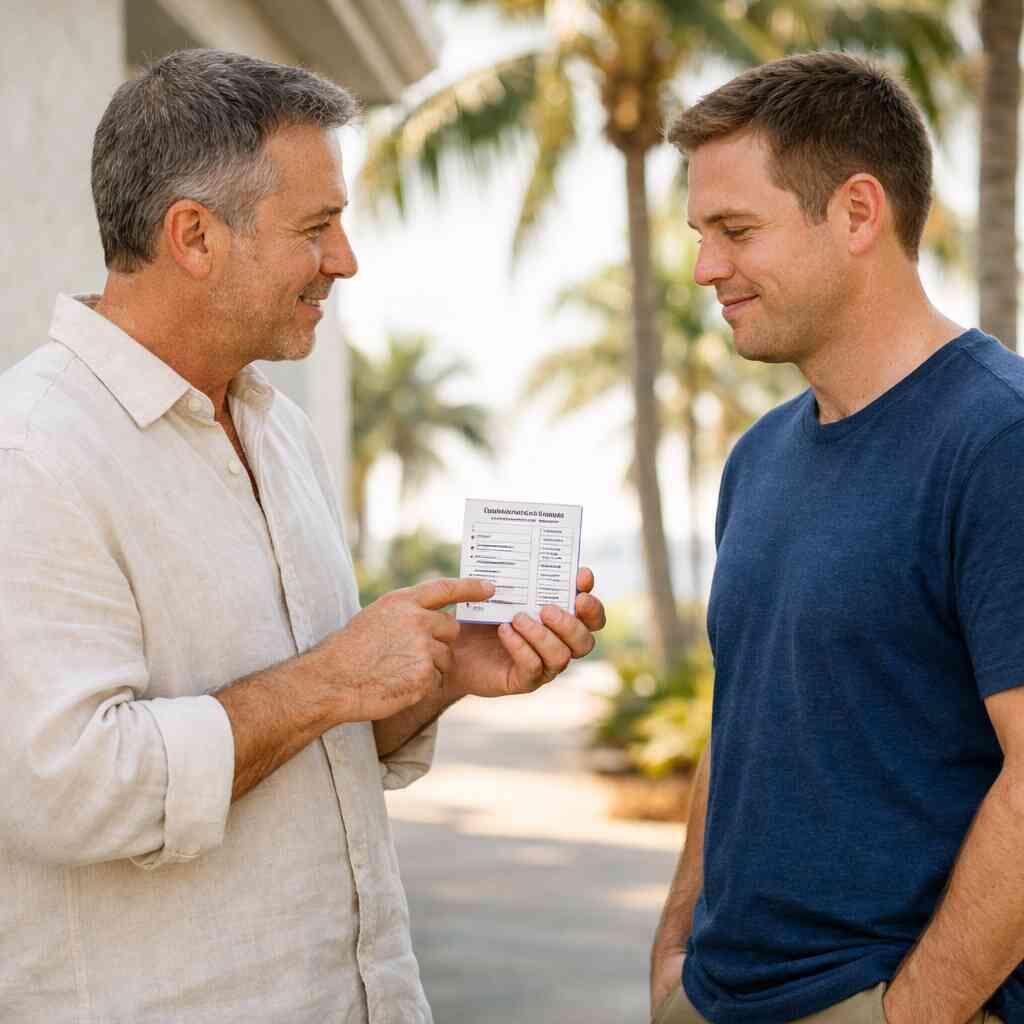
If you are reading this after a difficult call with a treatment center, take a breath. That knot in your stomach makes sense. Families often feel torn between hope and fear, especially when the word private sounds safer, costlier, or both. The truth is more practical: a private Palm Beach rehab should improve the quality of assessment, the speed of response, and the level of clinical attention. It should not simply mean nicer chairs and quieter hallways.
-
The question families ask after the phone call: why a private Palm Beach rehab feels safer or riskier than it sounds
Private treatment can feel reassuring because the setting is calmer and intake often moves faster. In Delray Beach, that matters when stress is already high and people are scared of being judged. Still, comfort alone does not prove quality care. A polished lobby on Atlantic Avenue does not tell you whether the program can manage dual diagnosis treatment or handle the medical realities of withdrawal.
What private treatment should actually change about privacy, pace, and clinical attention in Delray Beach
A strong private program should give you more direct access to licensed clinicians, clearer communication, and a treatment plan that fits the person’s actual symptoms. That may include integrated psychiatric care for depression and addiction when mood, sleep, trauma, or anxiety are driving use. It should also feel less rushed during the intake process, because rushed decisions miss important details. In South Florida recovery, details matter.
Here is the part most families miss: private does not mean lenient, and it should never mean vague. If the team cannot explain the plan for Florida addiction treatment in plain language, keep asking. You deserve to know who is evaluating the person, who is deciding next steps, and how the program handles co-occurring disorders.
Why a clean lobby and ocean views do not tell you whether care is medically sound
Beachside recovery settings can lower stress, but scenery does not treat addiction. A person with alcoholism treatment needs may need medical monitoring, not just a serene room. The same is true for cocaine detox Florida, opioid rehab Delray, or prescription pill addiction. If the staff talks more about comfort than risk, that is a warning sign.
On a recent call, a worried sister described a center with soft music, fresh flowers, and a great view of the coast. Yet no one could clearly explain the withdrawal plan. That gap mattered. In treatment, atmosphere helps, but a safe intake process and skilled assessment help more.
How to tell if the setting supports dual diagnosis treatment or just markets comfort
Ask directly how the program treats co-occurring disorders. If a facility can only talk about substance use and avoids depression, panic, OCD, bipolar symptoms, or trauma, it may not be built for real-world complexity. Strong programs coordinate psychiatry, therapy, and medication decisions instead of separating them into silos. That is the difference between a brochure and a real continuum of care.
If you are comparing options near Delray Beach, look for a treatment model that includes evidence-based treatment, licensed clinicians, and clear follow-up. The best programs make the clinical path visible. They do not hide behind luxury language. They explain how care shifts if symptoms intensify.
When a private rehab is still the wrong fit for severe withdrawal, fentanyl use, or complex psychiatric symptoms
Sometimes the answer is not “private.” Sometimes the answer is “higher monitoring.” Severe benzodiazepine withdrawal, heavy fentanyl use, suicidal thoughts, or unstable bipolar symptoms can require more structure than a standard private setting offers. That may mean South Florida detox, inpatient rehab Palm Beach County, or a higher level of psychiatric oversight before any outpatient plan starts. If the center downplays risk, keep looking.
-
Question one: what happens in the first 24 hours and who is really making the call
The first day sets the tone. It should feel careful, not chaotic. Good programs do not just ask what substance was used. They ask what happened before use, what symptoms show up during withdrawal, what medications are already on board, and what mental health concerns are active right now. That is how RECO Integrated Psychiatry approaches real-world treatment planning.
How the intake process should sort out safety, substance use history, and mental health needs before treatment starts
A serious intake should identify immediate safety issues, recent use patterns, past detox episodes, seizure history, and psychiatric symptoms. It should also ask about sleep, appetite, panic, trauma, and self-harm. Those questions are not paperwork. They are clinical triage. They help the team decide whether the person belongs in a partial hospitalization program in South Florida arrangement, a detox setting, or an outpatient program Delray Beach model.
The question you are really asking is simple: who is making the call? If the answer is “someone with medical and psychiatric training,” that is a good sign. If the answer feels vague, ask again. A clear treatment decision should never depend on a sales script.
What a real addiction assessment looks for in alcohol use cocaine detox Florida opioid rehab Delray and prescription pill addiction
A real assessment looks beyond the substance itself. For alcohol use, it considers withdrawal risk and prior detox history. For opioid rehab Delray, it looks at tolerance, overdose risk, and medication options. For cocaine detox Florida, it looks at mood crashes, sleep loss, and impulsivity. For prescription pill addiction, it checks dose patterns and the medical reason the medication started.
That wider lens matters because people rarely use only one substance in isolation. They may also have anxiety treatment needs, untreated ADHD, or trauma that keeps the cycle going. A strong program sees the pattern, not just the latest crisis. That is a major part of how to choose a rehab wisely.
Why benzodiazepine withdrawal and fentanyl treatment need careful medical planning before any schedule is discussed
Benzodiazepine withdrawal can be medically serious. Fentanyl use can be unpredictable and dangerous. Both require careful planning, not rushed promises. If a program talks about the schedule before it talks about safety, pause. Good care begins with stabilization.
SAMHSA guidance and common medical practice both support cautious withdrawal planning when risk is high. That includes observation, medication review, and close symptom checks. For some people, medication-assisted treatment may be appropriate. For others, the safer path is a monitored start before therapy gets deeper.
How to spot whether the program offers licensed clinicians integrated psychiatric care and a true continuum of care
Ask whether psychiatric care is built into treatment or added later. Ask who reviews the medication list. Ask how the team communicates if symptoms worsen. A true continuum of care links detox, therapy, psychiatry, aftercare, and step-down support. That matters for mental health IOP, residential treatment facility planning, and long-term recovery.
On the projects we completed this year with families in South Florida, the strongest programs gave plain answers fast. They named the clinician role, the reassessment schedule, and the next level of care before anyone signed forms. That kind of clarity reduces panic. It also builds trust.
-
Question two: if I need detox, PHP, or IOP, what level of care matches what is happening now
This is the question that keeps many families up at night. The words sound clinical, but the decision feels personal and urgent. You may be trying to protect a job, a lease, a family, or a body that is already worn down. That is real. The right level of care depends on medical need, symptom severity, and support at home.
How to compare inpatient rehab Palm Beach County partial hospitalization program and intensive outpatient without guessing
Think of the levels like this:
- Inpatient rehab Palm Beach County offers the most structure.
- A partial hospitalization program gives full-day treatment with more independence.
- Intensive outpatient provides strong support while allowing more daily life outside treatment.
If you need help comparing inpatient and outpatient rehab options in Delray Beach, ask about supervision, therapy hours, medication support, and home stability. The best fit depends on withdrawal risk, relapse risk, and psychiatric stability. Not every person needs residential care. Not every person can safely start with IOP.
When South Florida detox is medically necessary and when an outpatient program Delray Beach may be enough
South Florida detox becomes more important when withdrawal could turn dangerous. That includes alcohol, benzodiazepines, and heavy opioid use. If symptoms are mild and medical risk is low, an outpatient program Delray Beach may work. But do not guess. Let a clinician sort that out.
A family recently asked whether they could skip detox because the person “seemed fine in the morning.” By evening, tremors and confusion had started. That is why the first assessment matters. Withdrawal can change quickly. The safest plan is the one that accounts for the worst likely case, not the best hoped-for one.
Why dual diagnosis treatment and co occurring disorders can change the whole level of care decision
Dual diagnosis treatment changes placement decisions because untreated psychiatric symptoms often drive relapse. Depression and addiction, bipolar disorder therapy needs, PTSD treatment, and anxiety treatment all affect risk. If the person is using to quiet thoughts, sleep, or panic, then substance use and mental health cannot be separated. That is the co-occurring disorders model in practice.
NIDA has long emphasized that treating substance use and mental illness together improves coordination and reduces fragmentation. That does not mean every person needs the same setting. It means the level of care should match both problems, not just one. A good program explains this clearly.
How medication assisted treatment Vivitrol injections and Suboxone maintenance may fit into a safe plan when appropriate
For some people, medication-assisted treatment is part of safety and stability. Suboxone maintenance may help reduce opioid cravings and lower relapse risk when clinically appropriate. Vivitrol injections can also be useful in selected cases, especially when the team and patient agree on the plan. These medications are not magic. They are tools.
A 2023 analysis in JAMA Network Open reinforced a broad point seen in addiction care: ongoing engagement and medication support often matter more than short bursts of treatment alone. That is why a good program discusses medication as part of the whole plan, not as a stand-alone fix. When used well, it supports recovery. When used poorly, it becomes another disconnected piece.
-
Question three: what therapies will they actually use when anxiety, trauma, or depression are driving the addiction
This is where many people get relieved, because they finally hear the treatment will address the real pain. Substance use is often the loudest symptom, not the only problem. If anxiety, trauma, grief, or depression sit underneath, therapy has to address them directly. Otherwise, relapse prevention stays shallow. 
Why evidence based treatment should include cognitive behavioral therapy dialectical behavior therapy and relapse prevention work
Evidence-based treatment should include cognitive behavioral therapy and dialectical behavior therapy when appropriate. CBT helps people notice thought patterns that trigger use. DBT helps with emotion regulation, distress tolerance, and impulsive moments. Both are widely used because they translate well into daily life.
Ask how the program teaches coping skills. Ask how it handles urges, shame, and conflict. Ask how relapse prevention is woven into the week. If the answer stays abstract, that is a problem. A serious treatment plan should sound concrete.
How EMDR trauma therapy and PTSD treatment can matter when substance use is tied to unresolved stress
For many people, trauma sits close to the center of addiction. EMDR trauma therapy can help some patients process painful memories without getting overwhelmed. PTSD treatment may also reduce the need to self-medicate with alcohol or drugs. That said, trauma work should be paced well. Too much too fast can backfire.
If you want to understand the clinical logic, ask how trauma is stabilized before deeper processing begins. Good trauma care does not rush. It builds safety first. That matters in a place like Delray Beach, where many people arrive exhausted and emotionally raw.
What family therapy group therapy activities and family support in recovery should look like in a serious program
Family care should not be an afterthought. Real family therapy and relapse prevention support gives relatives tools, not blame. It teaches boundaries, communication, and warning signs. It also helps families stop unintentionally reinforcing the cycle.
Group therapy should feel structured and purposeful, not like open-ended sharing with no clinical frame. The best programs use group therapy activities to practice honesty, accountability, and connection. A family weekend can help too, as long as it includes skill-building and not just emotional release. Healing gets stronger when everyone has a role.
How holistic recovery options like mindfulness meditation yoga therapy and art therapy can support but not replace clinical care
Holistic care can be helpful. Mindfulness meditation, yoga therapy, and art therapy may lower stress and improve body awareness. They can support emotional regulation and help people tolerate discomfort. But they should never replace therapy, psychiatry, or medical care.
This is where balance matters. People often want a gentler path, especially after crisis. That is understandable. A strong program offers both holistic recovery and clinical structure, so the person can heal without drifting.
-
Question four: how do insurance and aftercare decide whether treatment holds up after discharge
The discharge day can feel too soon if aftercare was never planned. That is why insurance and follow-up matter as much as the first week. A smart plan looks beyond admission and asks what happens when the schedule gets lighter. Recovery needs support after the formal program ends.
What insurance verification should reveal about Aetna, Cigna, Blue Cross Blue Shield, out-of-network benefits, and self-pay options
Insurance should never be a mystery. Ask for insurance verification and self-pay options for rehab in writing, if possible. Confirm whether the program accepts Aetna, Cigna, or Blue Cross Blue Shield. Also ask about out-of-network benefits and any remaining balance. Confusion here creates delay, and delay can be dangerous.
A good admissions team explains coverage without pressure. It should help you understand deductibles, authorizations, and what the policy may or may not cover. If the answer sounds rushed, keep asking until it is clear. Financial stress already weighs enough on families.
Why long term recovery depends on aftercare planning sober living resources and case management before discharge day
Recovery after treatment depends on what happens next. That is why aftercare planning and sober living resources should start early. A solid plan may include case management, appointment scheduling, peer support, and housing support. If those pieces wait until the last minute, people often leave with hope but no structure.
Long-term recovery also depends on relapse prevention and coping skills. The person needs a plan for cravings, conflict, boredom, and triggers. That plan should be practical enough to use on a stressful Tuesday, not just in a meeting room. Good aftercare makes daily life more manageable.
How 12 step alternatives SMART Recovery alumni support and a RECO Intensive alumni network can extend care past PHP or IOP
Not everyone connects with 12-step language, and that is okay. Programs should discuss 12-step alternatives, including SMART Recovery when appropriate. Alumni support can also help people stay engaged after PHP or IOP ends. That is one reason RECO Intensive recovery programs in South Florida can matter in a continuum of care.
An alumni network should feel active, not symbolic. It should offer connection, accountability, and reminders that progress is built over time. This aligns with continuing care best practices. People do better when treatment does not stop emotionally the day the schedule changes.
What to ask about life skills training vocational support family weekend and relapse prevention before you commit
Ask about life skills training, vocational support, and how the program prepares people for work, school, or parenting again. Ask whether family weekend includes education and communication tools. Ask how relapse prevention is reviewed before discharge. Those answers tell you whether the program is planning for real life.
If you are comparing Palm Beach County treatment centers, this is a useful filter. Private care should not only calm the crisis. It should help the person rebuild function. That is the measure that matters most.
-
Question five: what makes a Palm Beach rehab worth trusting when the stakes are high
Trust is earned through proof, not polish. Marketing can sound impressive, but clinical reliability leaves clues. You want a place that can explain what it does, why it does it, and what happens when a patient needs more help. That is especially important in a region with many Florida rehabs that take insurance and many that do not.
How to weigh Joint Commission accreditation DCF licensure and NAATP membership against marketing claims
Look for Joint Commission accreditation, DCF licensed status where applicable, and any NAATP membership claims that can be verified. These do not guarantee perfection, but they do signal external oversight. Ask the center to explain what those credentials mean in daily practice. If they cannot, the badge is doing too much work.
You can also ask about SAMHSA guidelines and how the program aligns with them. A serious center should be able to talk about safety, documentation, medication management, and continuity of care without sounding defensive. Credentials matter most when they shape real treatment. That is the standard to hold.
Why the address near 140 NE 4th Avenue Delray Beach FL 33483 and the coastal recovery setting should support the clinical model not replace it
The address matters because place affects access, routine, and comfort. A center at 140 NE 4th Avenue Delray Beach FL 33483 sits in a real recovery community, close to the energy of Delray Beach and the calmer spaces people sometimes need. But the setting should support care, not distract from it. Coastal healing helps when the clinical model is strong.
Delray’s rhythm, from the bustle near Atlantic Avenue to quieter neighborhood streets, can support structure and reflection. Yet a pretty environment is only one piece. The real question is whether the program can translate that setting into safer, steadier treatment. The view should never outshine the medicine.
What to listen for when a program talks about young adult rehab LGBTQ plus affirmative treatment veterans addiction help women s rehab or men s recovery
Listen for specificity, not slogans. If a program says it serves young adult rehab, LGBTQ plus affirmative treatment, veterans addiction help, women’s rehab, or men’s recovery, ask how that shows up in groups, staffing, and safety planning. Real inclusivity is practical. It affects language, trauma awareness, and belonging.
That matters because people heal better when they do not have to hide core parts of themselves. A good center explains how it adapts care, not just who it welcomes. That is especially important in South Florida recovery, where people bring very different histories and identities into treatment.
Which signs show the center can handle integrated psychiatric care for depression and addiction anxiety treatment bipolar disorder therapy and trauma therapy South Florida without fragmenting care
This is the final filter. If someone needs depression and addiction treatment, anxiety treatment, bipolar disorder therapy, or trauma therapy South Florida, the program must coordinate care. That means therapy, psychiatry, and medication management should talk to each other. If they do not, people fall through gaps.
RECO Integrated Psychiatry is built for that kind of coordination in Delray Beach. Our team works with adults who need thoughtful psychiatric support alongside substance use care. If you are comparing options now, ask for a clear plan, not a vague promise. Then take one concrete next step: make one verification call today, ask the five questions above, and write down the answers before you decide.
Frequently Asked Questions
Question: In Best 5 Questions to Ask Before Private Rehab in Palm Beach, how does RECO Integrated Psychiatry help me decide between private rehab, South Florida detox, PHP, IOP, or outpatient program Delray Beach care?
Answer: RECO Integrated Psychiatry helps you match the level of care to what is happening now, not just to what sounds most comfortable. During the intake process, our team looks at signs of addiction, withdrawal risk, mental health symptoms, medication history, and home support to determine whether South Florida detox, partial hospitalization program, intensive outpatient, or an outpatient program Delray Beach model is the safest next step. If someone may need inpatient rehab Palm Beach County or a residential treatment facility first, we will say that clearly. If outpatient care is appropriate, we will explain why. That kind of careful treatment planning is especially important for dual diagnosis treatment and co-occurring disorders, because depression and addiction, anxiety treatment, bipolar disorder therapy, and PTSD treatment can change the whole decision. Our goal is to provide evidence-based treatment with licensed clinicians so families can move from uncertainty to a clear plan without guesswork.
Question: What kinds of addiction and mental health concerns does RECO Integrated Psychiatry treat for people looking for Delray Beach rehab or Florida addiction treatment?
Answer: We provide integrated psychiatric care for adults who need help with complex mental health and substance use concerns. That includes depression and addiction, anxiety treatment, bipolar disorder therapy, OCD, ADHD, trauma therapy South Florida, and PTSD treatment, alongside support for prescription pill addiction, opioid rehab Delray needs, fentanyl treatment, heroin recovery, alcoholism treatment center referrals, cocaine detox Florida questions, and benzodiazepine withdrawal concerns. We also help people think through medication-assisted treatment, including Suboxone maintenance or Vivitrol injections when clinically appropriate. Because many people searching for a drug rehab near me are dealing with both mental health and substance use symptoms, we focus on coordinated care rather than siloed services. Our approach is compassionate, evidence-based, and designed to support long-term recovery rather than short-term stabilization only.
Question: Does RECO Integrated Psychiatry offer therapy and support services like cognitive behavioral therapy, dialectical behavior therapy, EMDR trauma therapy, family therapy, and relapse prevention aftercare planning?
Answer: Yes. A strong recovery plan usually needs more than medication management alone, which is why we emphasize therapy and aftercare planning as part of a continuum of care. Depending on clinical needs, treatment may include cognitive behavioral therapy, dialectical behavior therapy, EMDR trauma therapy, family therapy, group therapy activities, and practical relapse prevention work focused on coping skills and daily functioning. We also discuss holistic recovery options such as mindfulness meditation, yoga therapy, and art therapy when appropriate, because these tools can support regulation and stress management. For many families, family therapy and family support in recovery are essential because they help set boundaries, improve communication, and prepare for long-term recovery. If needed, we can also help patients think through sober living resources, case management, life skills training, and vocational support so treatment continues to make sense after the first phase ends.
Question: How does RECO Integrated Psychiatry support insurance verification, out-of-network benefits, self-pay options, and Florida rehabs that take insurance for Palm Beach County treatment centers?
Answer: We know that insurance verification can feel confusing during an already stressful time, so we work to make the process as clear as possible. Our team can help you review coverage from plans such as Aetna, Cigna, and Blue Cross Blue Shield, and we can also discuss out-of-network benefits and self-pay options when needed. Families comparing Florida rehabs that take insurance often want to know whether care can be both high-quality and financially workable, and that is a fair question. We aim to provide straightforward information so you can focus on treatment planning instead of paperwork. If you are comparing Palm Beach County treatment centers or looking for questions to ask before rehab, we encourage you to verify benefits early, ask about any authorization requirements, and understand what services are included. Transparency matters, especially when you are evaluating private rehab options in a coastal healing environment like Delray Beach.
Question: What makes RECO Integrated Psychiatry a trusted option near 140 NE 4th Avenue Delray Beach FL 33483 for people comparing RECO Intensive reviews, South Florida recovery options, or a professional’s program?
Answer: RECO Integrated Psychiatry is the psychiatric arm of the RECO treatment network, and our focus is on integrated, evidence-based treatment that respects each person’s clinical complexity. From our Delray Beach location at 140 NE 4th Avenue Delray Beach FL 33483, we support adults across South Florida recovery with outpatient psychiatry, medication management, and thoughtful coordination with the broader continuum of care. People comparing RECO Intensive reviews, RECO Intensive location details, or a professional’s program often want to know whether a program can truly address both mental health and substance use without fragmentation. That is exactly where we can help. We work with dual diagnosis, co-occurring disorders, and integrated psychiatric care in a way that fits real life, whether the person needs support before, during, or after treatment. We also welcome individuals seeking LGBTQ+ affirmative treatment, veterans addiction help, women’s rehab, men’s recovery, or young adult rehab support. If you are searching for how to choose a rehab, we suggest asking about licensed clinicians, continuity of care, aftercare support, and whether the program can adapt to changing needs over time. That is the standard we hold ourselves to.